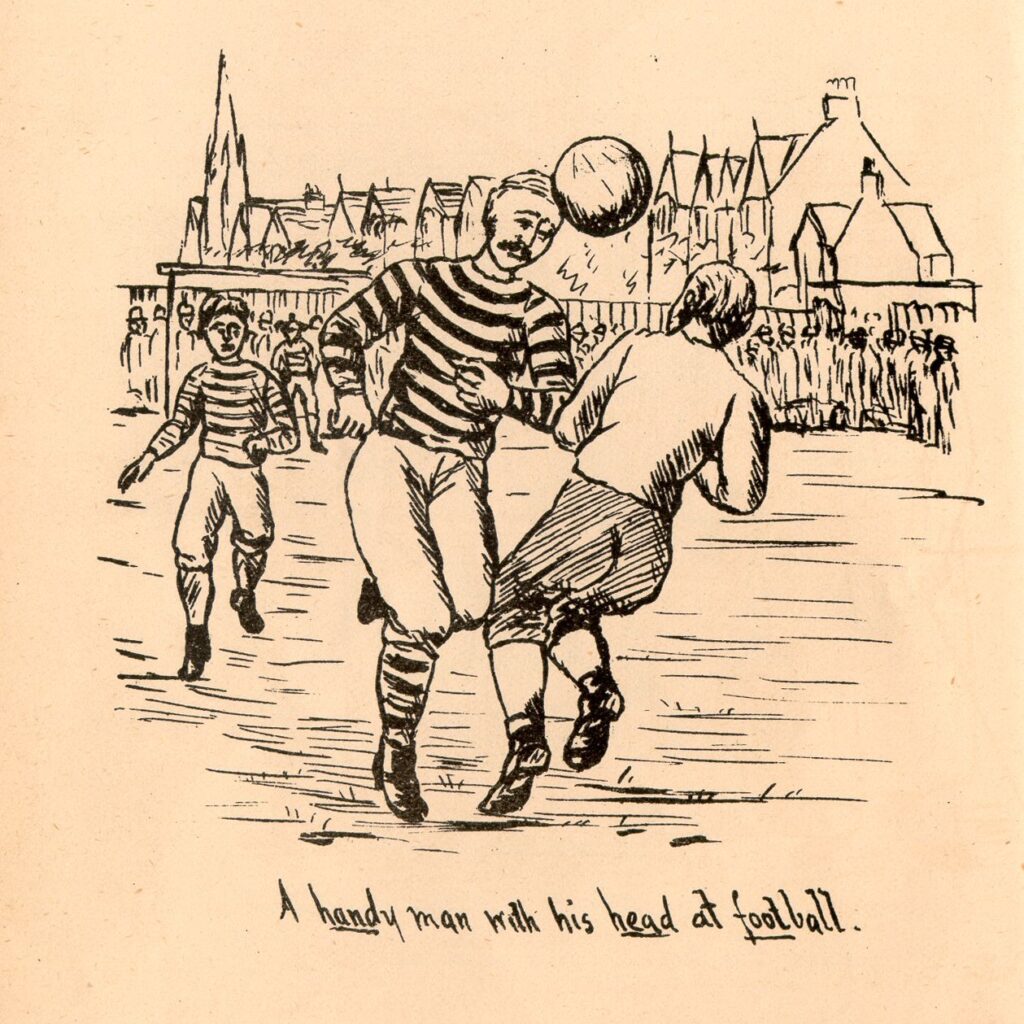
You have probably heard of Hampden Park in Glasgow – our national football stadium since 1903. However, there were two earlier Hampdens – the Second (1883/4-1903) located under what is now Cathkin Park, and the First (1873-1883) was at the current site of Hampden Bowling Club. All three sites are in very close proximity in the Southside of Glasgow, and each were home to Queen’s Park FC, our oldest football club, as well as the home for international matches.
The Original Hampden
We have access to valuable resources to discover what First Hampden looked like. However, the story starts a little before the ground was built, on a January evening in 1873. A committee meeting for Queen’s Park FC was held in the Southside and on the agenda was the plan to find and build a new home for the club. The ground was aspirational with the target to host competitions, cup finals and even International Matches! This was a hugely ambitious plan as no previous sports ground in Scotland, or arguably in the whole of Britain, had been conceived and built specifically for hosting football matches.
The history of the earliest football grounds across the world is an evolving subject that historians are gradually understanding more fully. We can’t currently be certain if First Hampden was the first purpose-built football ground in the world, it might be, but we are certain it was the first in the world built with the intention to host international matches.
We are fortunate that Queens Park FC commissioned Richard Robinson to compile a thorough and detailed publication titled “History of the Queen’s Park Football Club 1867-1917” (1920). This publication has been invaluable as a reliable source to help piece together the early days of this historic club and also their move across three football grounds. Unsurprisingly, the publication is mostly text based, particularly for the chapters on the early days of the club.
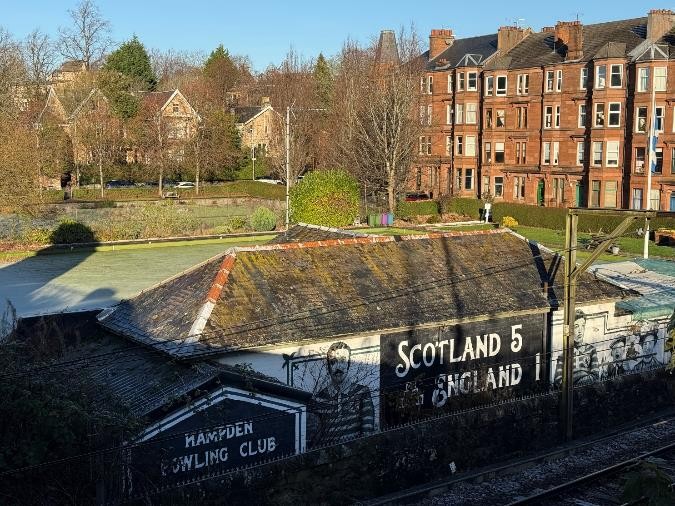
A recent photo overlooking the site where First Hampden was located.
A glimpse of First Hampden through archives
What did one of the earliest football grounds in the world, the first ever purpose built in Scotland, look like? Unfortunately, there are no known photographs to survive of the ground and its relatively short lifespan of 1873-1883 means it missed the periodic mapping events by Ordnance Survey. Luckily historians and researchers uncovered a Cathcart District Railway map from 1879 which shows a basic mapped plan of the ground. The enclosed ground, grandstand and pavilion are mapped. The grandstand was a later development and provided improved viewing for spectators as it was probably sloped or terraced and also likely covered. The grandstand could have held a larger crowd than what standing level with the pitch would allow.
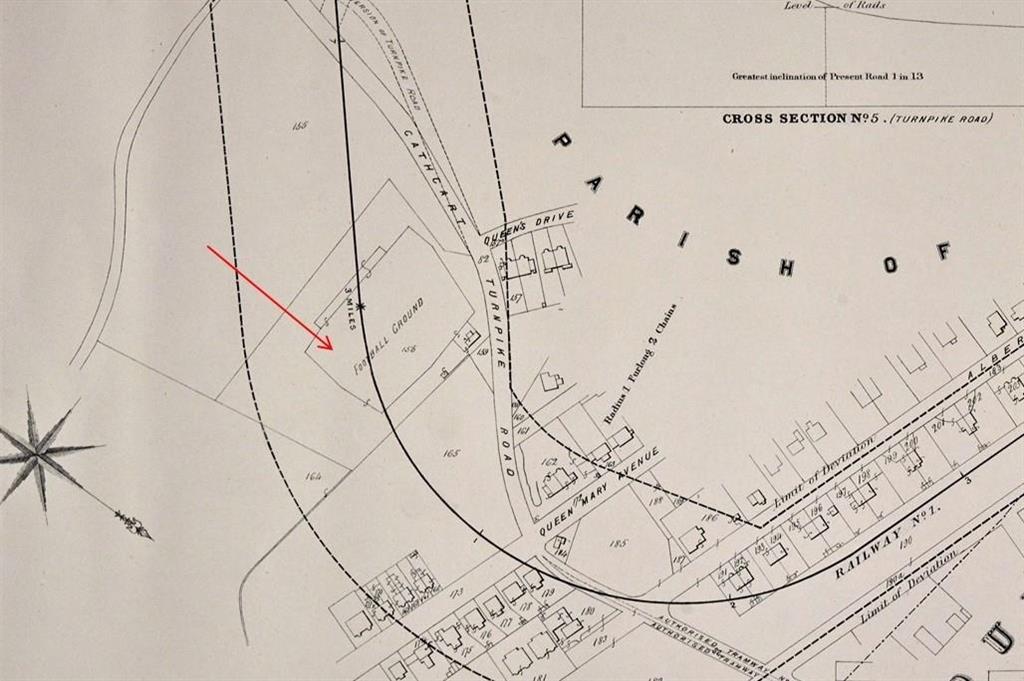
Railway Map (1879) with First Hampden highlighted by the red arrow. Cathcart District Railway map, Courtesy of National Records of Scotland.
Queen’s Park FC hold an archive and within it there is a photograph of the opening ceremony of the pavilion at First Hampden. Taken in 1878, the nostalgic photograph shows key people from the club neatly lined up in front of the pavilion they purchased from the Caledonian Cricket Club. The club were very proud of this new facility, and it gave a class leading, professional space for players, press, board members and important visitors. In 2021, archaeological investigations confirmed the foundations of the pavilion, along with related artefacts from its down-taking and the spectators that used it, survive buried on the site of First Hampden.
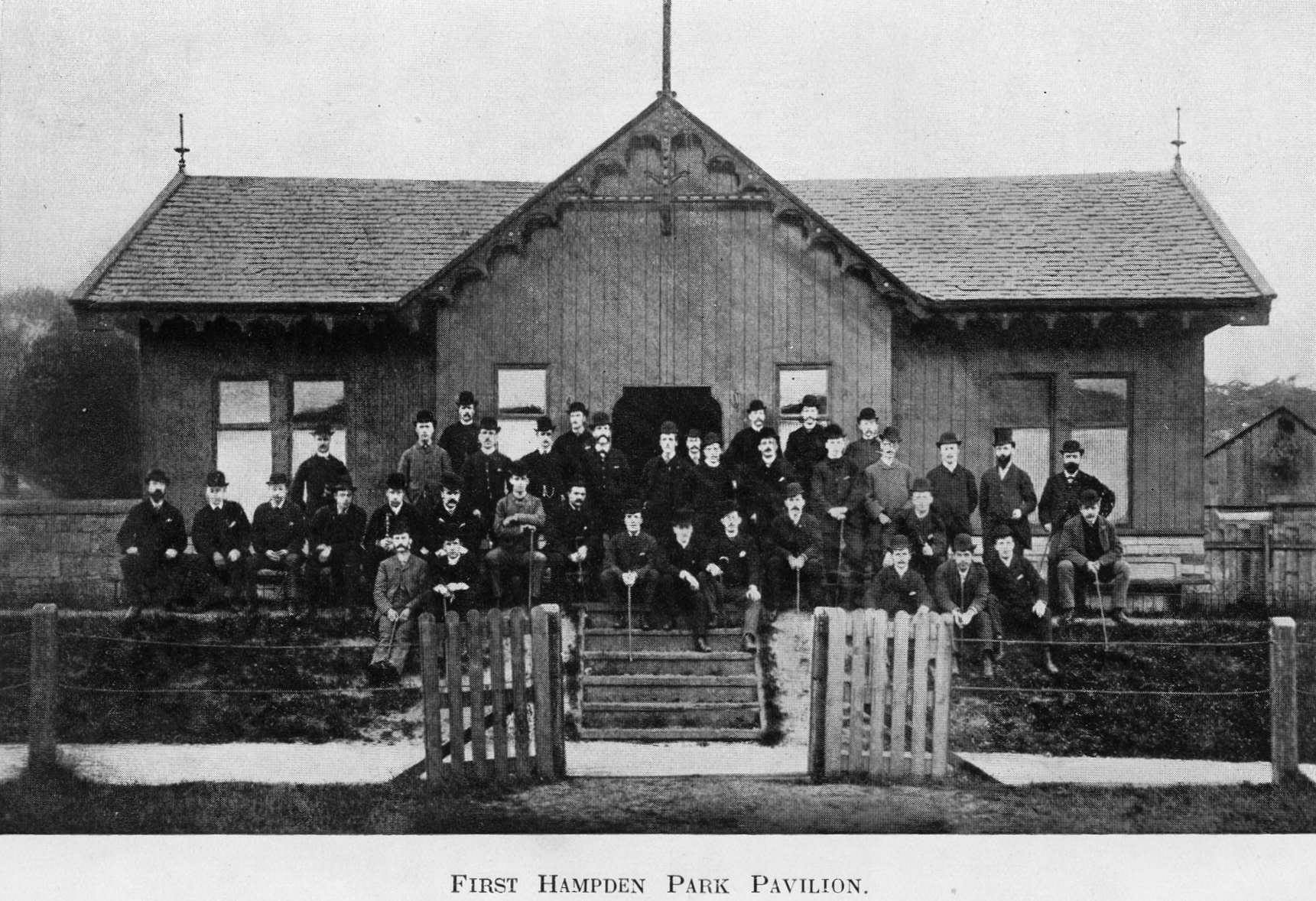
The opening ceremony of the pavilion at First Hampden (1878). Courtesy of Queen’s Park FC archives.
Sketches of a day at the football
Last but by no means least, we have the magazine “Free Kicks At Football” dated 1882. This unlikely source, a limited run magazine aimed at the growing football fan base, had an edition with a series of sketches made from the illustrator attending a game at First Hampden.
The pavilion interior sketch
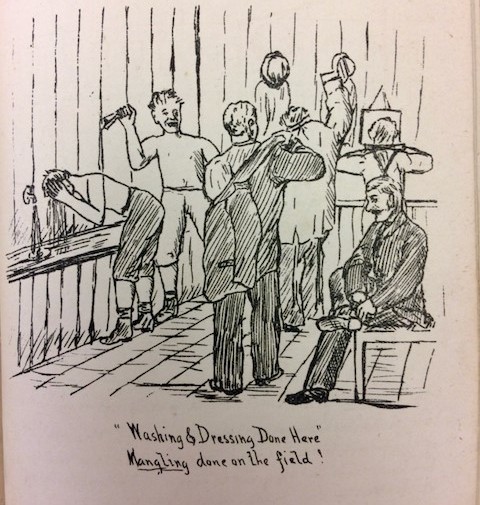
Sketches from Free Kicks at Football (1882), Courtesy of National Library of Scotland.
This is the only image we have that shows what part of the pavilion looked like inside. It had a large entrance hall with possibly two very narrow rooms opposite the entrance door which may have been stores. To each end of the pavilion were probably two mirrored rooms for changing and basic washing facilities. These spaces could also be multi-functional and serve as meeting rooms when matches weren’t played.
Paying your pennies at the gate
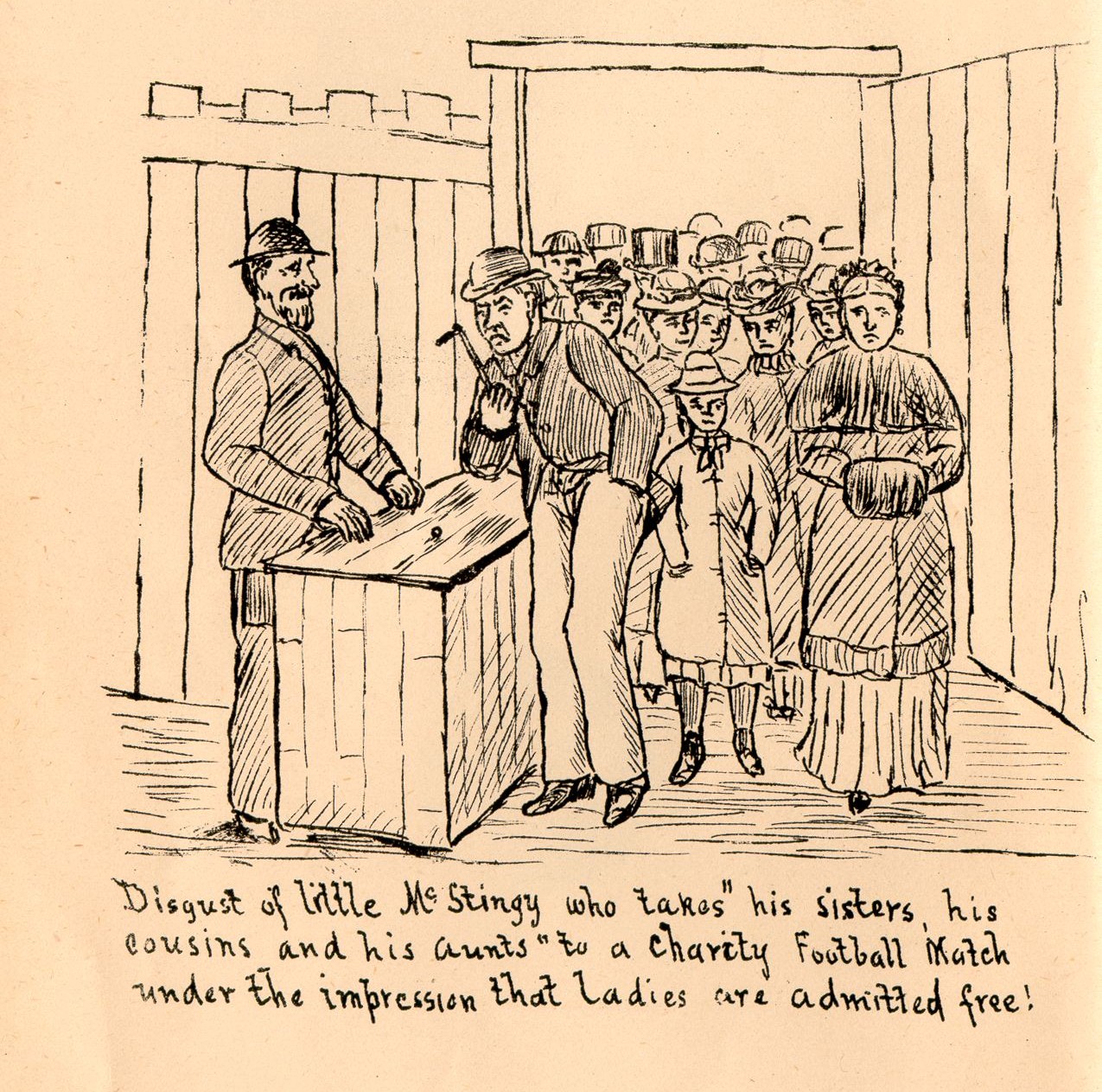
The first area of a football ground to greet the fans would be the entrance and, a crucial element of this purpose-built ground, the pay gate! Queens Park realised the potential to charge spectators a fee to enter and watch the games. The club had seen how popular matches could be, such as the first Scotland versus England game in 1872. If the club could raise funds through entrance fees then money could go back into the club to improve facilities and pay players to strive towards better football and more professionalism in the game.
Pitch-side views
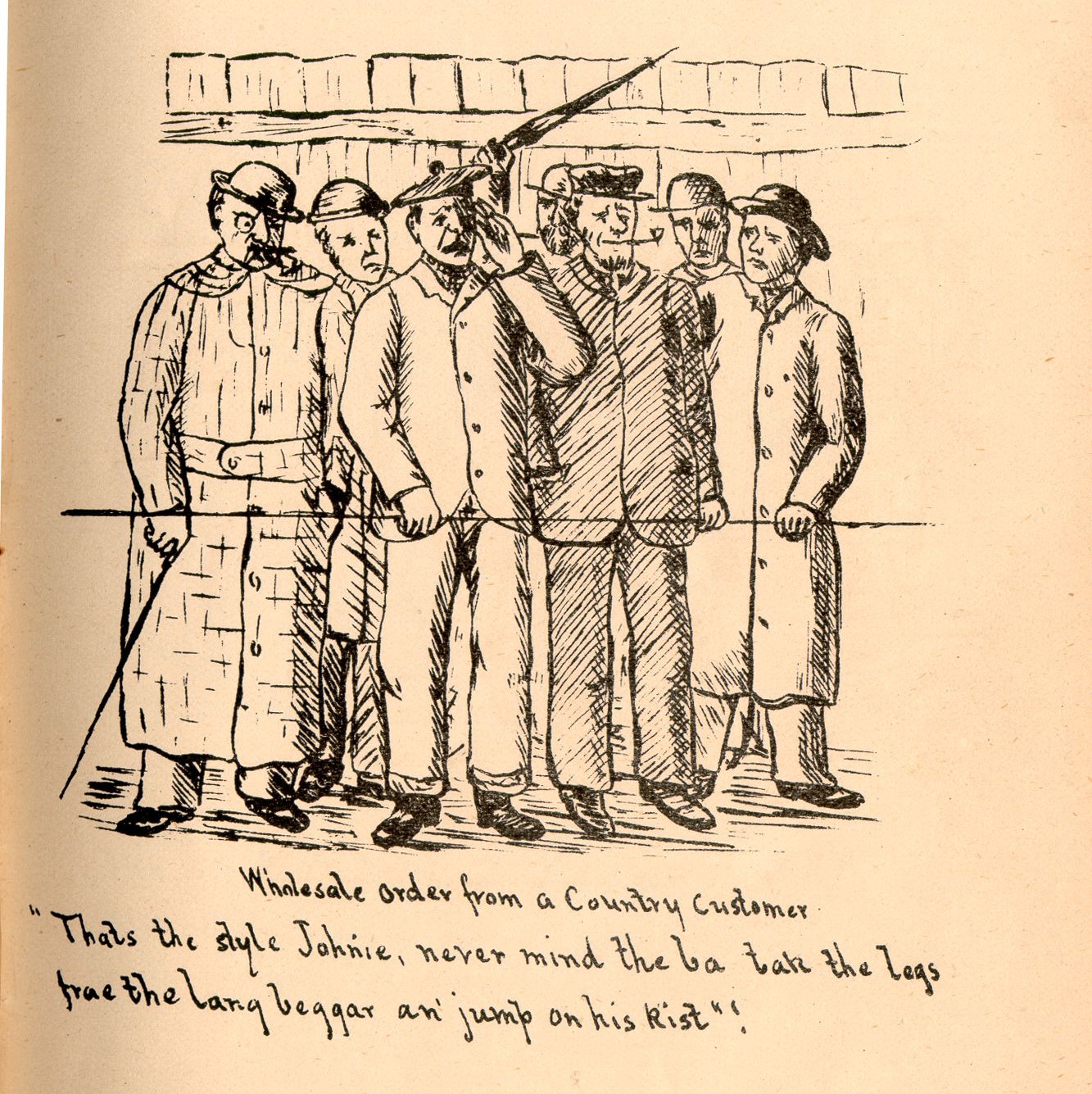
You have paid your pennies to enter the ground and then find a spot to stand and watch the game. This sketch shows an important aspect of the first football ground – the tall, solid wooden fence behind the pitch-side. The fence stopped people watching the game outside the ground – no freebies here. Again, this was to ensure spectators paid to see the game and money was raised for the club.
Getting in on the action
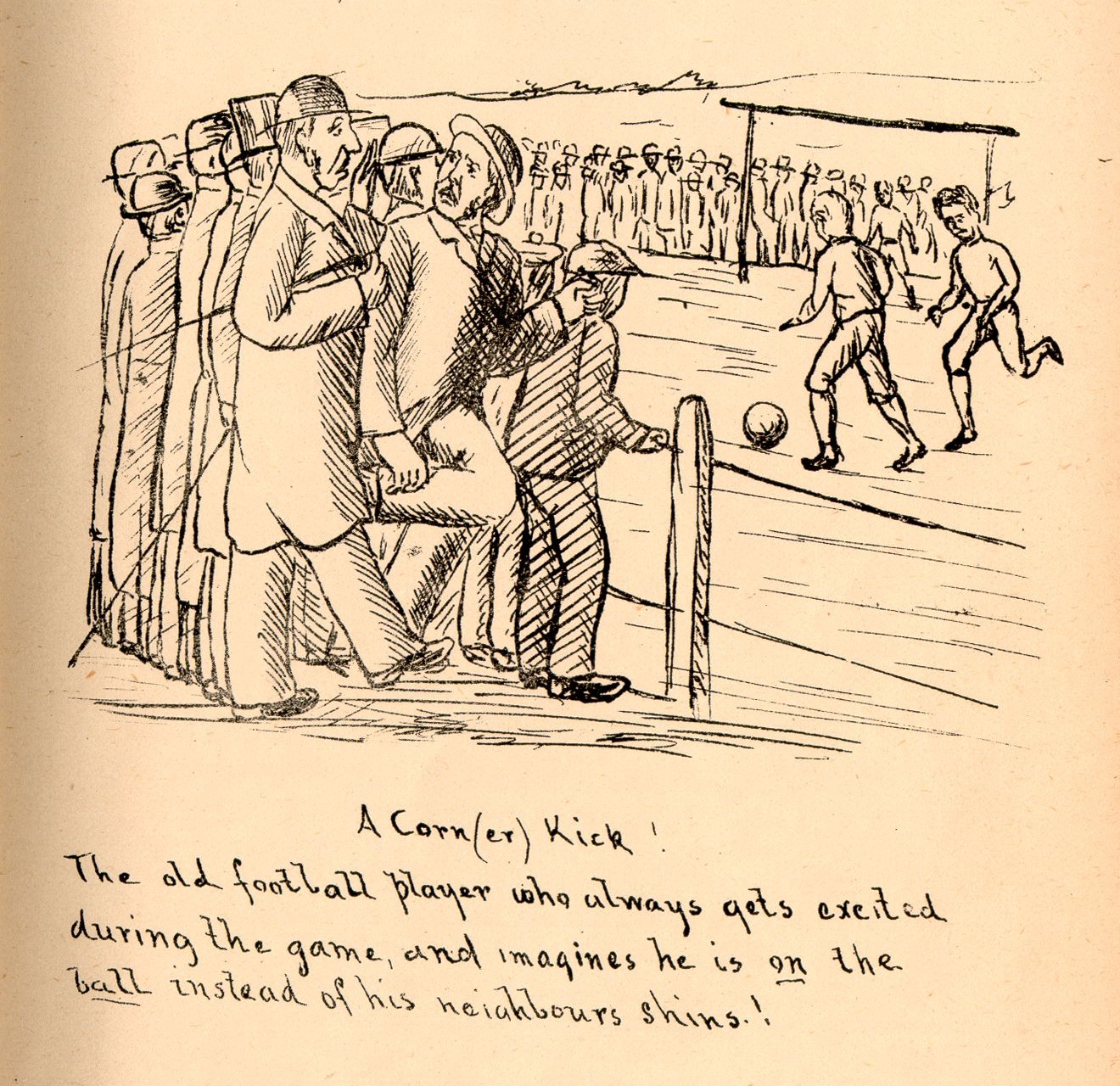
This action-packed sketch helps highlight a couple of aspects of the First Hampden ground and experience. First, there are many fans shown and lined up multiple rows deep – the game was clearly popular. Second is the wooden post and wire fencing, or possibly rope, around the edge of the playing pitch. This is a key aspect of the early ground development as spectators were kept away from players to limit interference and help preserve the standard of the grass pitch to encourage a better game of football. In fact, Queen’s Park were known to close off the ground and pitch and tend to the grass to improve drainage, greenery and the general playing surface. Another sign of the strive to professionalism in the game.
Views of the pitch and beyond
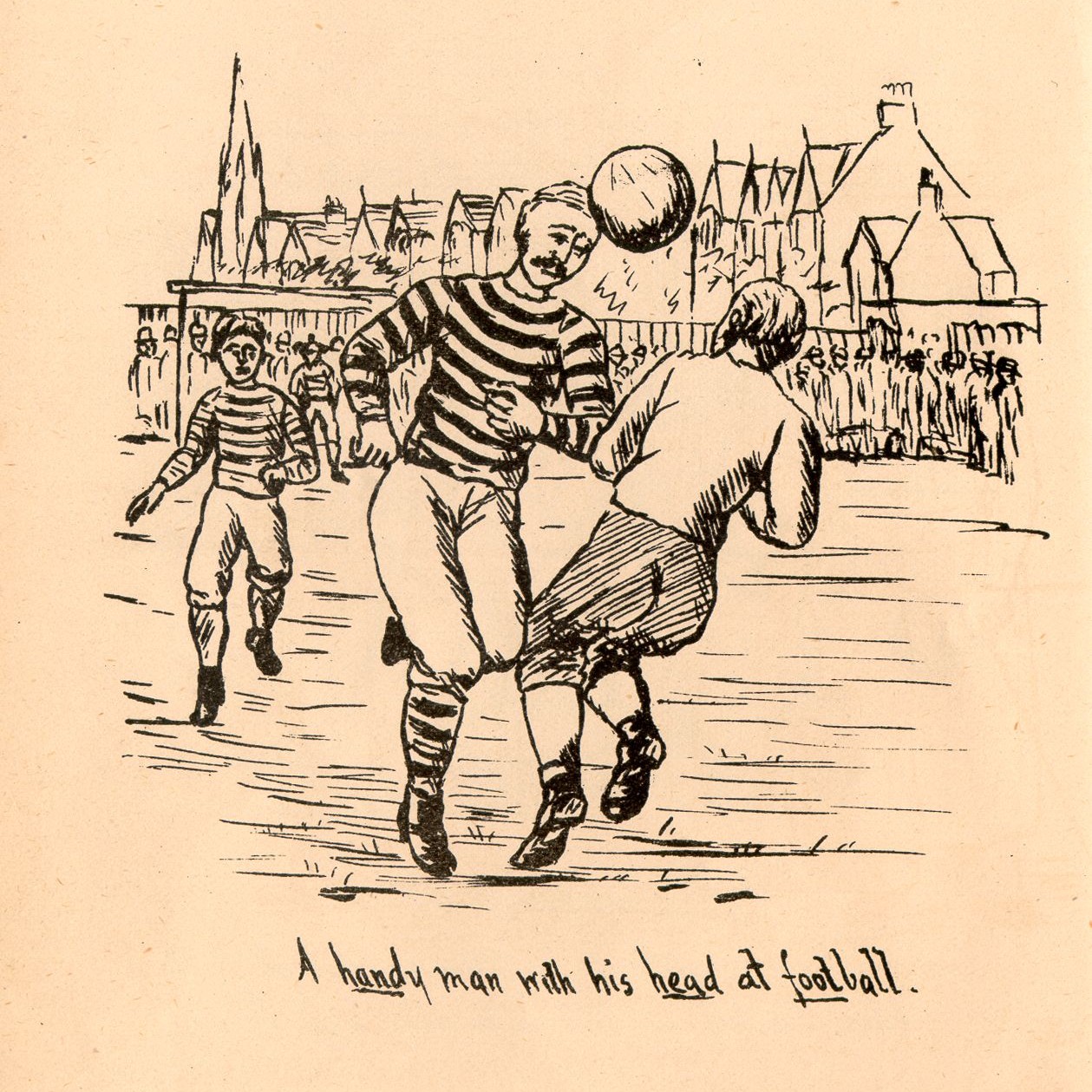
In this more picturesque sketch, we can see the construction of the goal posts – with overhanging ends unlike today! The tall outer fence is obvious and clearly kept the match visibility within the ground. However, the interest in this sketch is what isn’t the football ground. We can see a row of villas and a church spire. These buildings still exist today, and this sketch helped historians and archaeologists to align the Railway map with the streets today and confirm exactly where First Hampden was laid out.
First Hampden: A Scottish football first
First Hampden was a first in many ways. Before this ground, football teams simply accepted playing on shared, general recreation parks and also frequently used cricket grounds for football matches. The advent of First Hampden essentially provided the blueprint for what makes a football ground– enclosure from outside viewing, pay gate on entry, segregation of fans and players, grandstand or terracing for improved viewing, the pavilion to give players, staff, press and others a dedicated facility and a curated playing pitch. All these elements that made First Hampden are featured in the football grounds of the 20th century and can even be seen, in a more developed form, in the modern stadia of today.
The Cathcart District Railway purchased First Hampden in 1883 and heavily altered the landscape to lay the new railway line. The football ground was changed beyond recognition and in the decades that followed fine sandstone tenements, tennis courts, a bowling club and new roads were constructed across the site. Today, the northwest corner of the original First Hampden site is Kingsley Gardens and is the location of the remains of the First Hampden pavilion.
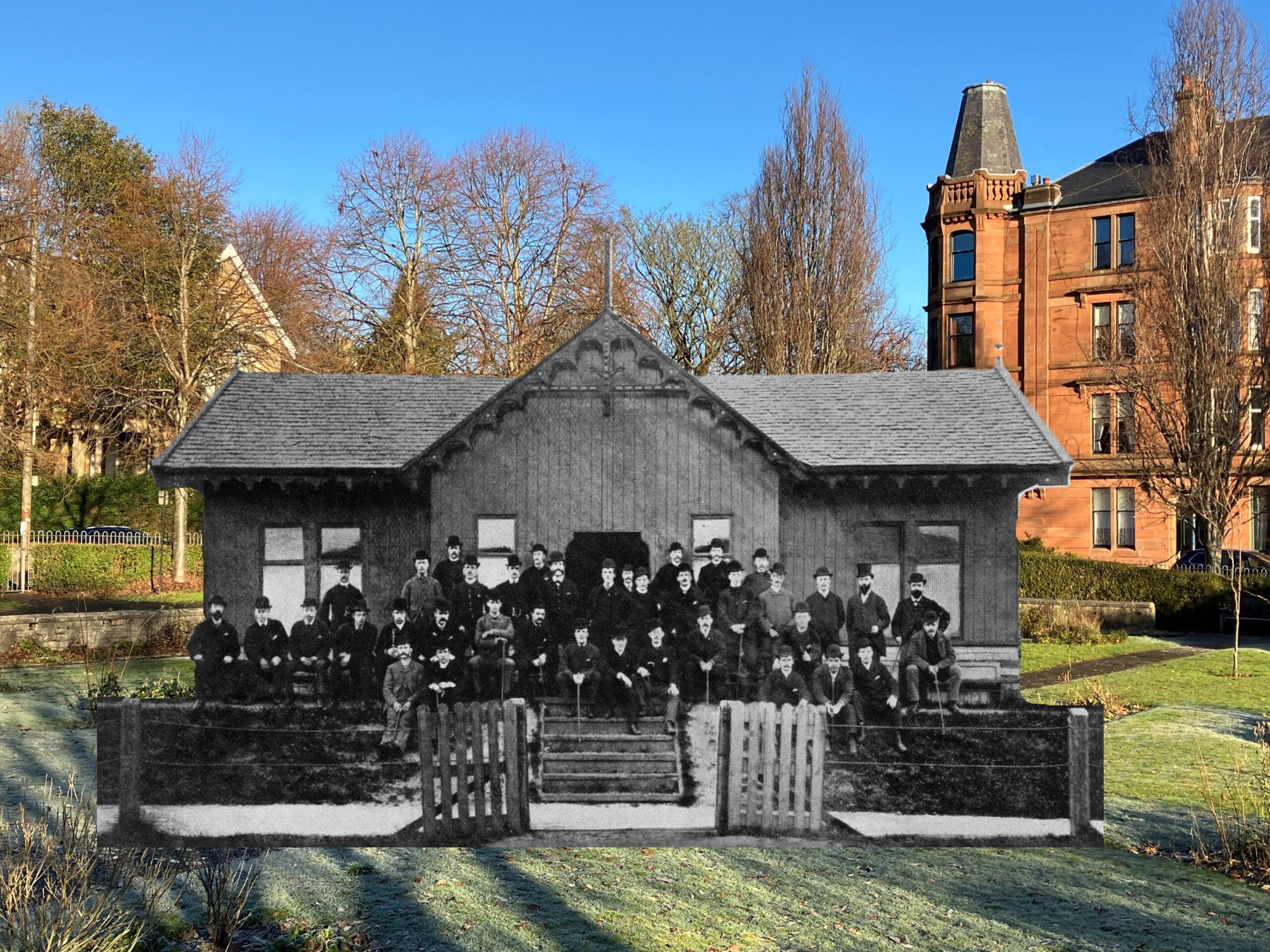
Overlay of the pavilion aligned and above where the archaeological remains have been located.
We have recently designated the remains of the pavilion at First Hampden as a Scheduled Monument. In 2025, we designated Cathkin Park, the 20th century football ground overlying the site of Second Hampden, as a Scheduled Monument.
Want more sporting action from Scotland’s past? Check out our blog on Scottish football history, or discover the lost Scottish sport of quoiting.
Share
About Author