Glasgow will welcome thousands of visitors this October for A Mòd Nàiseanta Rìoghail (the Royal National Mòd), Scotland’s biggest celebration of Gaelic language, culture and the arts. Bringing together performers, competitors and audiences from across the country and beyond, the Mòd showcases everything from music and singing to literature, drama and storytelling.
This year’s event begins on Friday 9 October at the Royal Concert Hall with Ar Cànan’s Ar Ceòl, a special concert celebrating 40 years of Gaelic Medium Education in the city.
Throughout the week, competitors, spectators and visitors will fill Glasgow’s venues, enjoying a packed programme of performances, events and cultural activities while soaking up the unique atmosphere of this vibrant festival.
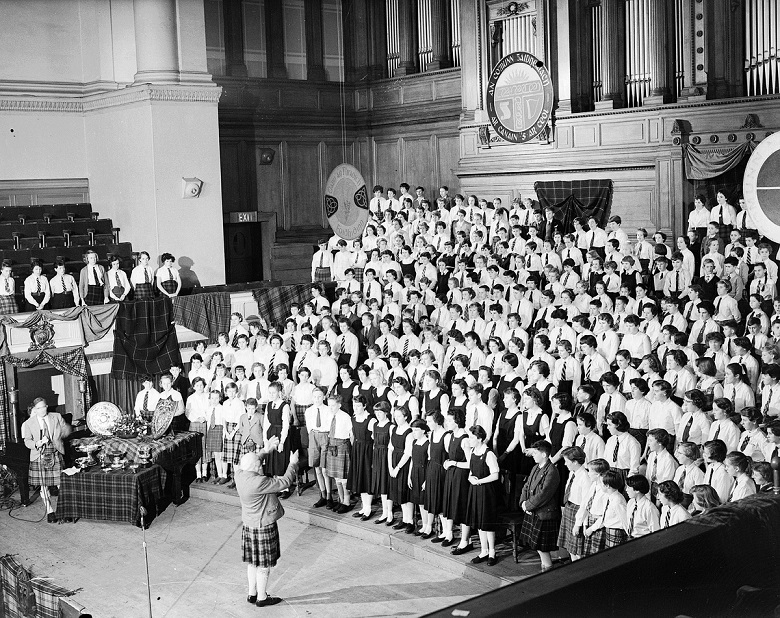
The Royal National Mòd in Glasgow. Choir performs the opening song at the children’s concert. © Licensed by The Scotsman Publications Ltd via SCRAN.
What is The Mòd?
The Royal National Mòd, often known simply as The Mòd, is a nine-day festival of Gaelic music, art, literature and drama. It is held in a different Scottish town every year, and celebrates Gaelic’s creative heritage and traditions.
The first half of the week is dedicated to competitions for young people, while the second half is for adults. It draws in fluent and learner Gaelic speakers alike, with a host of other interested and curious attendees.
How did the Mòd start?
In 1891, An Comunn Gàidhealach (The Association of Gaels) was established in Oban to help preserve and develop the Gaelic language. They founded The Mòd the following year to encourage the teaching, learning and use of Gaelic as well as to celebrate and to preserve Gaelic literature, history, music and art.
Since then The Mòd has run every year with the exception of wartime periods. It has been hosted in in 28 locations, from Stirling to Sutherland. April 2023 marked the first New York Tartan Week Mòd – a smaller version of The Royal National Mòd which invited competitors from North America, Scotland and further afield, to take part in solo Gaelic singing competitions.
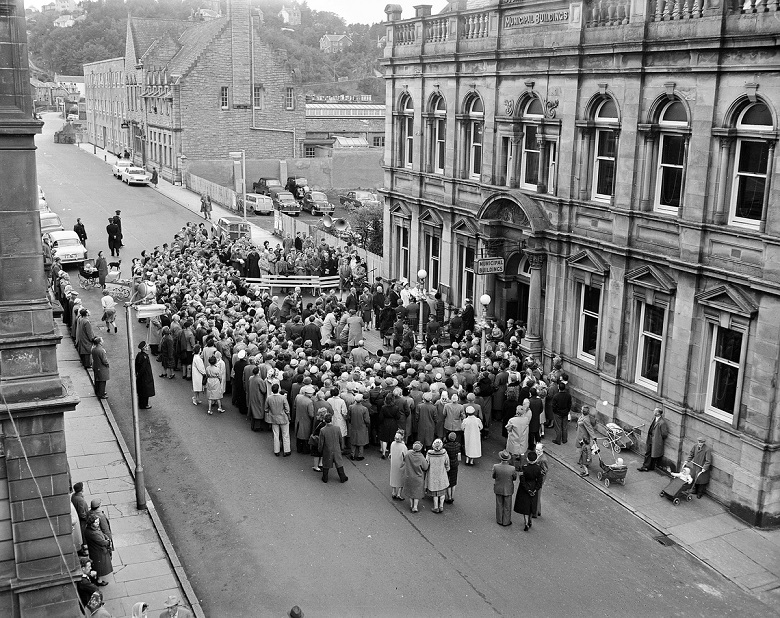
The Royal National Mòd in Oban, 1962. A crowd gathers for the unveiling of a plaque commemorating the founding of An Comunn Gàidhealach. © Licensed by The Scotsman Publications Ltd via SCRAN. More details on trove.scot.
What happens?
The main event is competition and performance-based, and is modelled closely on the National Eisteddfod festival in Wales. The Mòd has over 200 competitions from playing traditional instruments such as bogsa-ciùil (accordion), pìob-mhòr (bagpipes) and clàrsach (clarsach) to Gaelic drama, solo singing or poetry, and choir competitions. Competitors of all ages hail from around Scotland and sometimes further afield from countries such as France, Germany and America.
Each competition is judged by a panel of experts, and marks are awarded in categories such as musicality and Gaelic fluency. The winners of high-profile competitions such as the Silver Pendant or the prestigious Gold Medal perform at a nightly concert broadcast on Gaelic radio and television.
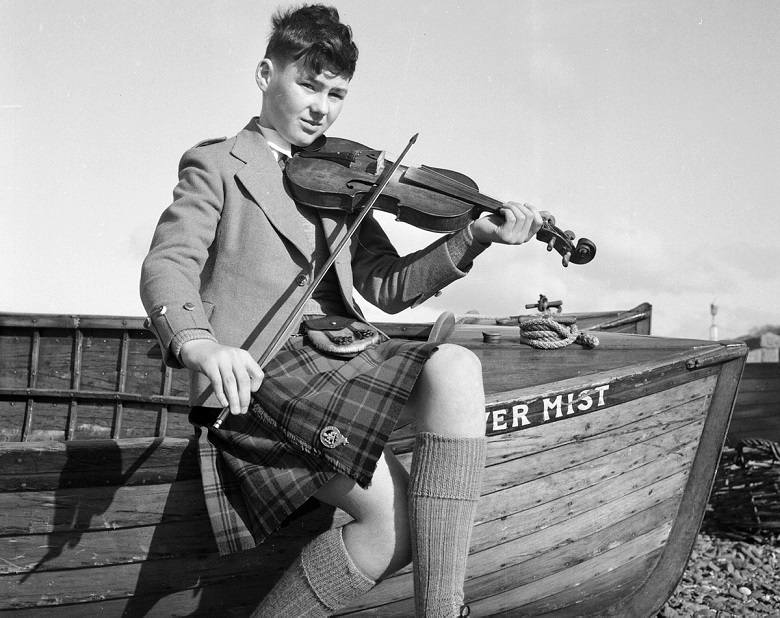
The Royal National Mòd at Largs, 1956. Glen MacFarlane competes in a fiddle competition. There are over 200 competitions at the Mòd to this day! Licensed by The Scotsman Publications Ltd via SCRAN.
What’s special about this Mòd?
The Mòd returns this year to Glasgow, known affectionately as ‘Baile Mòr nan Gàidheal’ (The City of the Gaels). The festival has been held in the city 12 times, with the last being in 2019. A record number of competitors have entered for the Mòd in Glasgow this year, with 2100 entries received for a wide range of competitions.
As with many festivals, there is also plenty to do and see as part of the festival’s fringe programme. This includes cèilidhs, workshops, lectures and book launches. ‘Camanachd’ or shinty also features at the Mòd and the Men’s, Women’s and Youth Mòd Shinty Cups for will be up for grabs on Saturday 10 October.
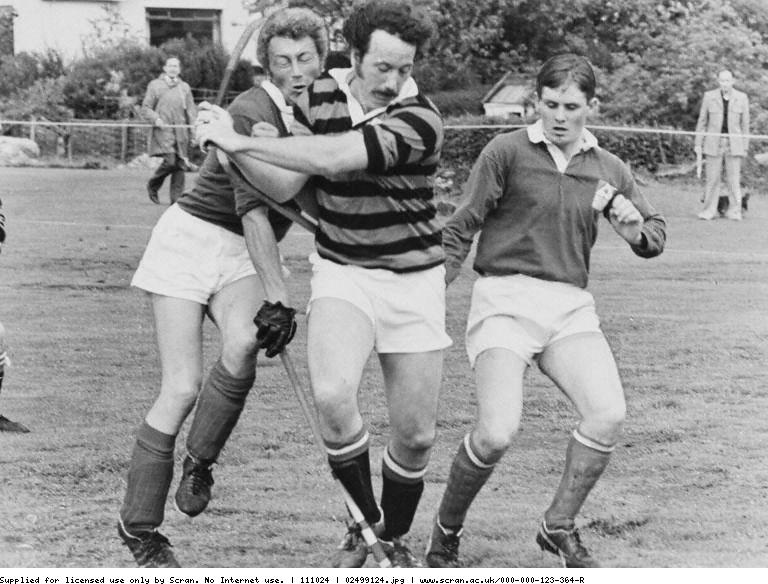
Glasgow Celtic Society centenary cup final at Bishopbriggs from 1979 © Newsquest (Herald & Times). Licensor www.scran.ac.uk
How can I get involved?
The Gaelic team at Historic Environment Scotland has a number of events going on for you to get involved in!
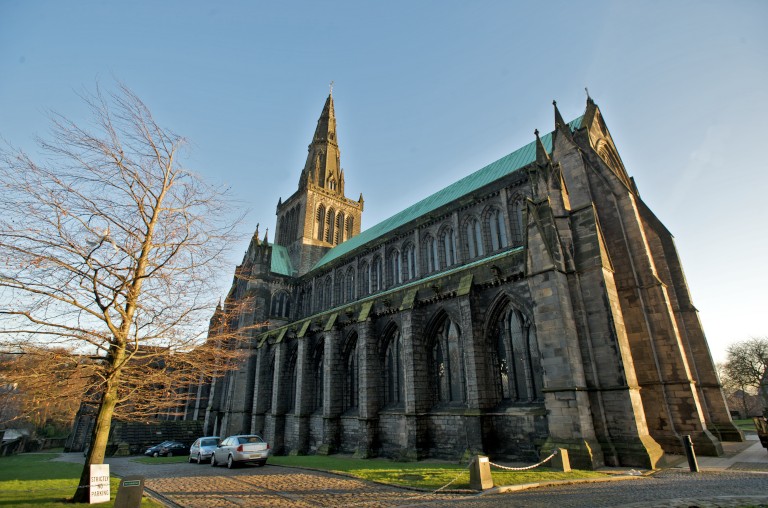
Join us on Saturday 3 October in Glasgow Cathedral to get a flavour of the choral music that can be heard at the Mòd. Local Gaelic choirs will be performing from 1pm-3pm in the Quire and it is free for all to attend. Take a seat in this beautiful building and soak up the music, or make Gaelic song the soundtrack to your visit while you explore.
We are running bilingual craft activities for children and families during the beginning of the Mòd week. At Coinnich ri Ceann Tighearna (Meet with St Mungo), you’ll find out more about Glasgow’s patron saint St Mungo, his miracles and the story of the city through crafts. These workshops are taking place on Monday 12 October from 11am-12pm at Edward House and on Tuesday 13 October as a drop-in session from 11am-2.30pm at Glasgow Cathedral.
If you fancy seeing some of the competitions, you can find the full programme on An Commun Gàidhealach’s website. While you’re here, why not say hello to the Gaelic team at the City of Glasgow College? We will be showcasing some of the fantastic archive images of the Mòd through the years from trove.scot. Come and check out this pop-up exhibition and have a chat with us. We’ll be at the College from 9am-5pm on Monday 12 and Tuesday 13 of October.
At Glasgow Cathedral throughout Mòd week, visitors can enjoy self-guided trails designed for both Gaelic learners and fluent speakers. Whether you’re just starting your language journey or already speak Gaelic with confidence, come along, explore the cathedral, and give the trails a try.
If you can’t make it to Glasgow in person, fear not. BBC Alba and Radio nan Gàidheal have live and roundup coverage through the week where you can watch the competitions.
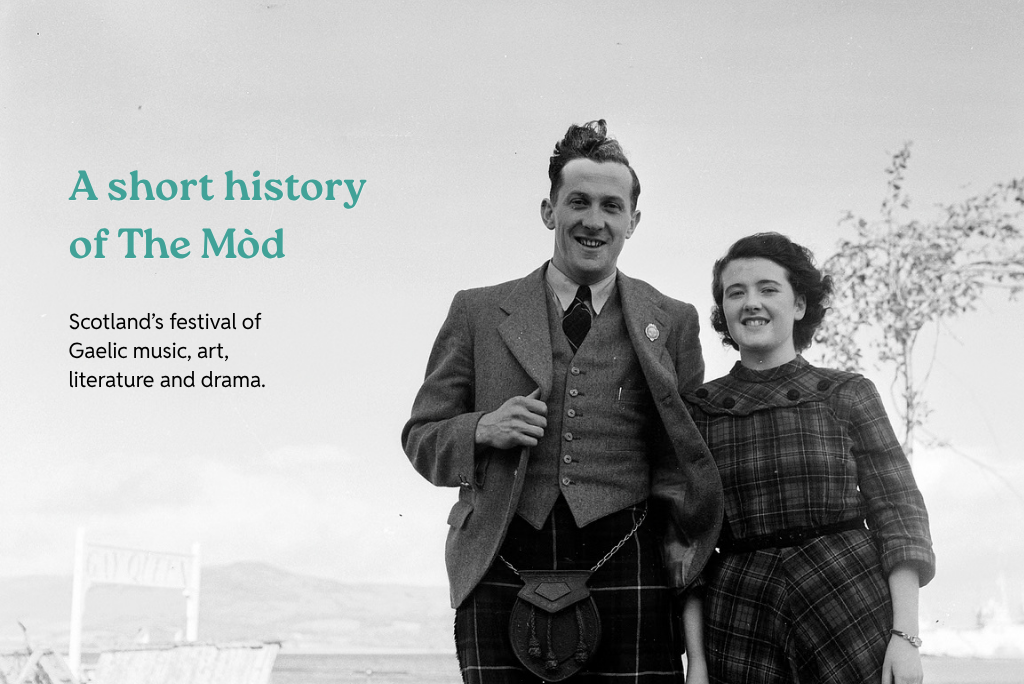
Banner image: Gold medallists from the Mòd at Rothesay in 1958. © The Scotsman Publications Ltd, licensed by SCRAN.
This blog was updated on Friday 25 October 2026.
Share
About Author