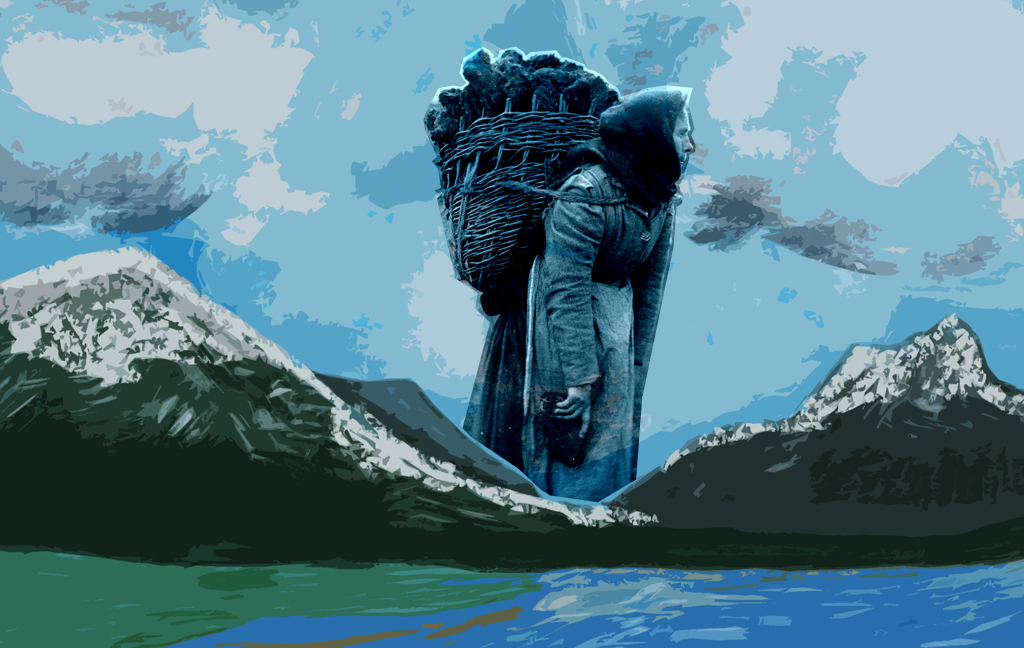
The Gaelic word ‘cailleach’ (pronounced kal-yuch with a soft ‘ch’ as in ‘loch’) simply means old woman. But the figure of the Cailleach in both Irish and Scottish folklore is much more than that.
Beira, Queen of Winter
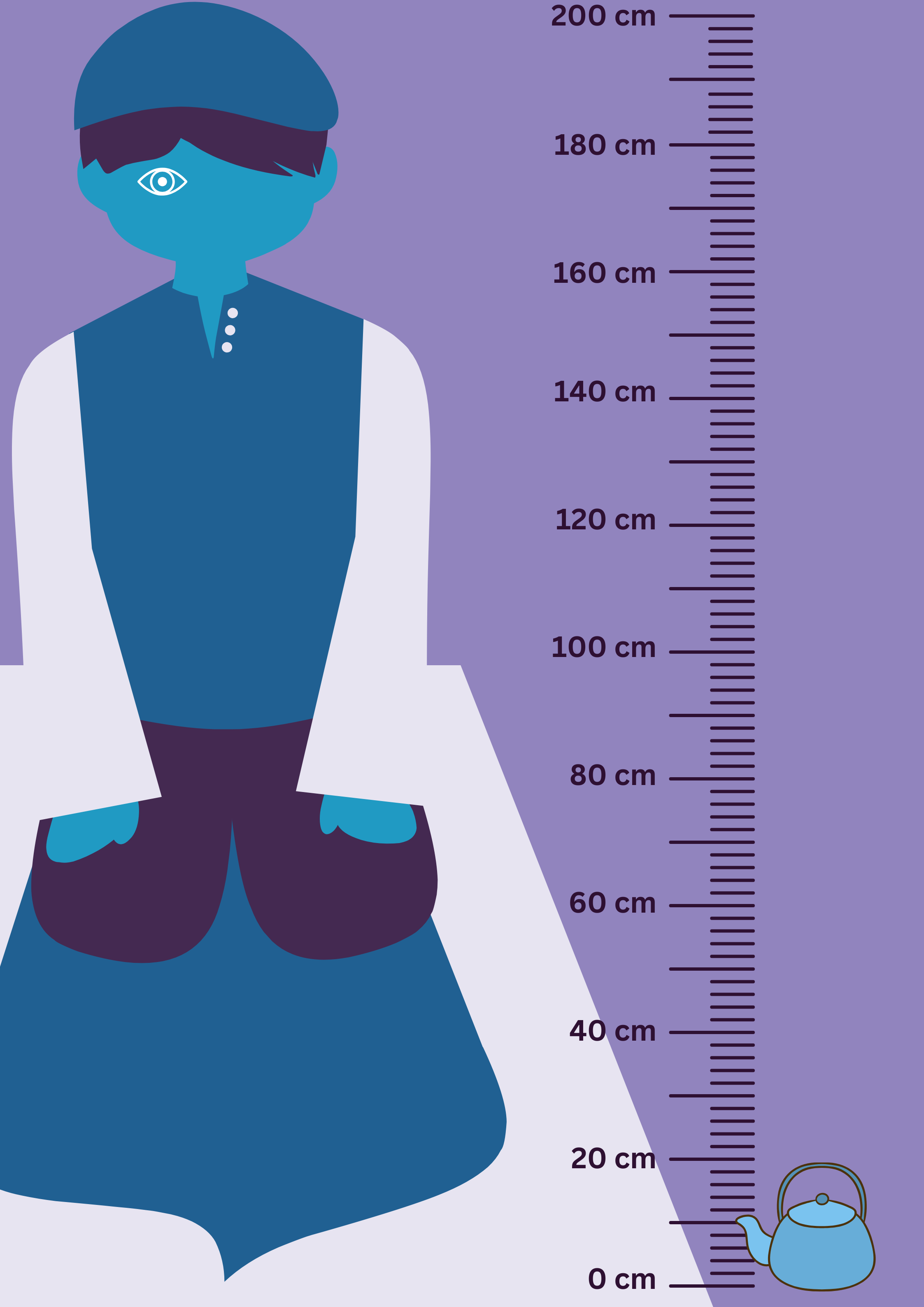
One of the most famous descriptions of the Cailleach comes from journalist and folklorist Donald Alexander Mackenzie. He called her Beira, Queen of Winter in his book Wonder Tales from Scottish Myth and Legend and said she was a giantess with blue skin, rust coloured teeth and one eye.
It’s worth noting though that Mackenzie wrote in English and didn’t cite his sources – which were Gaelic and went back much earlier than his 20th century publication.
This description of comes up time and time again, with some suggestions that her one eye symbolised abilities as a seer.
Irish scholar Gearóid Ó Crualaoich, who literally wrote the book(s) on the Cailleach, found her “pervasive” in medieval and modern sources. He wrote:
“An examination of Scottish material relating to a supernatural female bearing the names Cailleach Bheara/Bheur reveals a multitude of association between her and the forces of wild nature, especially the storms of winter, the storm clouds, the boiling winter sea.
“She is also, in the Scottish material, very much the spirit of the high ground, of mountain and moor and seen frequently to personify wildlife, for instance the life wellbeing and fertility of the deer herd.”
Carving of a deer with its faun on a Pictish Stone
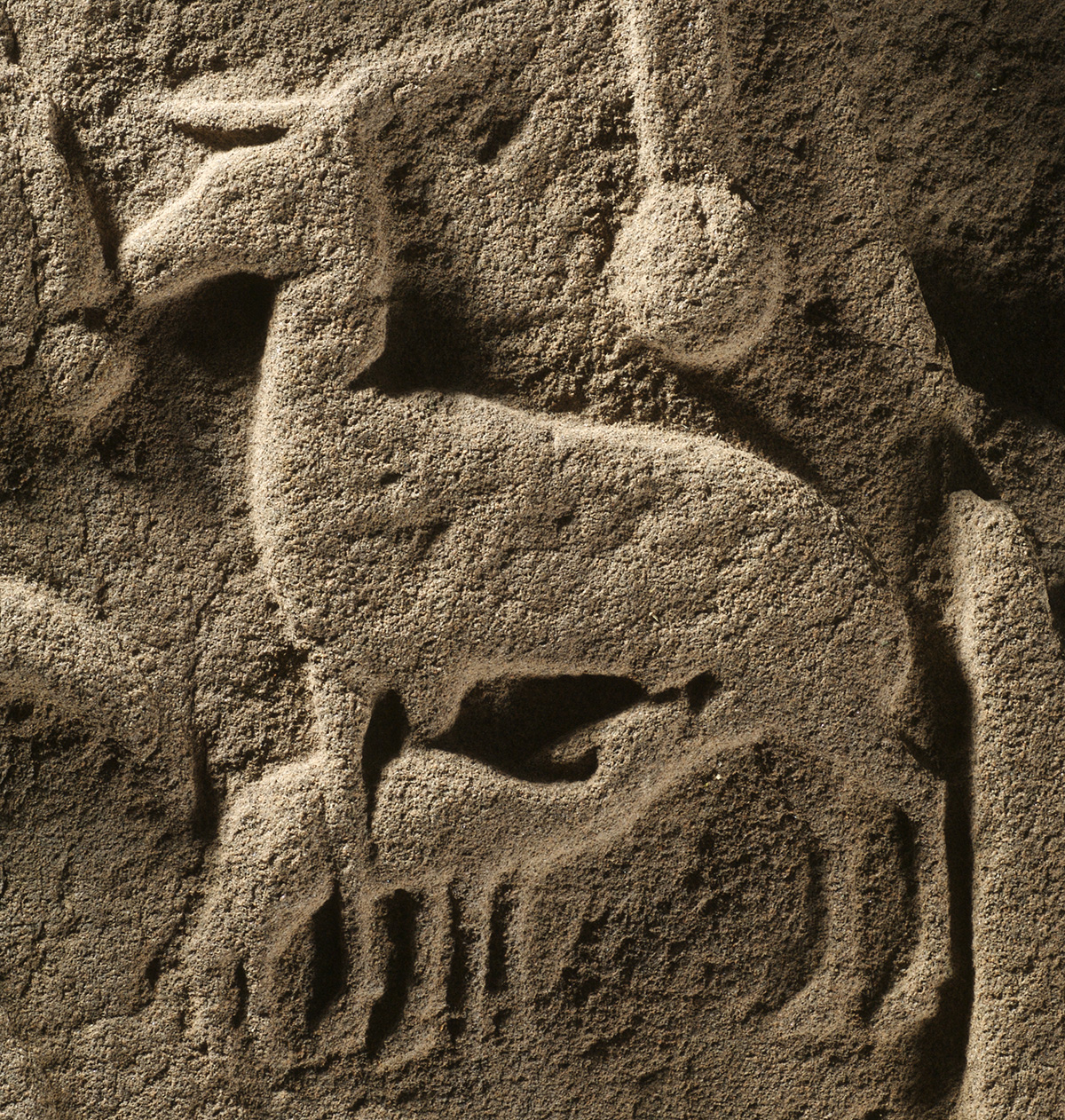
He goes on to say that she may have originated in Norse folklore.
She does have similarities with the Ice Goddess Skaði (Skadi) and in some stories, the Cailleach was said to have carried the rocks she used to form the Scottish mainland and Western Isles all the way over from Norway. (Obviously we know Orkney and Shetland were formed from the teeth of a gigantic sea serpent.)
What does the Cailleach do?
The main thread of the story is that Cailleach brings the winter to Scotland. Between Samhain and Beltane you feel her presence in the cooling of the air, whilst the first snow of winter is said to be her laying her cape across the land. Unless of course you subscribe to the version that she bangs her staff on the ground to bring ice and winter!
She’s also described as having formed most of the land in the first place. As she strode across Scotland, stones fell from her creel (or sometimes her apron) to form the mountains.
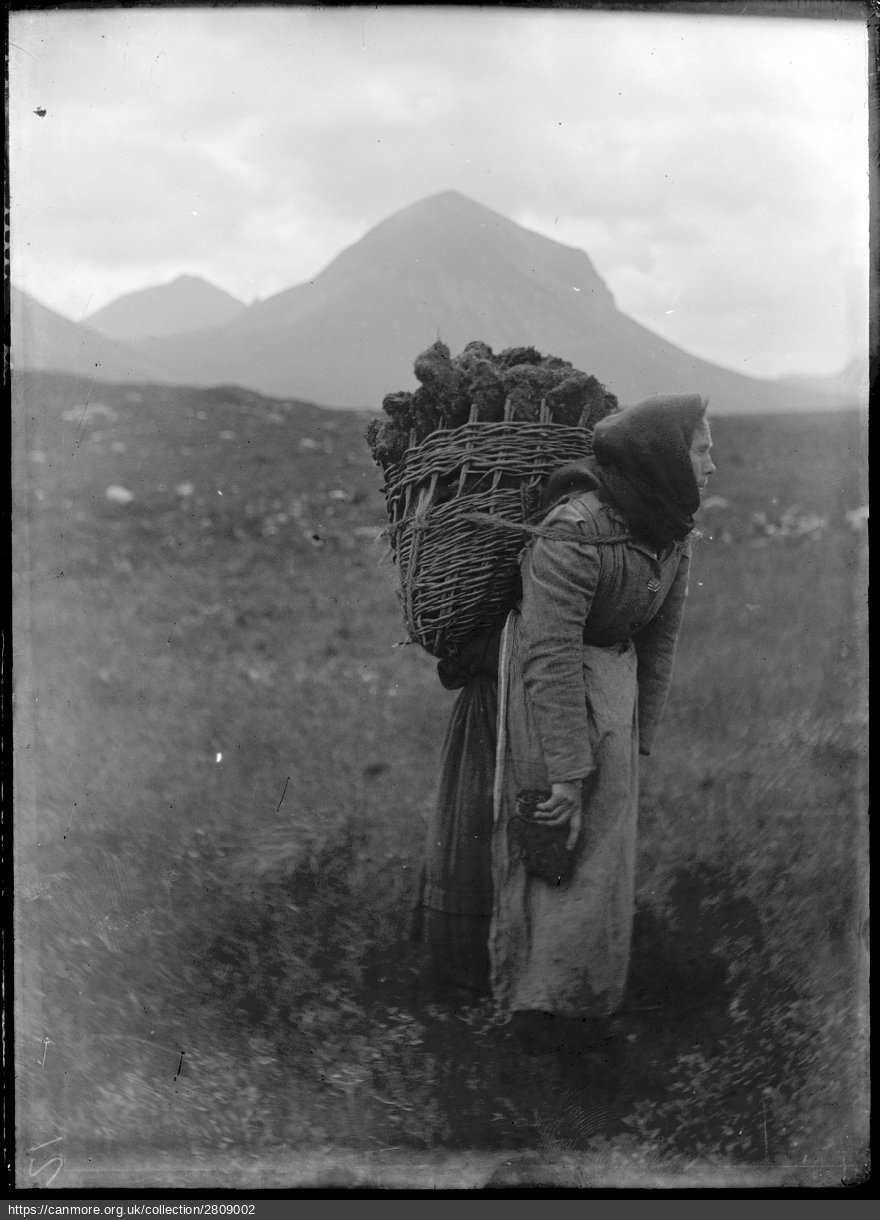
A woman carrying a creel, or wicker basket, on her back in Skye around 1905. Licensed by Scottish Life Archive. Zoom in on trove.scot
Alternatively, as storyteller Shona Cowie has it, she used her hammer of power to sculpt the mountains, the coastlines and the islands.
Part of her role is to look after the natural world. She’s often depicted herding deer, and protecting wolves in the cold winter months. She’s neither good nor bad, but a force of nature – albeit one locked in a never-ending war against Bride, the goddess of spring.
She was sometimes feared too, as winter could be a hard time for those living off the land. According to folklorist John Gregorson Campell in Superstitions of the Highlands & Islands of Scotland,
“The fear of the Cailleach in harvest made a man in Saor-bheinn, in the Ross of Mull, who farmed his land in common with another, rise and shear his corn by moonlight.”
Unfortunately, when he got up in the morning, it transpired he’d cut his neighbour’s corn by accident!
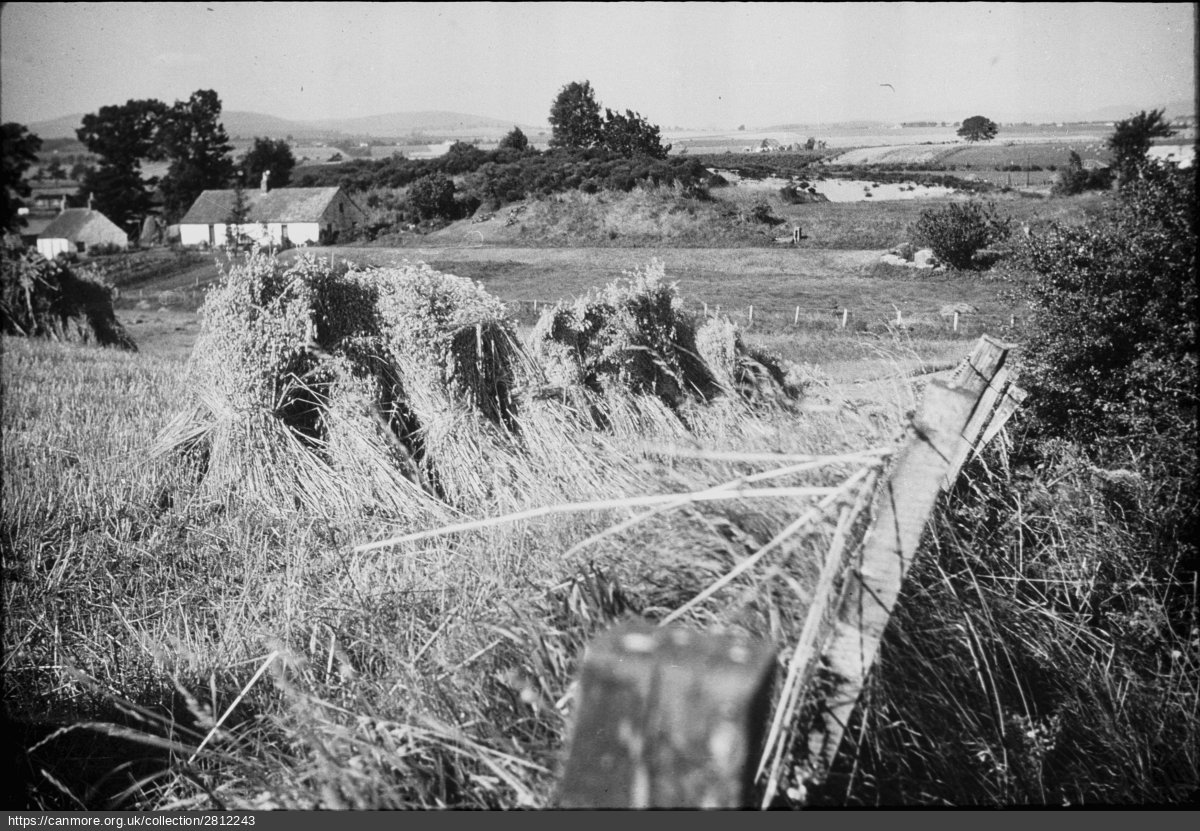
Stooks of corn lined up in a field at Roundyhill, Glamis. © Licensed by Scottish Life Archive. Zoom in on trove.scot
Honourable Mentions
John Francis Campbell wrote a tale concerning ‘the Old Woman or Witch of Jura’ in Popular Tales of the West Highlands, a cailleach with a magic ball of thread she could use to draw people towards her.
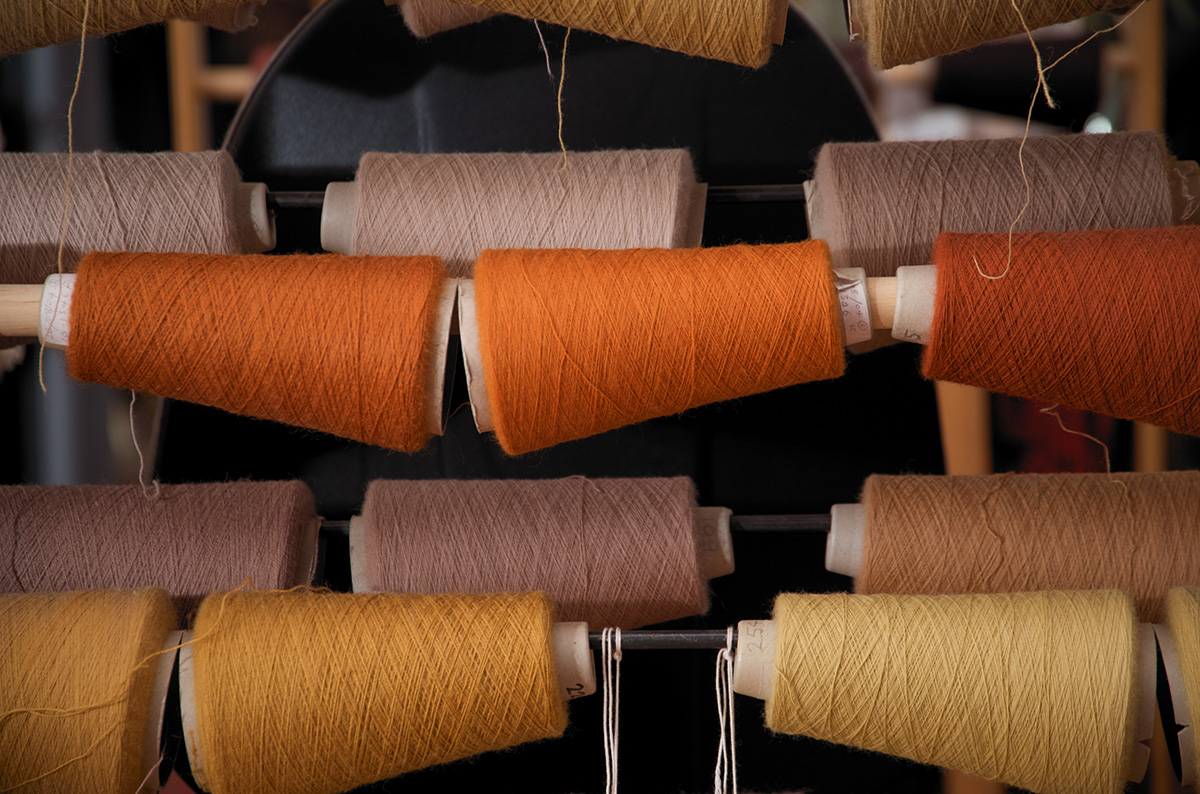
As far as we know none of these are magic
The plural ‘Cailleachan’ refers to the storm hags – including the goddess of thunder and Muilearteach the sea hag.
In Superstitions of the Highlands & Islands of Scotland, John Gregorson Campbell writes of the ‘Carlin Wife of the Spotted Hill’.
This fairy woman was known to have owned the deer of Ben Breck, and one hair from her head was strong enough to tie a dog. At the time of writing, though, she had aged somewhat and “instead of being ‘broad and tall,’ she had become no bigger than a teapot!”
Tobar an Dualchas (a fantastic resource full of songs, music and history) have a recording of a song about this incarnation.
In ‘Cailleach Beinn a’ Bhric Ho Rò, Skye native Margaret Ross sings of how the Cailleach roamed from glen to glen to find out which one was the best, and how her deer herd preferred to eat the water cresses of the hills.
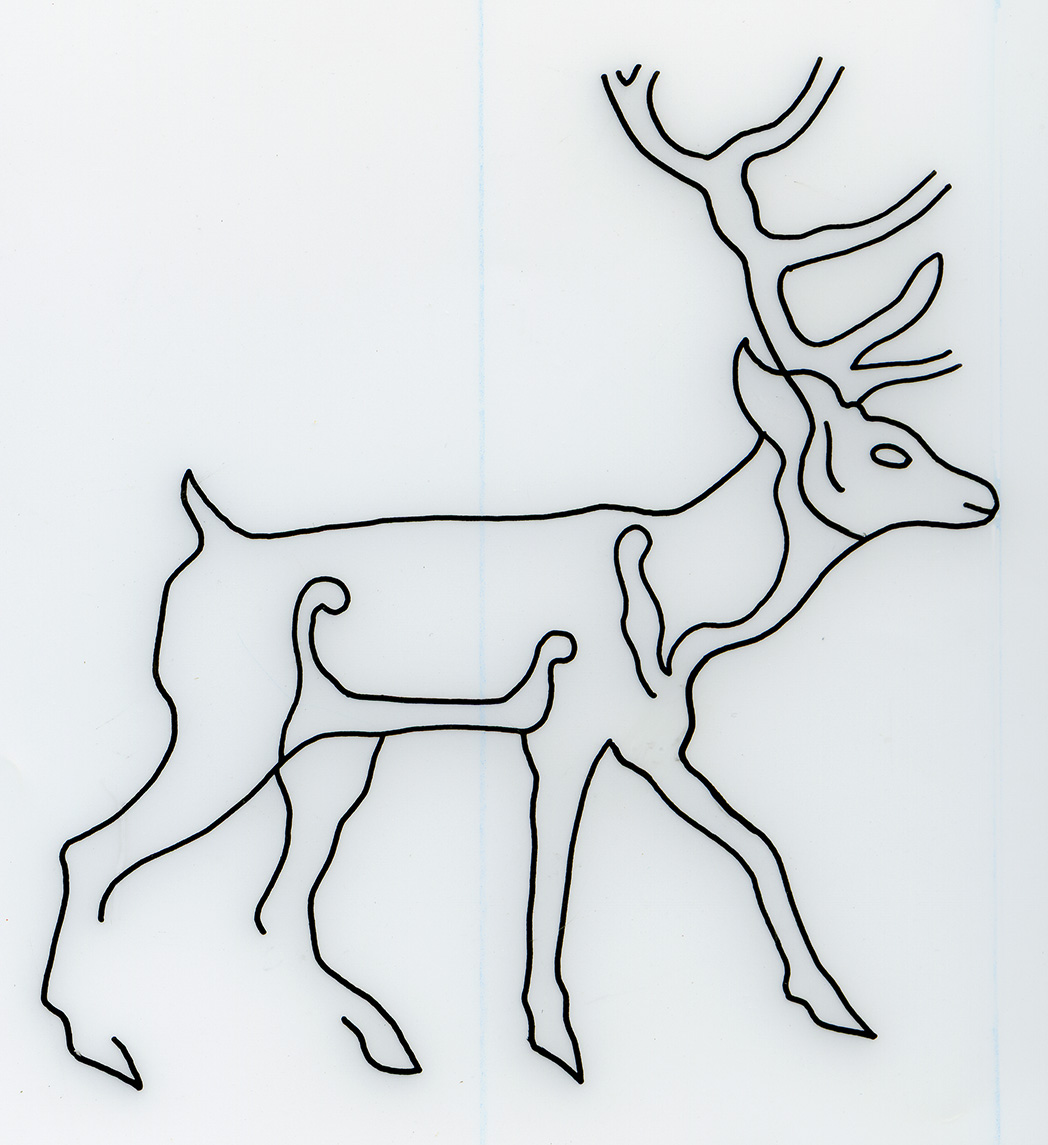
Pictish design showing a deer – possibly on its way to enjoy the water cresses of the hills
Another one from Gregorson Campbell is the tale of the Cailleachan-sìthe (kal-yuch-in she-uh).
“A person in Mull reported that he saw several of these fairy women together washing at a stream. He went near enough to see that they had only one nostril each.”
Sightings of these fairy hags on Campbell’s home turf of Tiree were meant to have taken place at streams and pools of water in multiple locations.
Places of the Cailleach
Given the sheer volume of stories, it’s no wonder half the country has a place associated with the Cailleach.
Corryvreckan
Coire Bhreacain, or the Gulf of Corryvreckan, is a whirlpool between the islands of Jura and Scarba.
Here is famously where the Cailleach is said to do her washing. Once her huge shawl is clean, a job that takes up to three days, she lays it over the land and this is the first snow of winter (nobody tell the Met Office).
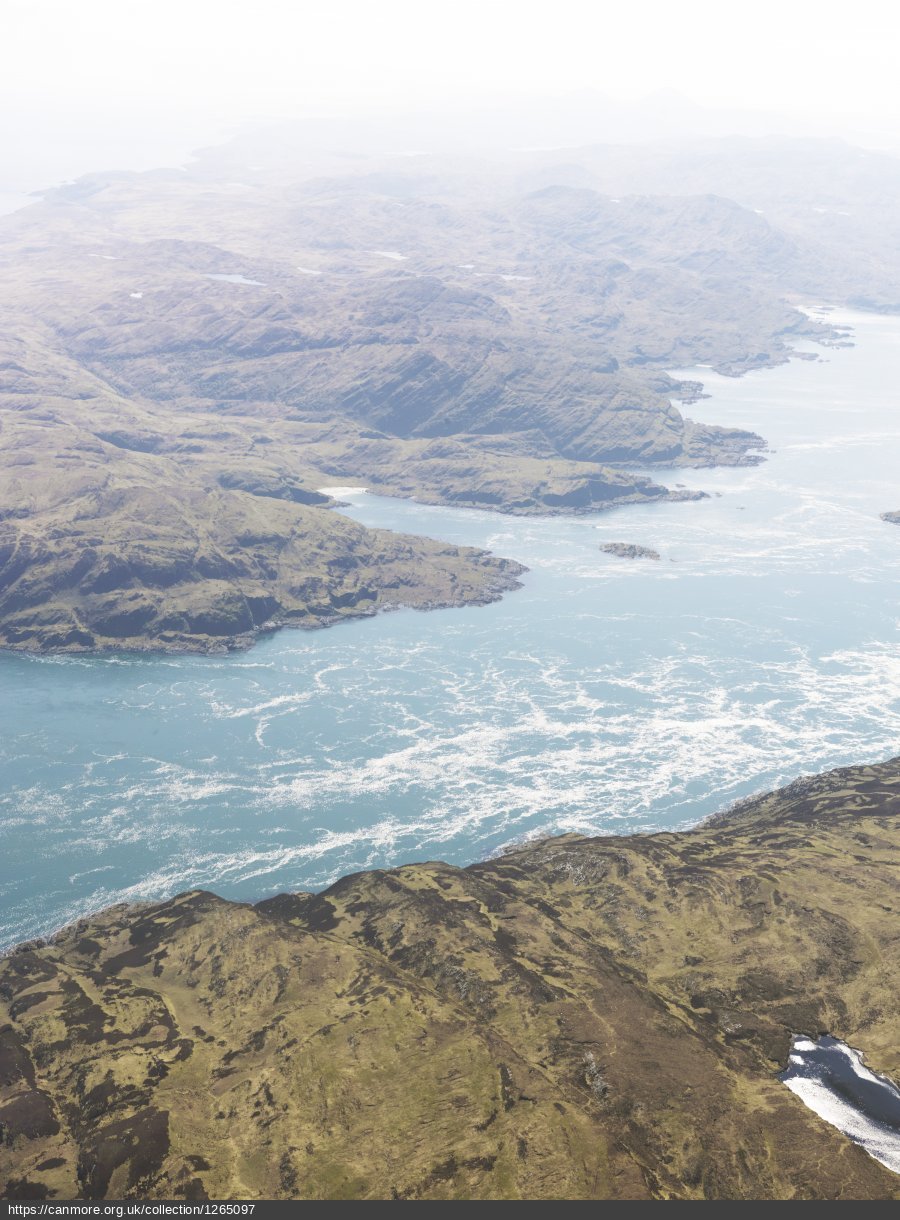
Aerial view of the whirlpool at Gulf of Corryvreckan – zoom in on trove.scot
Tigh Na Bodach
The earliest known reference to Tigh Na Bodach, House of the Old Man, is in 1888 in The book of Garth and Fortingall: historical sketches relating to the districts of Garth, Fortingall, Athole and Breadalbane.
This stone shelter in Glen Lyon has a number of weathered stones which resemble human forms. As there are 12 of these, it could be that they are associated with St Meuran and his eleven disciples.
But for our purposes in this post, this structure should rightly be called Tigh nan Cailleach, or ‘House of the Old Woman’. The biggest stone represents the Cailleach herself, whilst some of the stones represent the Bodach (one of her husbands) and their children.
There is a local tradition that the family are moved out of the house for the summer months at Beltane in May, then returned inside for the winter. This recognises a tale where, after being offered shelter in a storm, the Cailleach promised to make the glen fertile as a thank you.
Ben Cruachan
Ben Cruachan in Argyll and Bute may be where the Cailleach sleeps. There’s a story that she used to guard a fountain there, covering it over with a stone at night and lifting it in the morning.
Until one night she overslept, the fountain overflowed, and the water burst forth to create River and Loch Awe!
She was apparently punished for this, but it was arguably good news for the future of hydroelectric power in Scotland. Given her ability to see the future, maybe she was thinking ahead to the 1960s development of the A Listed Cruachan Power Scheme…
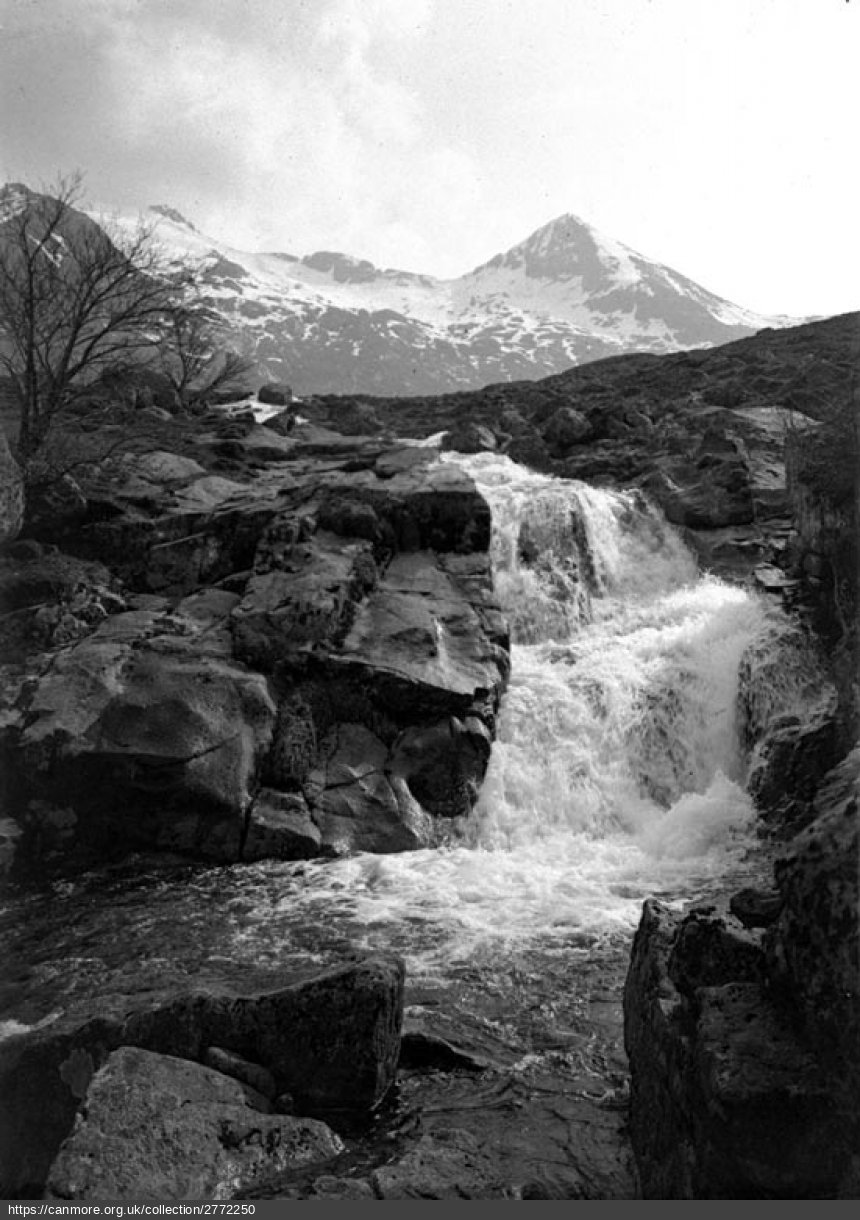
Waterfall, Ben Cruachan © Licensed by St Andrews University Library – zoom in on trove.scot
Beinn na Cailleach
In one account of the Battle of Largs, there is a mention of King Haakon of Norway and crew sailing “to Rona, and thence into the sound of Skye, and lay there at a place called Carlineston (now Cailleach stone, where the Gaelic “cailleach” has replaced the Norse ” Kerling”).
This seems to refer to Beinn na Caillich (or Cailleach), Hill of the Old Woman – a mountain near Broadford on the Isle of Skye. A cairn at the top supposedly marks the burial spot of a Norwegian princess.
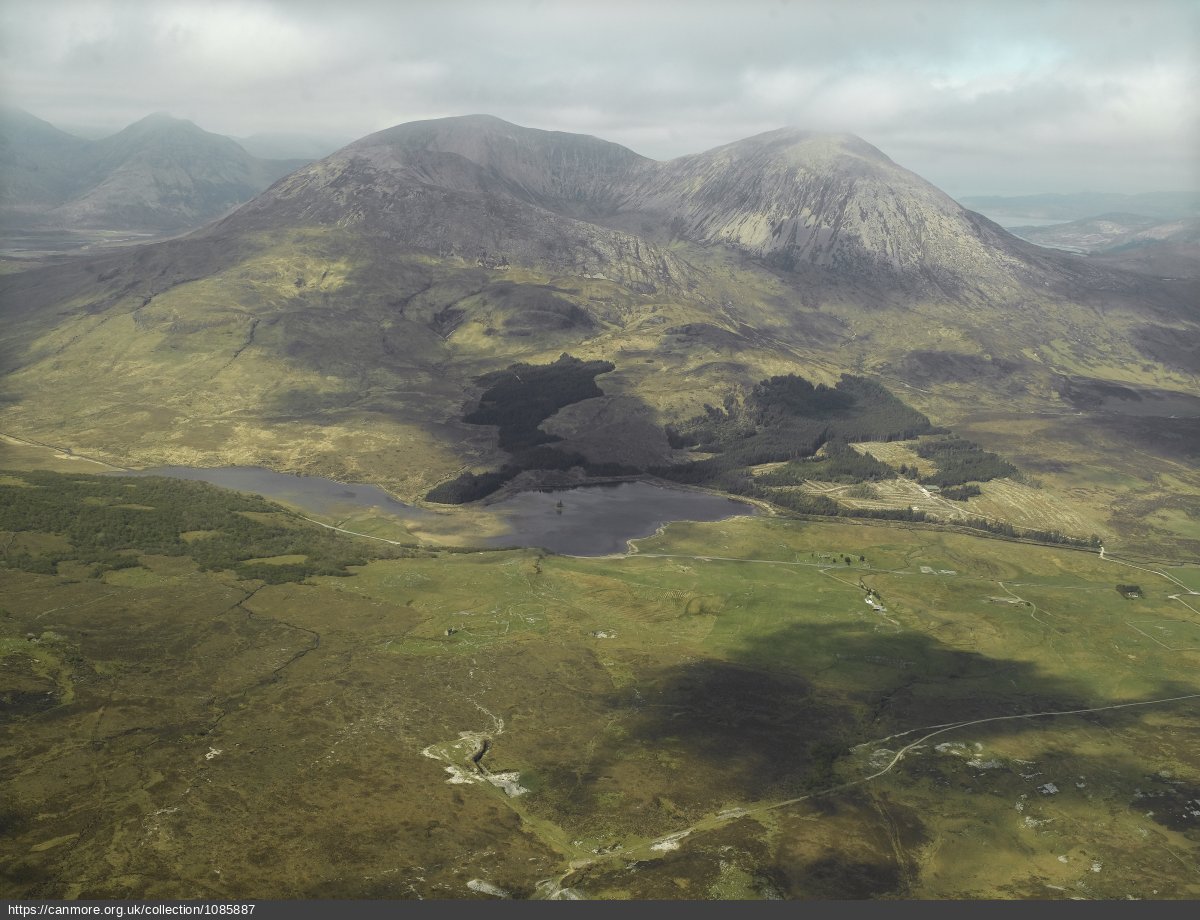
Aerial view of Beinn na Caillich and Beinn Dearg Mhor, taken from the south.
How to Pronounce Cailleach (and associated phrases)
We asked our Gaelic Language Policy Manager for a few tips on pronunciation. When you see a ‘ch’ remember it’s a soft sound, as in ‘loch’.
- Cailleach: ‘Kal-yuch’
- Cailleach Bheurra (master of winter): ‘Kal-yuch Vay-ruh’
- Coire Bhreacain (Corryvreckan, where she washes her giant plaid): ‘Caw-ruh Vrechk-een’
- Tigh nan Cailleach (House of the Old Woman): Tuh-ee Nun Cal-yach
- Tigh nam Bodach (House of the Old Man): Tuh-ee Num Bot-uch
- Bealltainn (Beltane festival): Be-yall-teen
- Samhain (Hallowe’en): Sa-ween
Cailleach in Culture
Imbolc (later St Brigid’s Day), the Gaelic festival at the start of February, is when the Cailleach gathers wood for the rest of winter.
Some sources say La Fheil Cailleach on 25 March marks the day that spring returns and the Cailleach retreats until the following winter.
The 1978 Doctor Who story Stones of Blood makes her a big alien bird creature. This could be inspired by a story from the Isle of Man, where she was said to appear on St Bride’s Day as a bird carrying sticks in her beak.
In 2021, Scottish writer Kirsty Logan re-imagined the tale of the Cailleach for us in
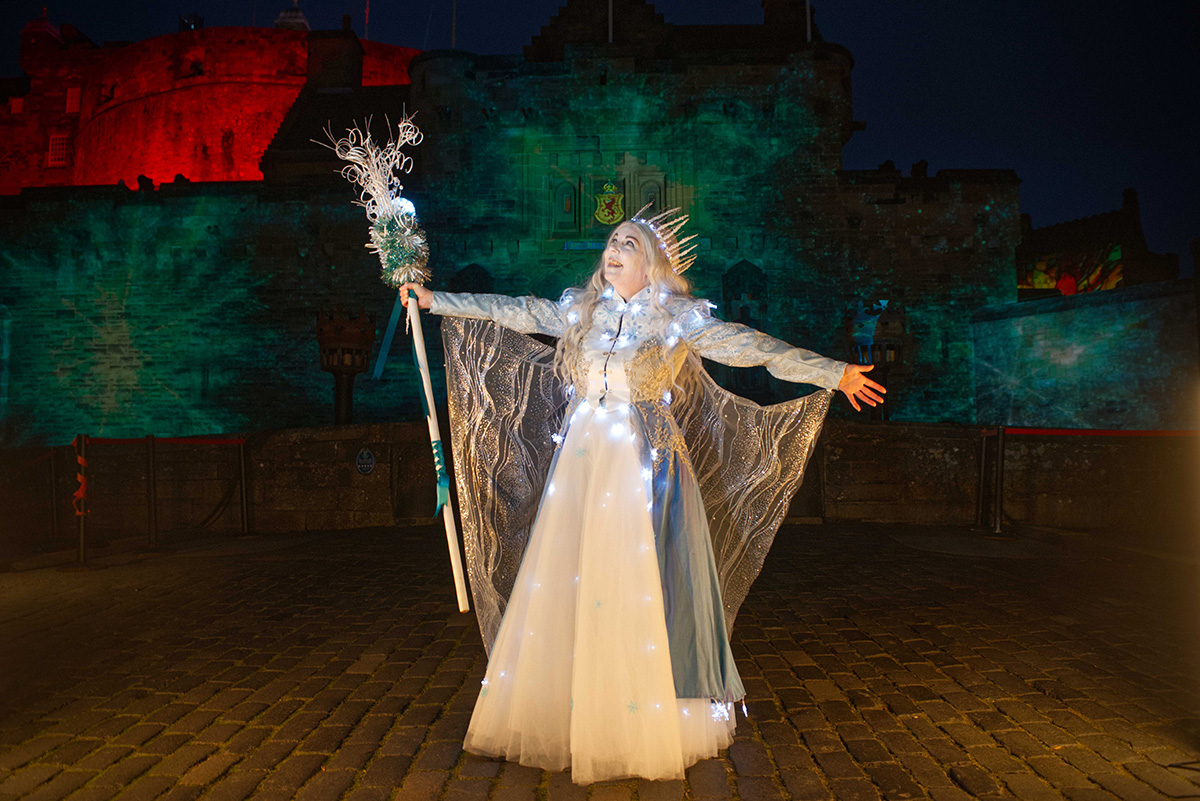
Our Ice Queen at this year’s Castle of Light event at Edinburgh Castle took inspiration from the Cailleach to design her costume.
Share
About Author