Scotland has a wealth of prehistoric sites, from burial monuments to settlements. Although many are well-known and well-studied, sometimes new sites come to light and surprise us all. This is the story of three newly discovered monuments from Scotland’s prehistory that have now been recognised as monuments of national importance.
The story begins at the end of 2024. A member of the public asked us to consider legally protecting three recently discovered prehistoric sites in Perth and Kinross as well as East Lothian: a barrow, a fort and a settlement.
All three are impressive earthwork monuments which had somehow escaped archaeological detection until now. Discoveries of previously unknown, well preserved prehistoric sites are uncommon, especially in regions where the archaeology is well-known and well-studied. So how had they remained hidden for so long?
Scotland’s Prehistory Hiding in Plain Sight
Sometimes, all it takes is someone looking at an area in a new way. New digital archaeological techniques offer different ways of looking at our landscape. One technology is Airborne Laser Scanning (ALS), also known as lidar. It uses laser pulses to measure and map the earth’s surface, creating 3D maps.
These 3D maps can show subtle features that are not easy to see on the ground. They can also model the ground surface beneath areas of woodland or thick vegetation. Archaeological features that would otherwise be hard to spot and understand suddenly become clear, and previously hidden sites are brought out into the open.
Using publicly available 3D mapping, an eagle-eyed member of the public spotted our three sites. With these brought to our attention, we had to visit the sites by foot. Seeing them up close allowed us to look in detail at how they fit into their wider context and surroundings.
The Bronze Age barrow
The first site is an early Bronze Age barrow from 2500 BCE – 1500 BCE, located northwest of Perth. Barrows are earthen burial mounds. They were built up over one or more initial burials and vary greatly in size and scale. They can range from very large monuments to smaller, more compact, mounds.
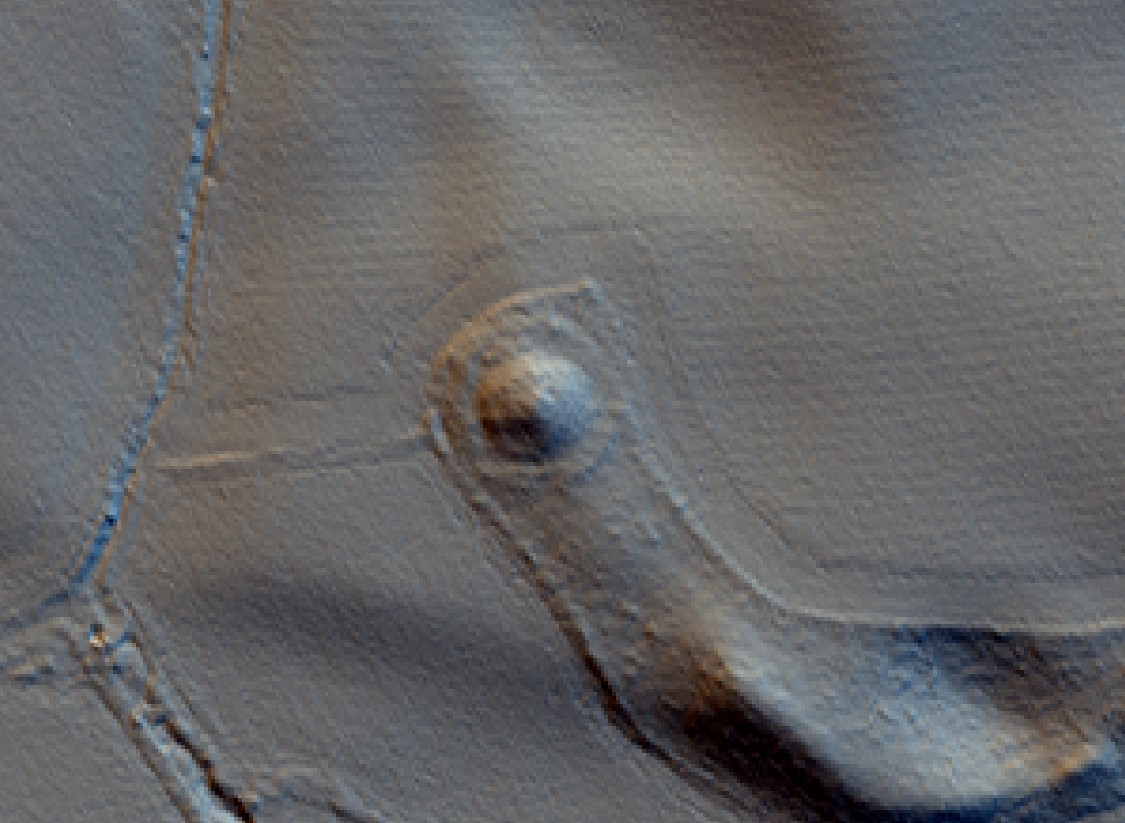
Lidar image of the barrow. (Contains public sector information licensed under the Open Government Licence v3.0)
This barrow is an impressive monument on a large scale, measuring about 30m in diameter and standing up to 5m high. Given its position in a patch of woodland crisscrossed with paths, it is remarkable that it has escaped attention until now. In fact, it is possible this monument was recognised in the past but was later ‘lost’.
The New Statistical Account, published in the mid-19th century, notes ‘cairns’ near a recently determined fort around 400m to the south of the barrow. Later, in the early 20th century, the Ordnance Survey could not find these ‘cairns’. As the terms ‘cairn’ and ‘barrow’ have often been used interchangeably between stone and earthen mounds, could our barrow be one of them? We’ll never know for sure, but it’s possible that this barrow is a ‘lost’ monument that has only recently been rediscovered.
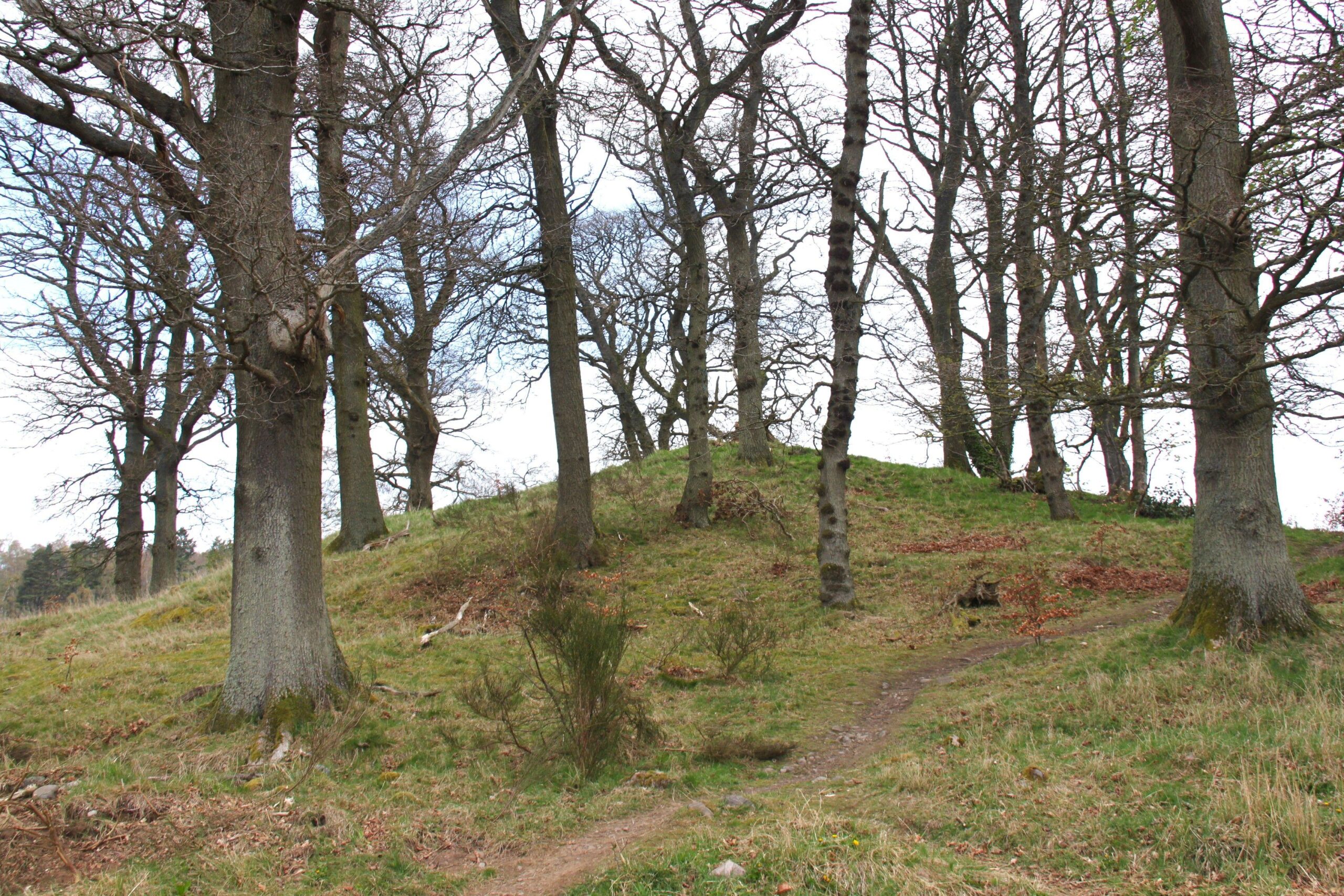
The barrow from the southwest (DP499790 © Historic Environment Scotland). Find out more about this monument on trove.scot.
The Iron Age fort
The remains of this fort are much less striking than the barrow but even so they are no less significant. Situated north of Crieff, the fort probably dates to the Iron Age, around 800BCE – 400 CE. Forts like this were defended settlements that could have accommodated an extended family or small community.
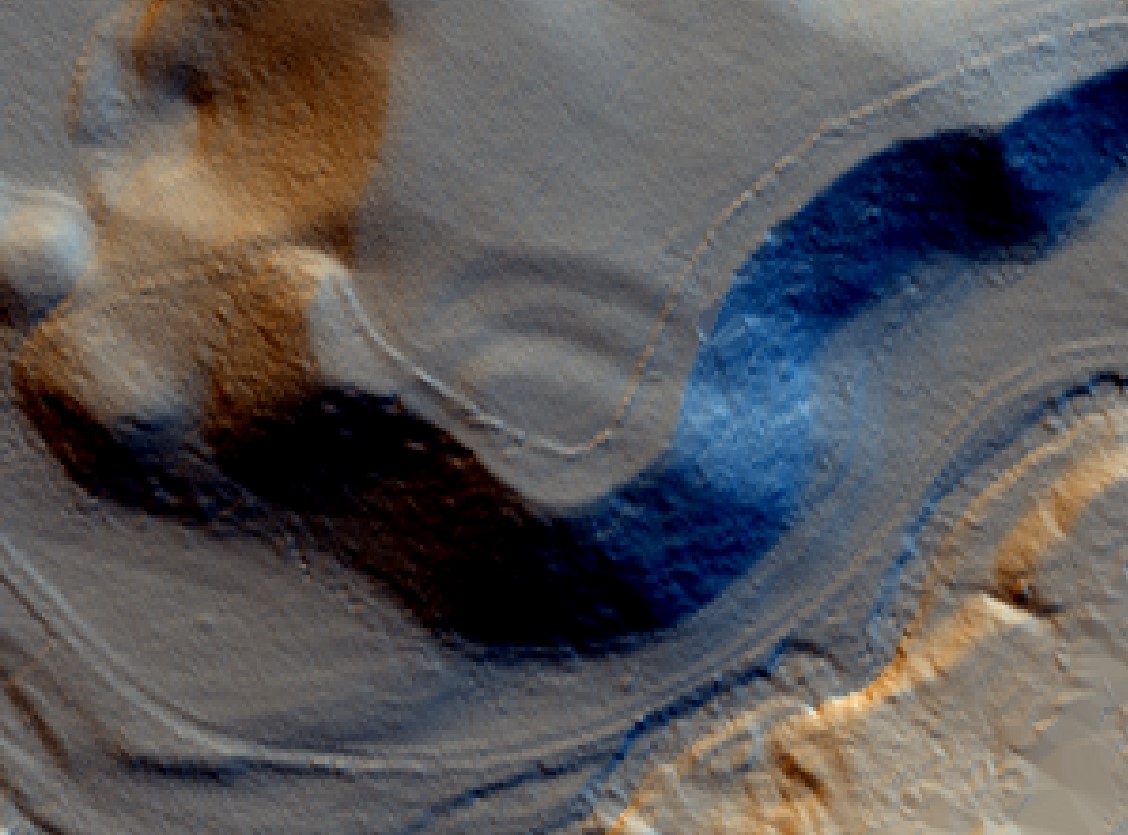
Lidar image of the fort. (Contains public sector information licensed under the Open Government Licence v3.0)
The Iron Age settlement
The settlement at Big Wood, near Pencaitland in East Lothian, was probably occupied at a similar date to the fort near Crieff. However, it is much larger and enclosed within only one bank and ditch. It seems the woodland which surrounds it has hidden it from archaeological eyes until now.
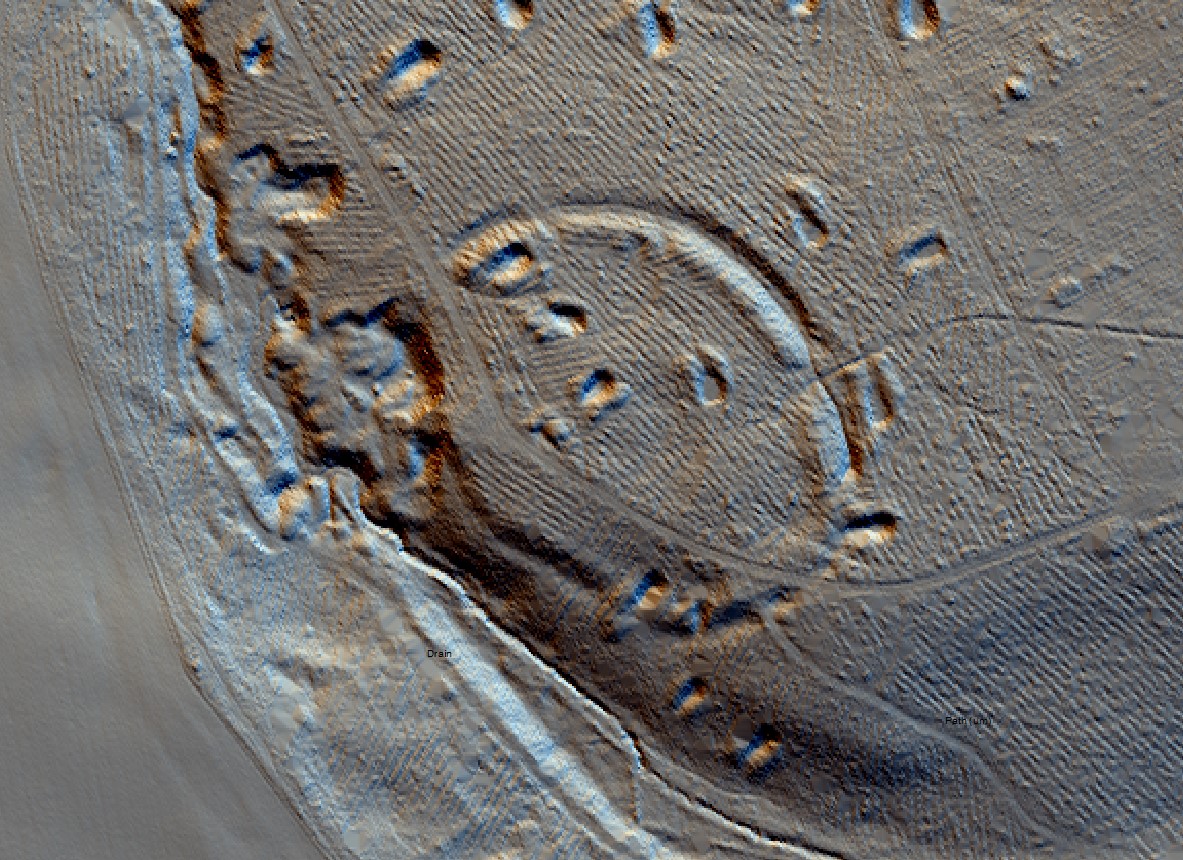
Lidar image of the settlement. (Contains public sector information licensed under the Open Government Licence v3.0)
Rediscovering More of Scotland’s History
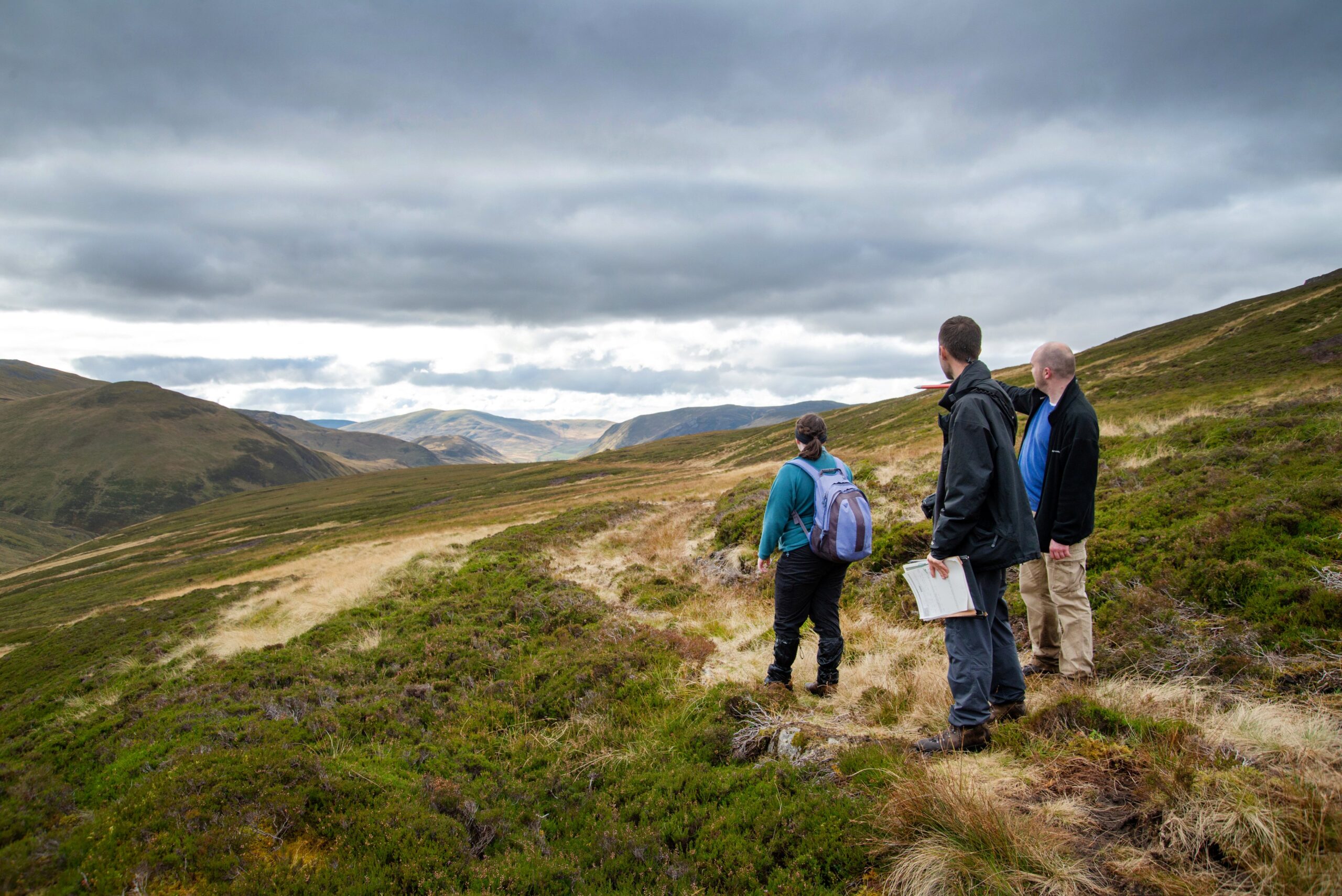
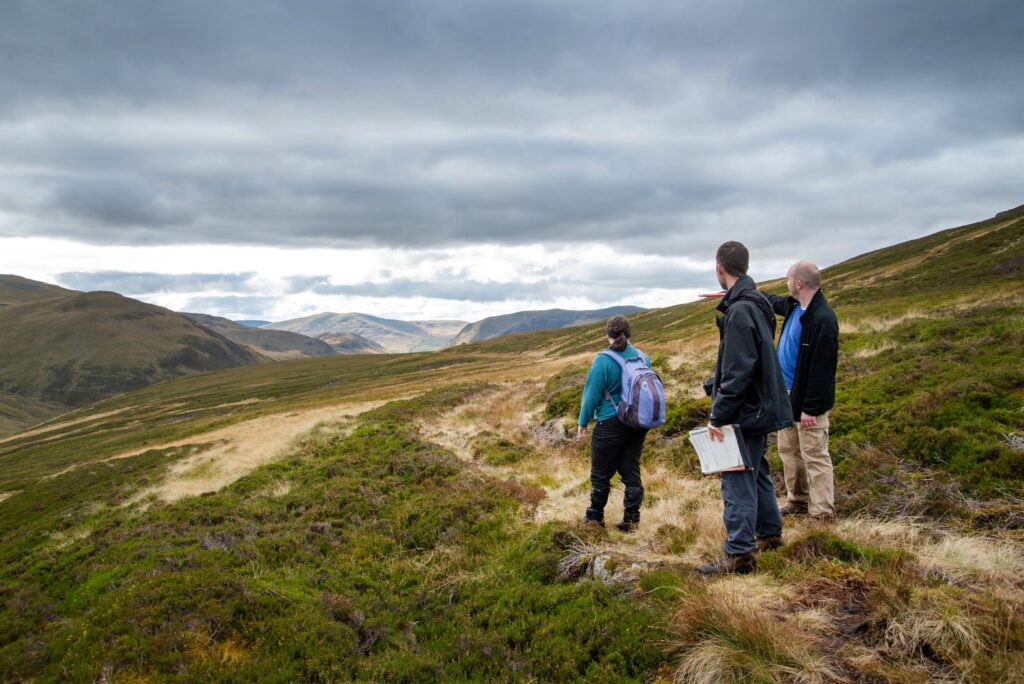
The Designations team completing fieldwork.
After visiting the locations, doing more research and comparing them with similar places, we confirmed these are culturally significant sites. All three are remarkably well-preserved examples of their type. We have recognised their national importance through scheduling. They are now protected under the Ancient Monuments and Archaeological Areas Act (1979), meaning these rediscovered pieces of Scotland’s story will be safeguarded for the future.
Could you add to our knowledge of the past? It’s vitally important that members of the public take time to ask us to look at sites and buildings. This is, after all, everyone’s heritage! Anyone can propose a building or site for designation as a scheduled monument, listed building or another of our designations. You can also ask us to review existing designations or correct errors in existing records. All you need to do is head over to our website and fill in an application form and send it by email to designations@hes.scot.
Interested in digging into more archaeology? Discover more stories of the ground beneath our feet on our blog, from Holyrood Park to Orkney!
Share
About Author