Scotland has a rich heritage of being a pioneering football nation. However, many places linked to that story are not widely known or recorded. We are excited to launch a project exploring Scotland’s important football heritage places. The first stage of the project involves you! Read on to explore some of the Scottish football heritage we’ve recorded and protected, and how you can help us expand our knowledge of locations throughout the country that have helped shape the game.
Summer of Fitba’
It’s almost a certainty that anyone living in Scotland, or with even a distant interest in our small country, will know the Scotland national football team are back in the World Cup Finals – the first time since 1998! Football is our national sport and obsession. We have the highest average weekly attendance (per capita) of top-flight league games in the whole of Europe! Some say football is in our blood and we say it’s definitely in our history.
Turning back the clock
The oldest association football club in Scotland is Queen’s Park FC, established in 1867. This famous club constructed and developed the first purpose-built football ground in Scotland. This is now a scheduled monument, which you can find out more about on our blog. Not only that, the club also birthed the regular international football match, and helped establish the Scottish Football Association and Scottish Cup. On the field, the historic club are seen as the first developers of the passing game – the modern game of football we know today.
This tiny snippet of football history, of one club, in one part of Glasgow, gives you an idea how much the Scottish game influenced the world of football. There are also many other clubs, places and people associated with important aspects of our football heritage.
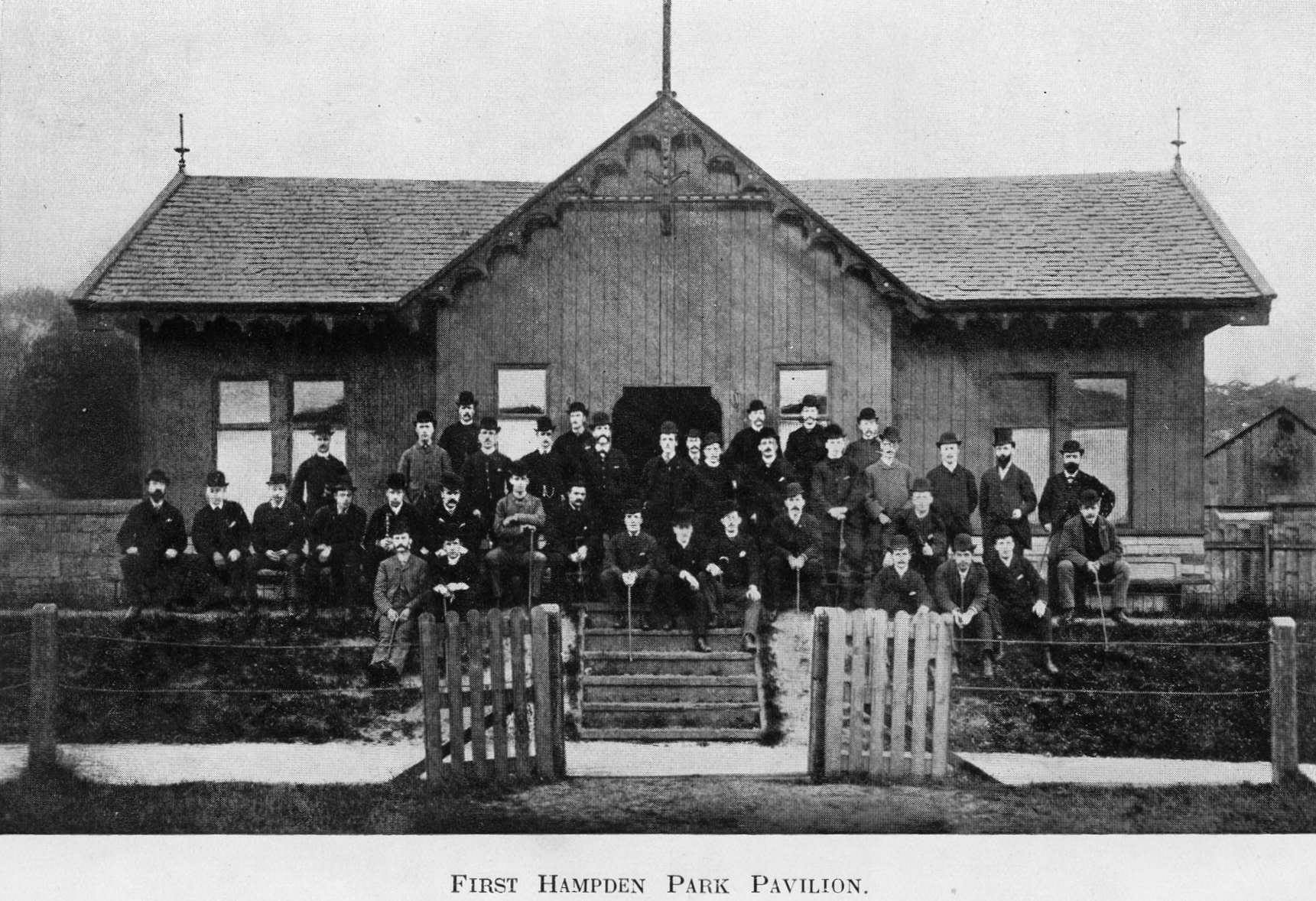
The opening ceremony of the pavilion at First Hampden (1878). Courtesy of Queen’s Park FC archives.
Knowing the score
As the lead public body for heritage in Scotland, we are responsible for upgrading the National Record of the Historic Environment (NRHE – a vast record of places related to our built heritage available on Trove). We are also responsible for designating protected historic places, such as listed buildings and scheduled monuments. When we look at the NRHE records and our lists of protected historic places, there is an under-representation of football heritage. We would like to improve our NRHE records of football places such as the established football grounds or historic sites directly related to football. Historic protected places are even more limited, with just a handful of football-related places protected by listing and scheduling. Our Scottish football heritage project will help us represent these places more and improve our records.
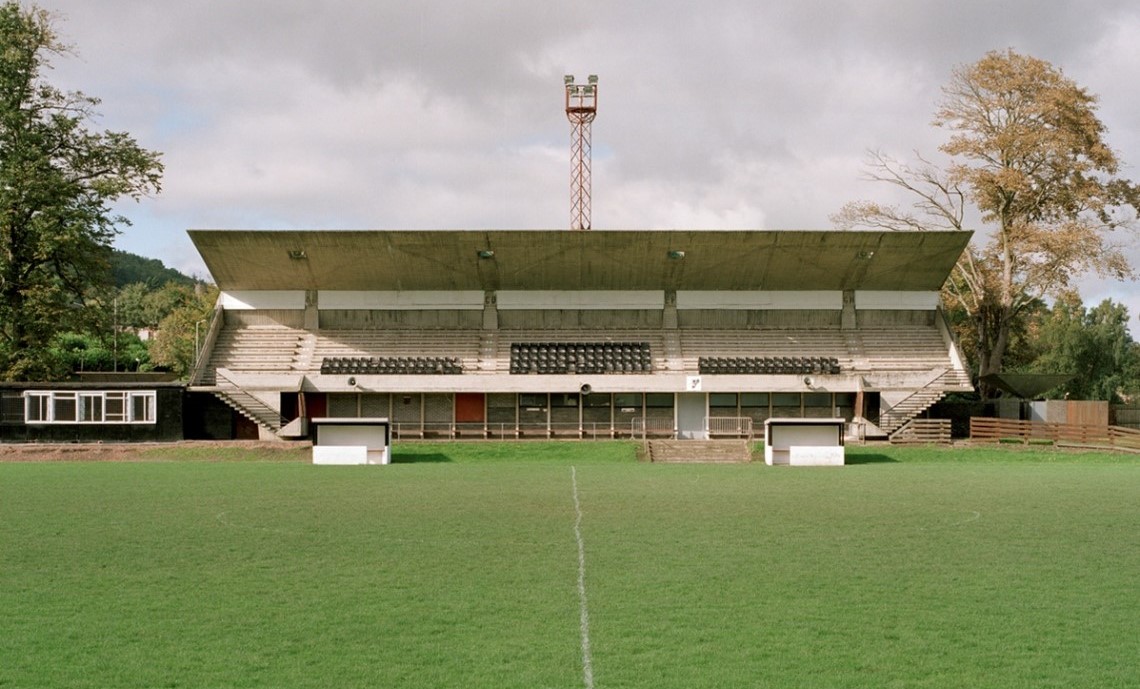
The category A Listed stand for Gala Fairydean FC, built 1965 (copyright HES: SC1117794).
Making the tackle
To tackle the task of improving our records, we need you! We are asking anyone with an interest in, or knowledge of, football to let us know about important football heritage places in Scotland. We are running an online survey through the Summer of 2026 to gather information on places we should investigate. We’re anticipating a high level of interest, based on the feedback levels and excellent public engagement in our recent work for Cathkin Park and the First Hampden Pavilion. We will consider all of the suggestions we receive, and our aim is to look into as many places as possible to significantly improve our records and assess some for possible designation.
Our recent highlights
We recently ran a project focussed on some football heritage related places in the southside of Glasgow. This gives a taste of the work we have done, and what we are hoping to do, to improve our football heritage records across Scotland. Here are a few highlights and why we think these places are important in our football heritage.
Cathkin Park
The famous former home of Third Lanark FC and a survival of the type of football ground no longer seen. The site was originally the second home of Queen’s Park FC before being purchased by Third Lanark in 1903 and completely redesigned. The remains of the concrete terraces date from the mid-20th century and are a reminder of days-gone-by when tens of thousands of fans stood on packed terraces cheering their team. Cathkin Park was designated as a scheduled monument in 2024.
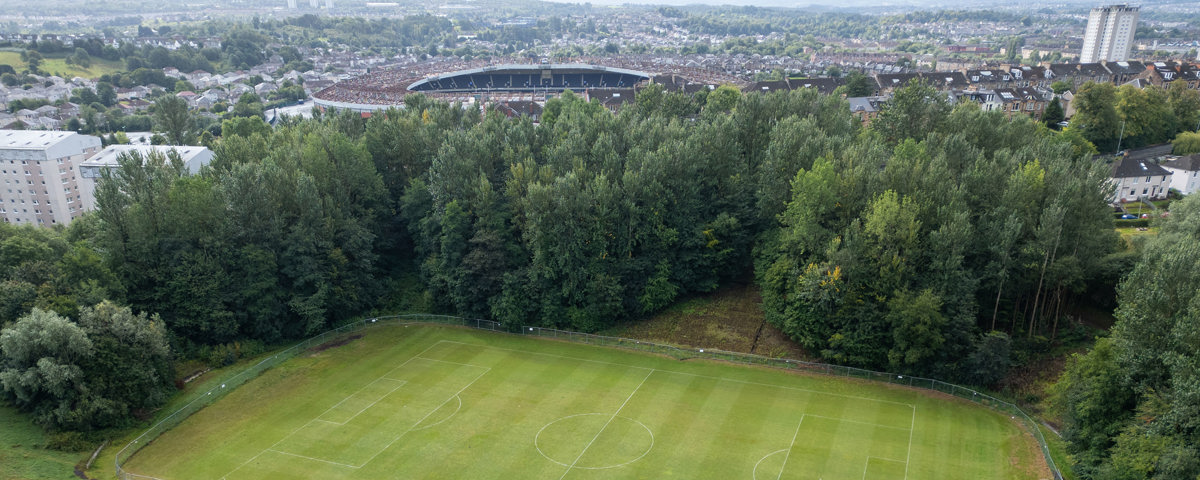
Aerial view of Cathkin Park, Glasgow – former home of Third Lanark FC.
Hampden Bowling Club
For the past 150 years or so, Lawn Bowls has traditionally been one of Scottish working men’s most popular pastime. There have been 87 private bowling clubs in Glasgow and the Hampden Bowling Club joined that list in 1905, established on the original site of Hampden Park, the first home of Queen’s Park FC. The bowling club house was constructed in 1905 and then extended a number of times to provide a club room, changing and washing facilities and a bar. It typifies where many Glasgow workers have spent their free time, however Hampden Bowling Club closed in early 2026 – reflecting the fact that these historic places are becoming a rarer sight in the cities and towns of Scotland.
We surveyed the building in 2025 to add information to the bowling club’s NRHE record, and will be describing this work in more detail, so watch this space!
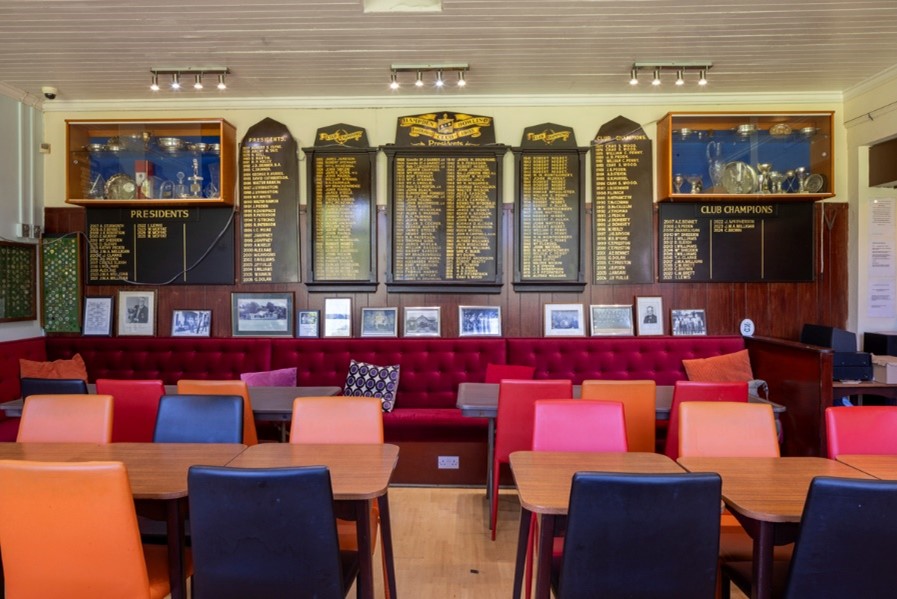
The interior of Hampden Bowling Club.
Rose Reilly Pub
First opened as the Hampden Bar, this traditional licensed premises sits on the ground floor of a Victorian tenement in the southside of Glasgow. Often frequented by football fans as a place to meet and socialise, the pub was recently renamed in dedication of one of Scotland’s greatest footballers – Rose Reilly. Rose had an outstanding playing career in Italy and played five times for Scotland, including the first ever women’s international in 1972. She also was part of the Italian National Women’s Football team, winning the “Mundialito” tournament in 1984. Rose Reilly was inducted into the Scottish football hall of fame in 2007. We recently reviewed and updated both the listed building record and the NRHE record to reflect the links and new dedication to Rose Reilly. Find out more in our LinkedIn article.
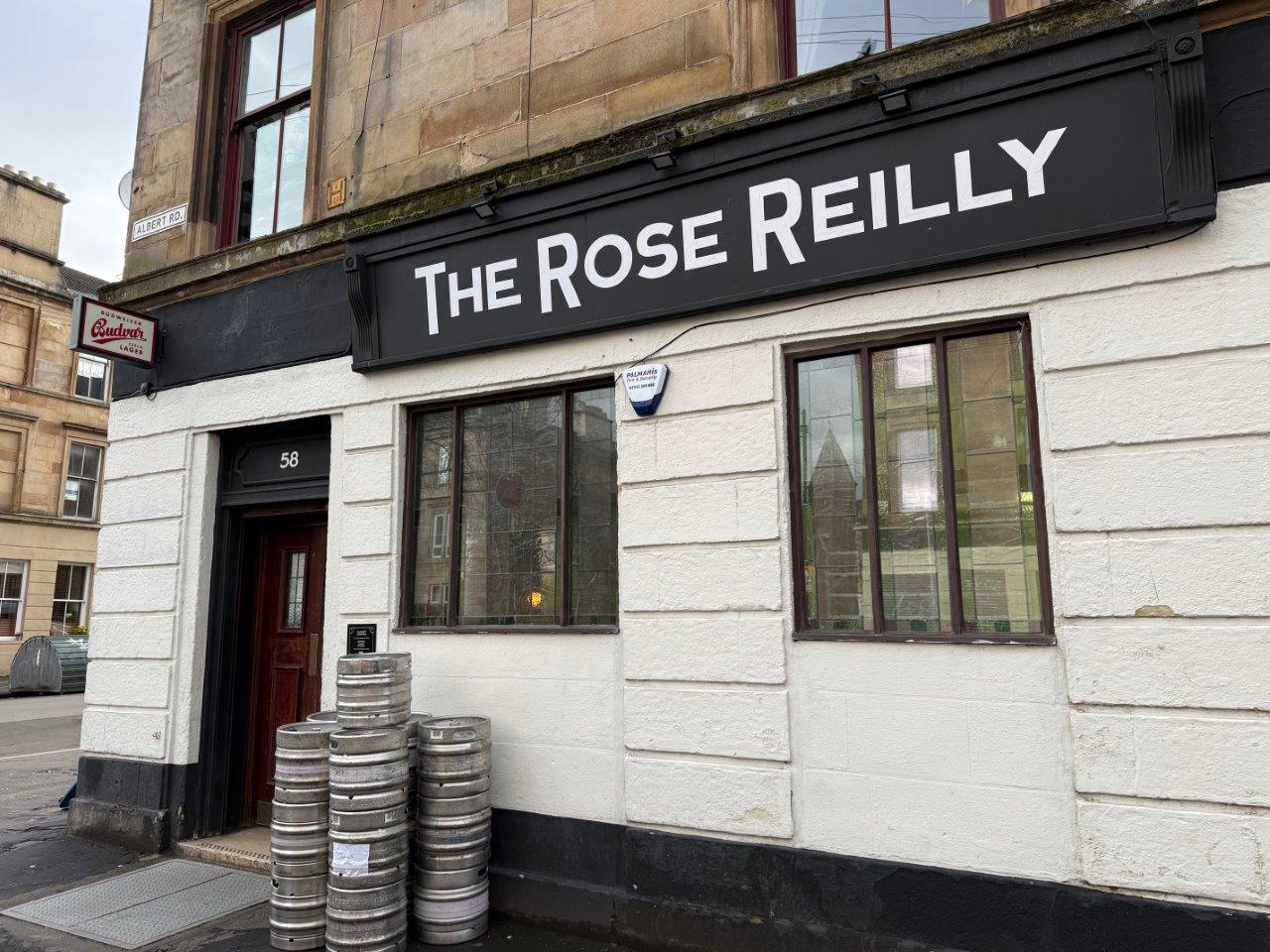
A traditional Glasgow pub named after a famous Scottish footballer!
Cathcart Cemetery
The football connection to this place might not be apparent but a closer look reveals the resting places and associated gravestones of people holding an important place in football history. Cathcart was laid out as a hilltop garden cemetery designed in 1876 by William Ross McKelvie. It contains many impressive gravestones and is a fine, representative example of an inner city 19th century cemetery. The link to football heritage can be found in many of the burials and gravestones, including that of Hugh McColl. Hugh moved to Spain and was the first captain of Sevilla FC and one of the club’s founding members. Just one example of how the influence of Scottish football pioneers reached across the world. We recently listed Cathcart Cemetery at Category B, in 2026.
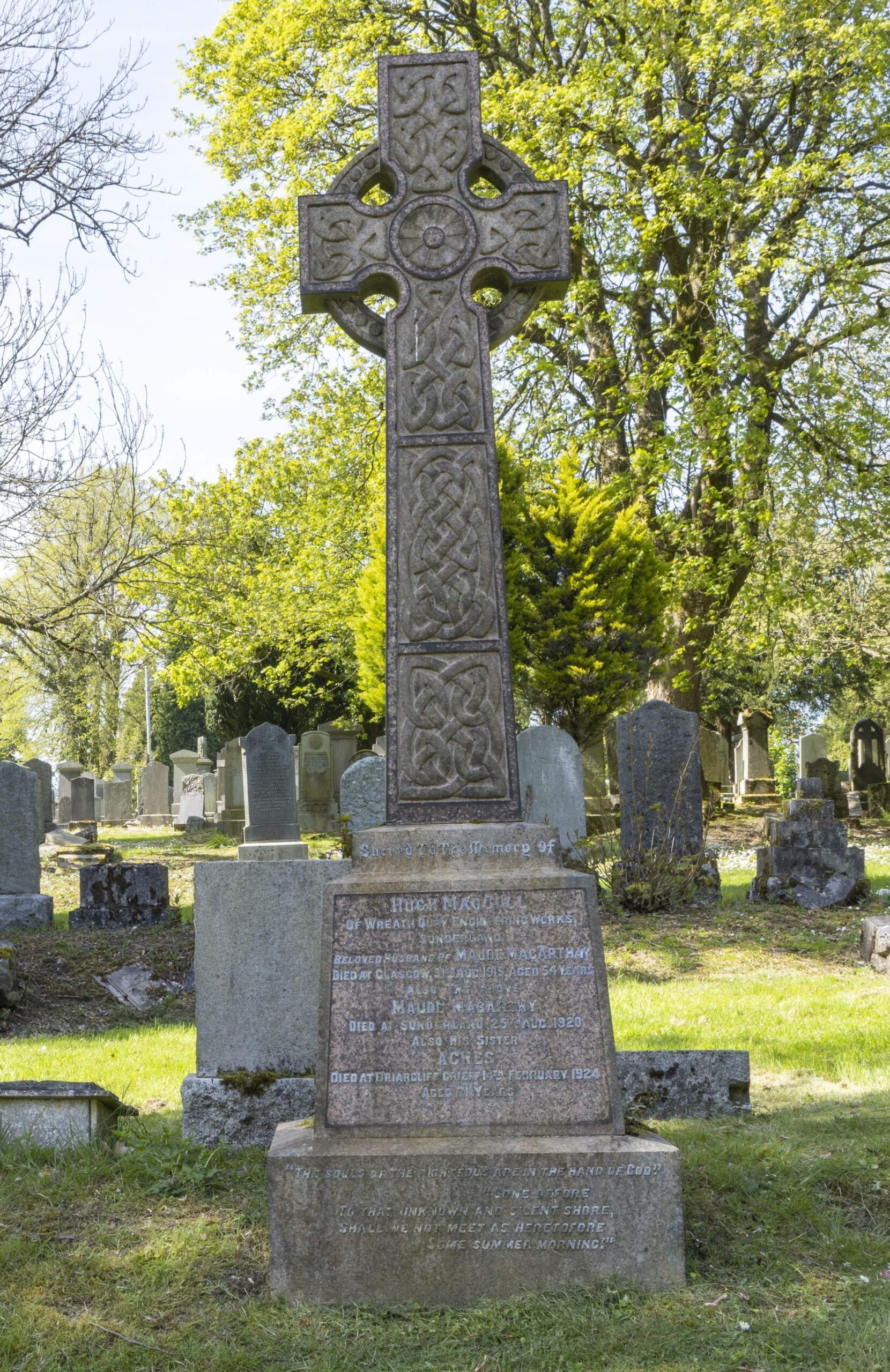
Gravestone of Hugh McColl located in the recently Listed Cathcart Cemetery.
Focus on football under the floodlights
One of our most interesting football place records is arguably Somerset Park, home ground of Ayr United FC. One evening in 2019, our survey and recording team visited to capture the atmosphere and action in the ground during a match. Somerset Park is one of the few stadia in the professional leagues that still has substantial sections of traditional terracing. The Trove record for the ground has a great selection of the images showing how the ground looked on a match night – a unique record for us to have.
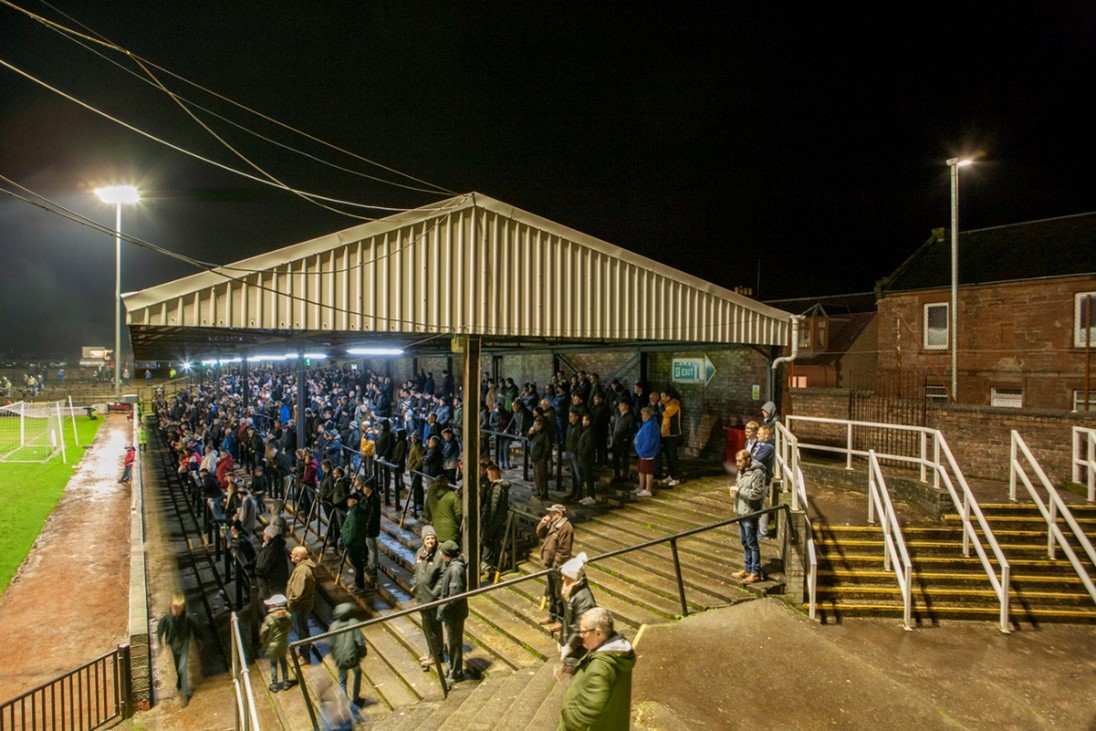
Win, lose or draw – you can’t beat the atmosphere of evening football at Somerset Park.
Help us score for football heritage
If you have information related to important football heritage places, please take part in our online survey. It only takes a few minutes and you can suggest as many places as you wish for us to consider for further investigation.
Want more sporting action from Scotland’s past? Check out our blog on Scottish football history, or discover what a day at the football was like at First Hampden. And if you’re feeling the football fever this summer, check out the World Cup collection on our online shop.
Share
About Author