On 18 August 1966, the Tay Road Bridge officially opened to traffic, connecting Dundee to Fife. 60 years later, the impressive structure remains one of the busiest bridges in Europe. It carried an estimated two million journeys across the river Tay in the last year alone!
Celebrate 60 years of the Tay Road Bridge! Look back at the construction of this monumental structure through our archive with us.
Building the Tay Road Bridge
Work started on the construction of the Tay Road Bridge in 1963, following decades of discussion and test borings conducted in the 1950s. Interestingly, in 1842, plans (held at Newport-on-Tay town archives) for a chain ferry or ‘floating bridge’ were drawn up but never executed.
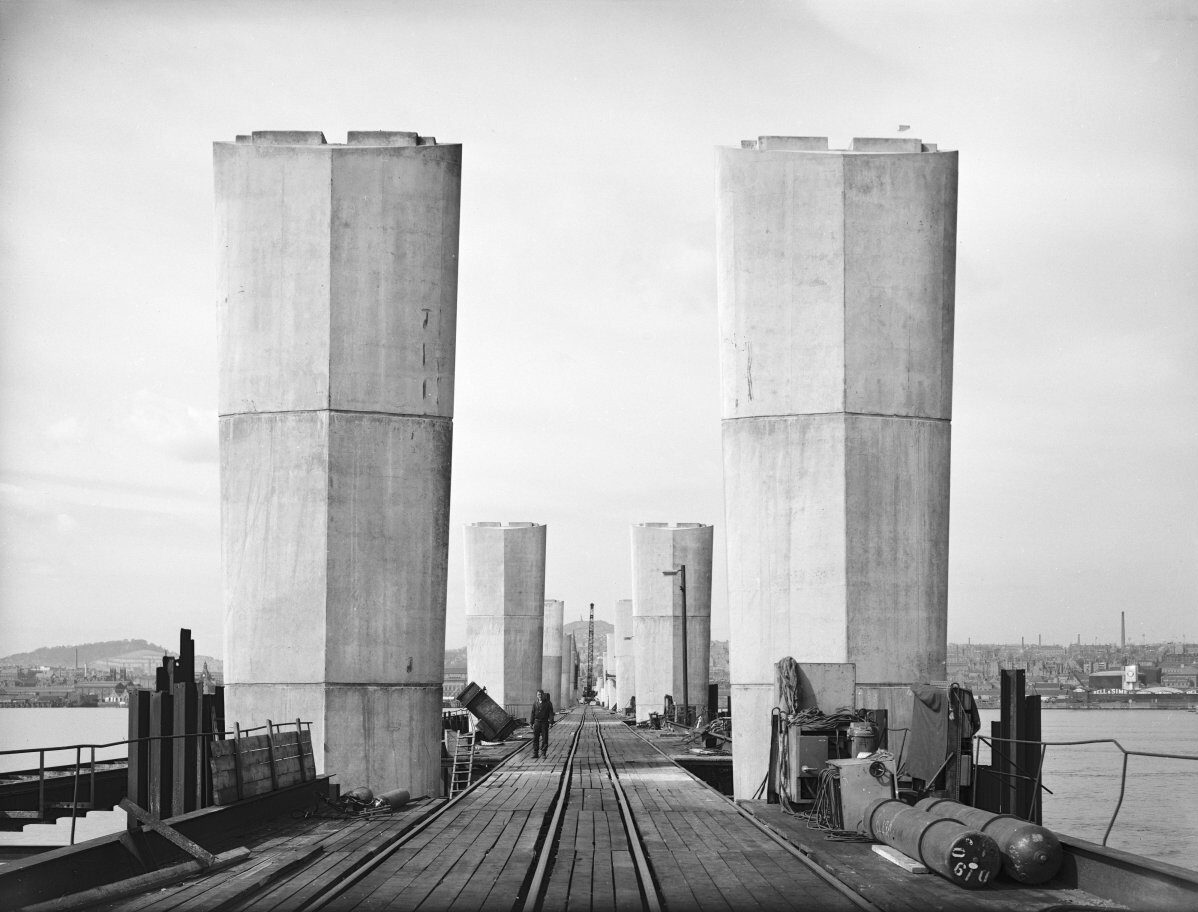
Tay Road Bridge: View along piers towards Dundee. Check it out on trove.scot
The bridge was designed by William Fairhurst of W.A. Fairhurst & Partners. He had two contrasting but successful careers as a bridge builder and International Master chess player. Duncan Logan Construction Ltd. were the civil engineering company, with steelwork by Dorman Long Ltd.
Willie Logan, of Duncan Logan and founder of Loganair, was killed in a plane crash outside of Inverness in January 1966. He never saw the bridge’s completion. His gravestone in Fodderty Cemetery in Ross and Cromarty is designed in the shape of a section of the Tay Road Bridge.
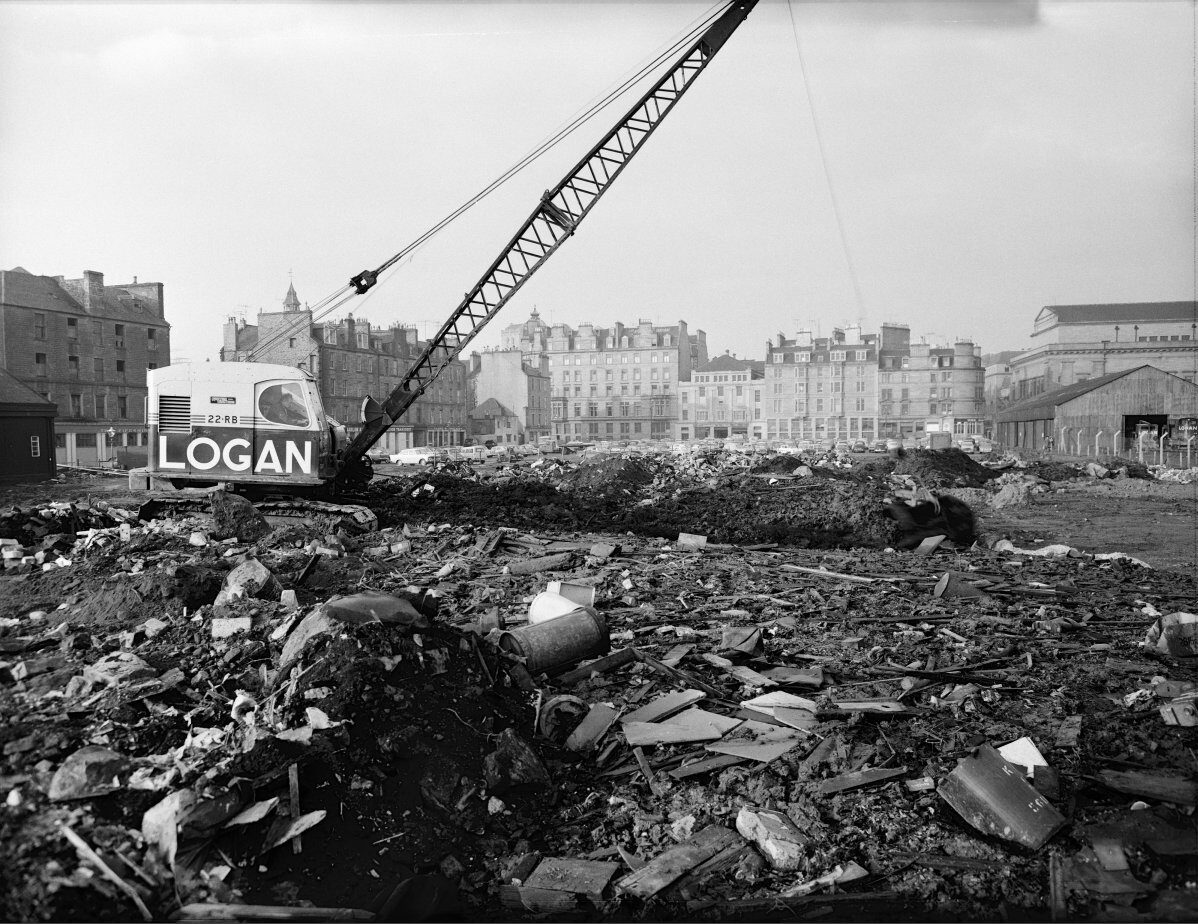
Tay Road Bridge: Logan crane with view across infilled dock on 3 December 1964. Find out more on trove.scot
The David Wilson Laing Photographic Collection
The D. Wilson Laing Photographic Collection, held in our archives, comprises around 57,000 photographs created by David Wilson Laing Studios, Blairgowrie. Opened in 1929 by the titular photographer, the studio continued an imaging legacy by Laing’s father who opened studios in Forfar and Kirriemuir. David Wilson Laing’s wife, Mary Constable Laing, and son, David Constable Laing, also worked as photographers at the Blairgowrie studio.
The photographic material in the Laing collection consists of film and glass negatives. These images were produced for commercial photography contracts and document the construction of important Scottish infrastructural projects such as the building of the Tay Road Bridge, Grampian Hydroelectric Scheme and M74 Hamilton Bypass. It also contains a smaller number of press and privately commissioned photographs. For the larger infrastructural projects, Laing Studios were commissioned by civil engineers, construction firms, councils, architects and boards to document progress.
David Wilson Laing died in 1961. His son was responsible for photographing the construction of the Tay Road Bridge. Commissioned by Duncan Logan, the Tay Road Bridge photographs were taken as black and white dry glass plate negatives.
For at least one day every month from 5 May 1963 to 12 April 1967, Laing photographed the progress of the bridge from similar positions, showing the whole story of the project. In some of the photographs, it is possible to see Laing’s shadow such as this one where we see Laing in the bottom left corner.
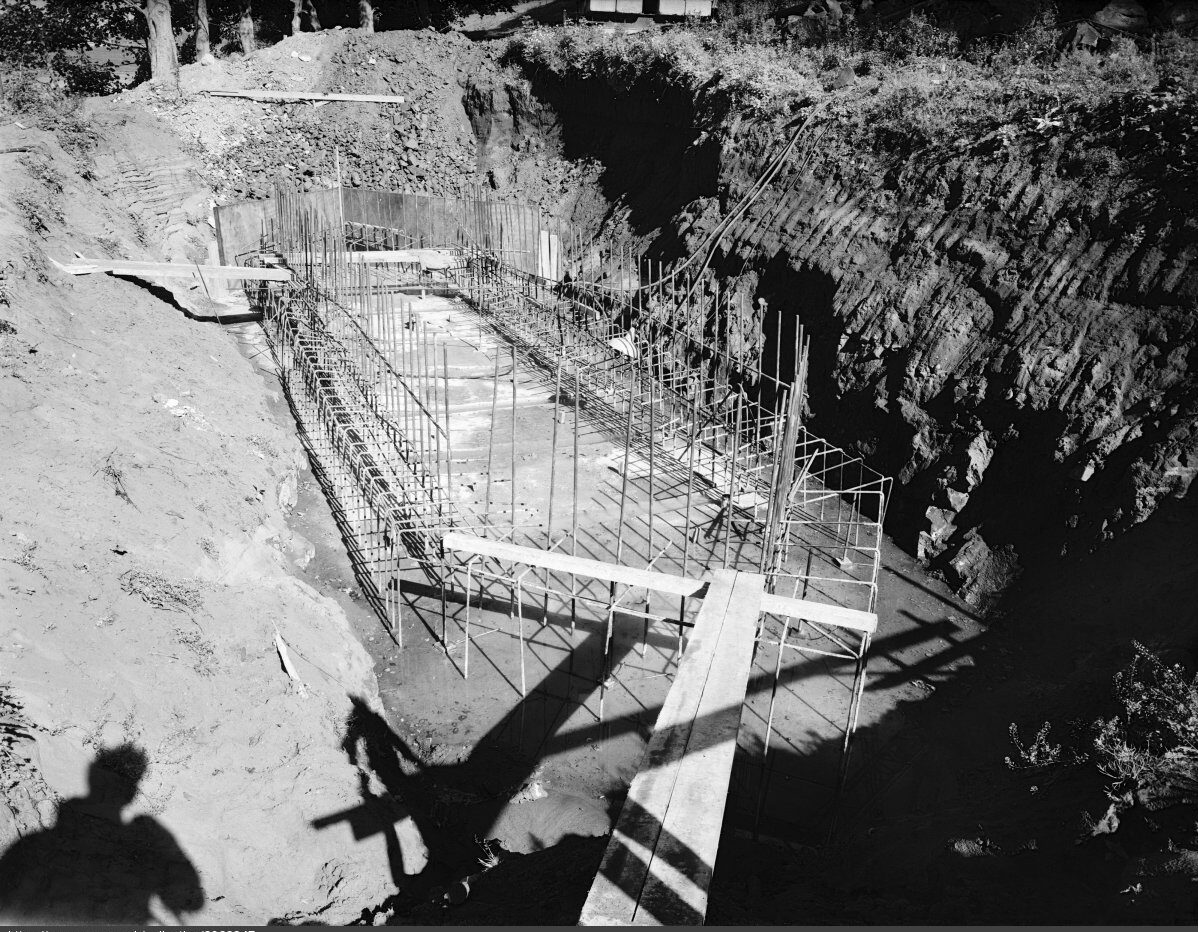
Tay Road Bridge: Pier foundations in Fife. Zoom in on trove.scot
Capturing a changing Dundee skyline
With the Tay Road Bridge being built directly on the shore on Dundee, the images produced by Laing also show the city’s changing landscape. Landmarks that once defined the city can be identified in the photographs, including Earl Grey Dock, Dundee’s many chimneys and the Royal Arch. You can see the latter here before, during and after its demolition, including several images taken from atop the arch itself.
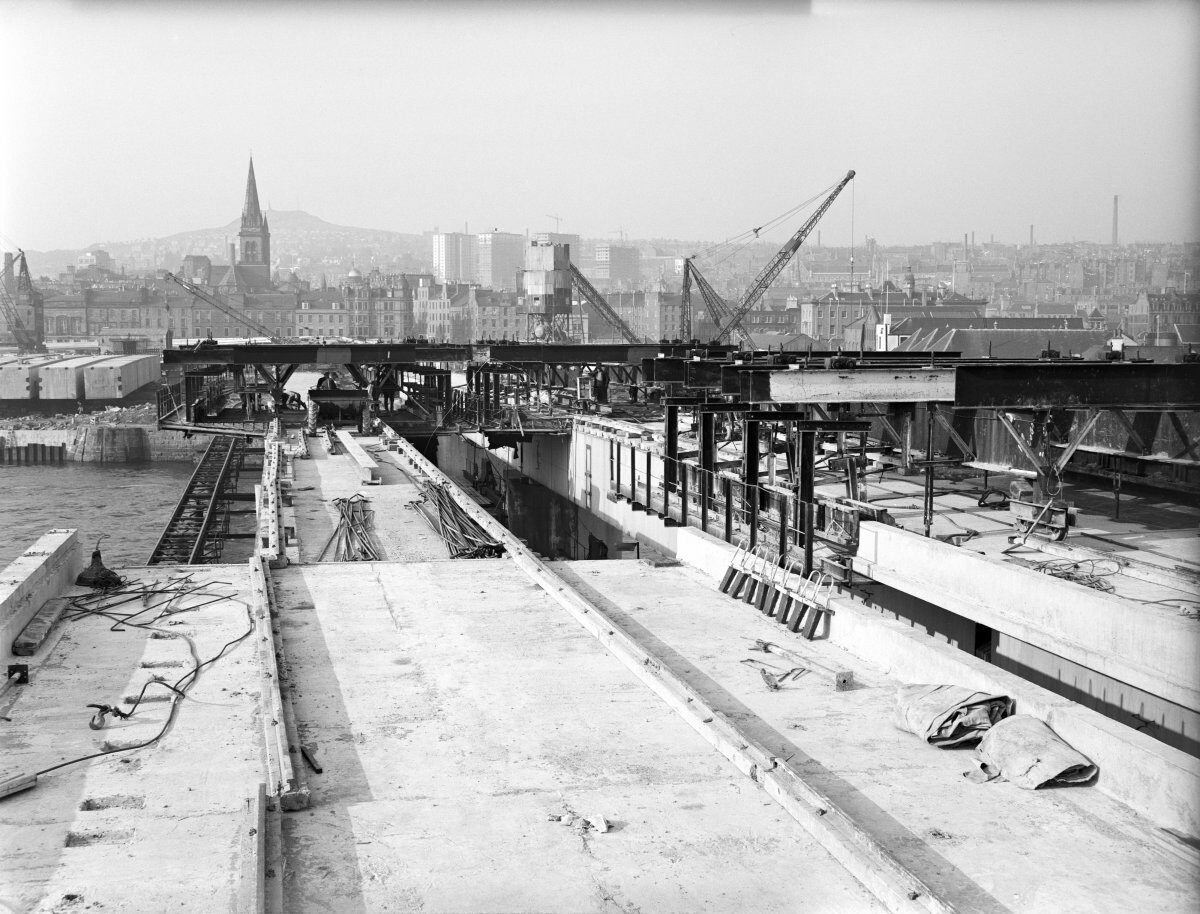
View from unfinished road bridge towards Dundee. Zoom in on trove.scot
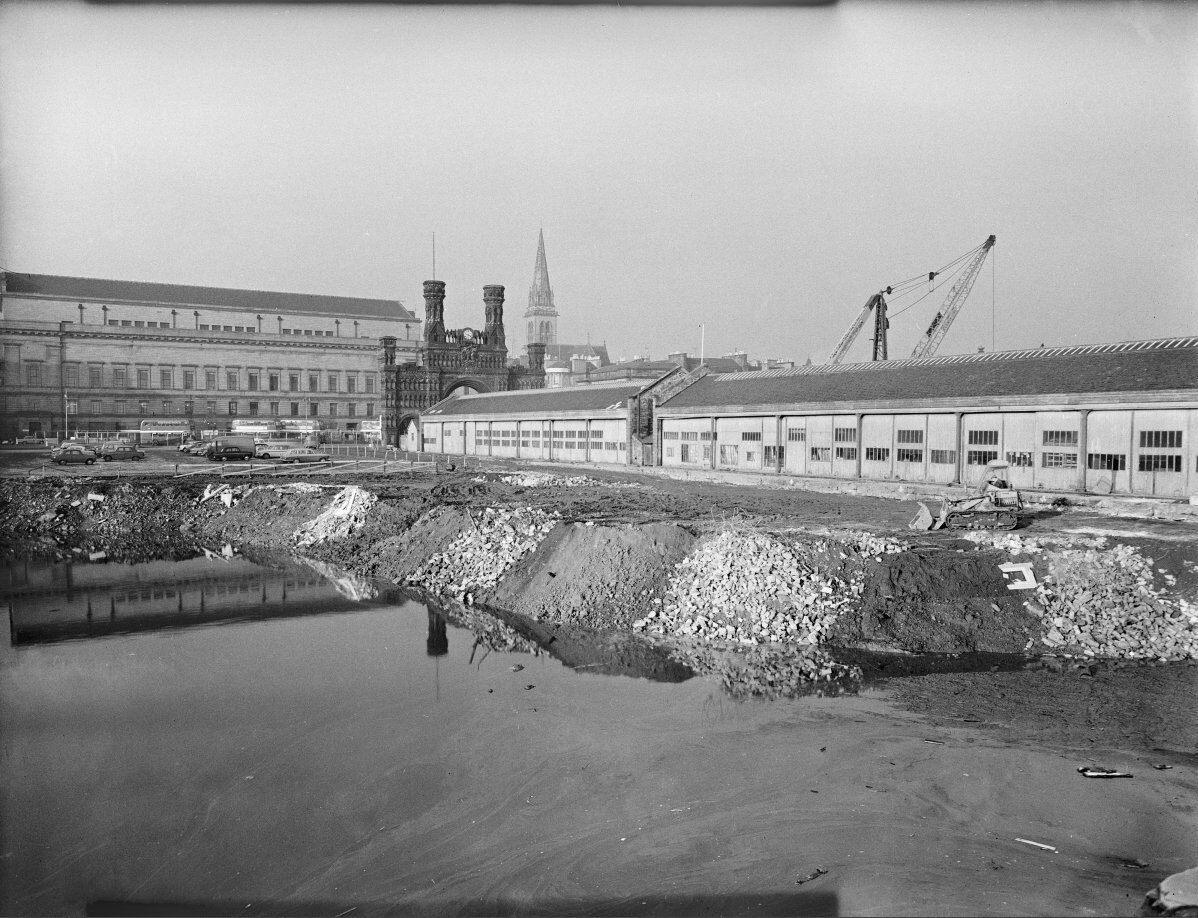
View from dock towards Royal Arch. See it on trove.scot
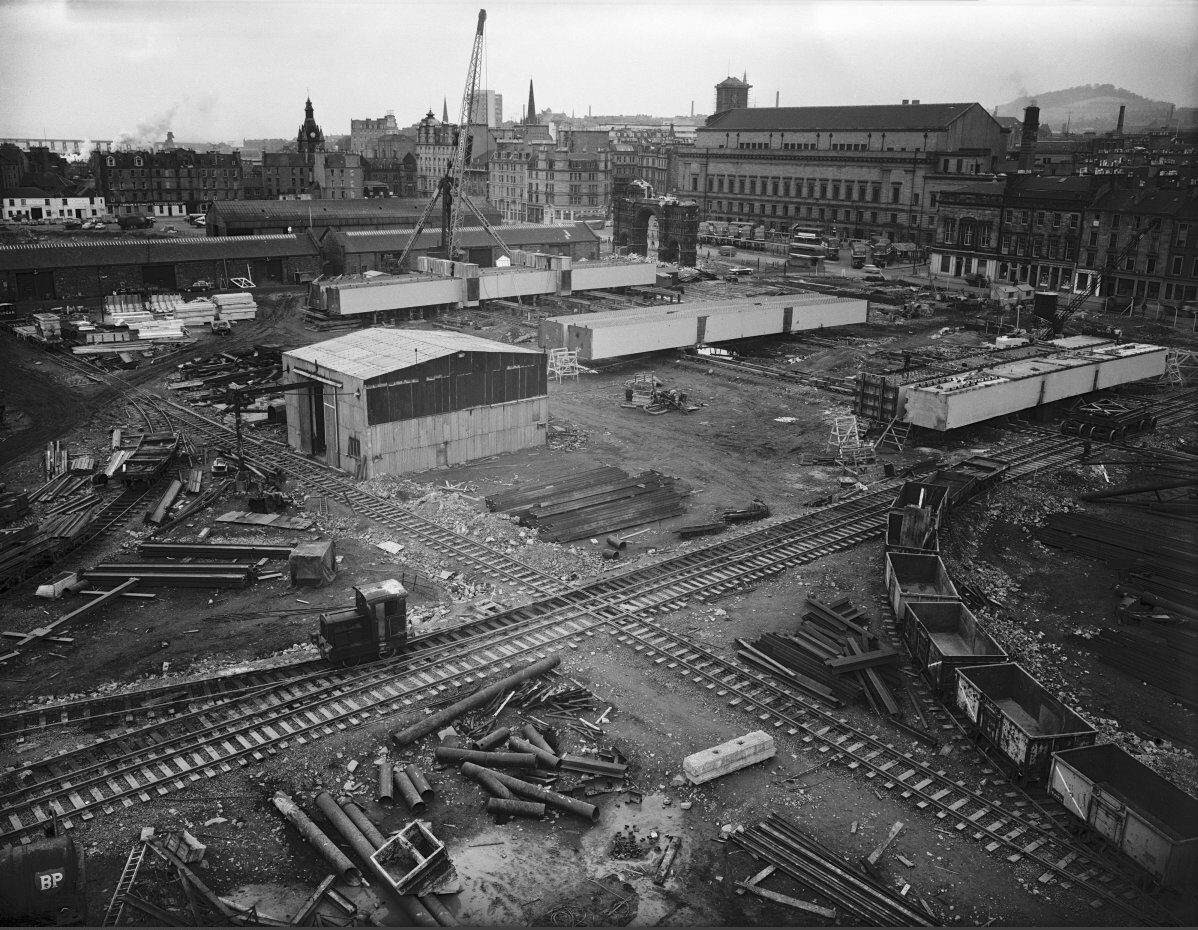
View from crane over dock showing semi demolished Royal Arch
Laing’s photographs are immensely important, not only for showing the changing cityscape of Dundee, but also practically. They have been digitised to protect the images when the original negatives eventually and inevitably deteriorate. Digitisation also makes them accessible for use by civil engineers and the Scottish Roads Archive. They help inform ongoing work to maintain and repair Scotland’s infrastructure. In the instance of the construction of the Tay Road Bridge, Laing has photographed welding and internal systems that cannot be seen externally.
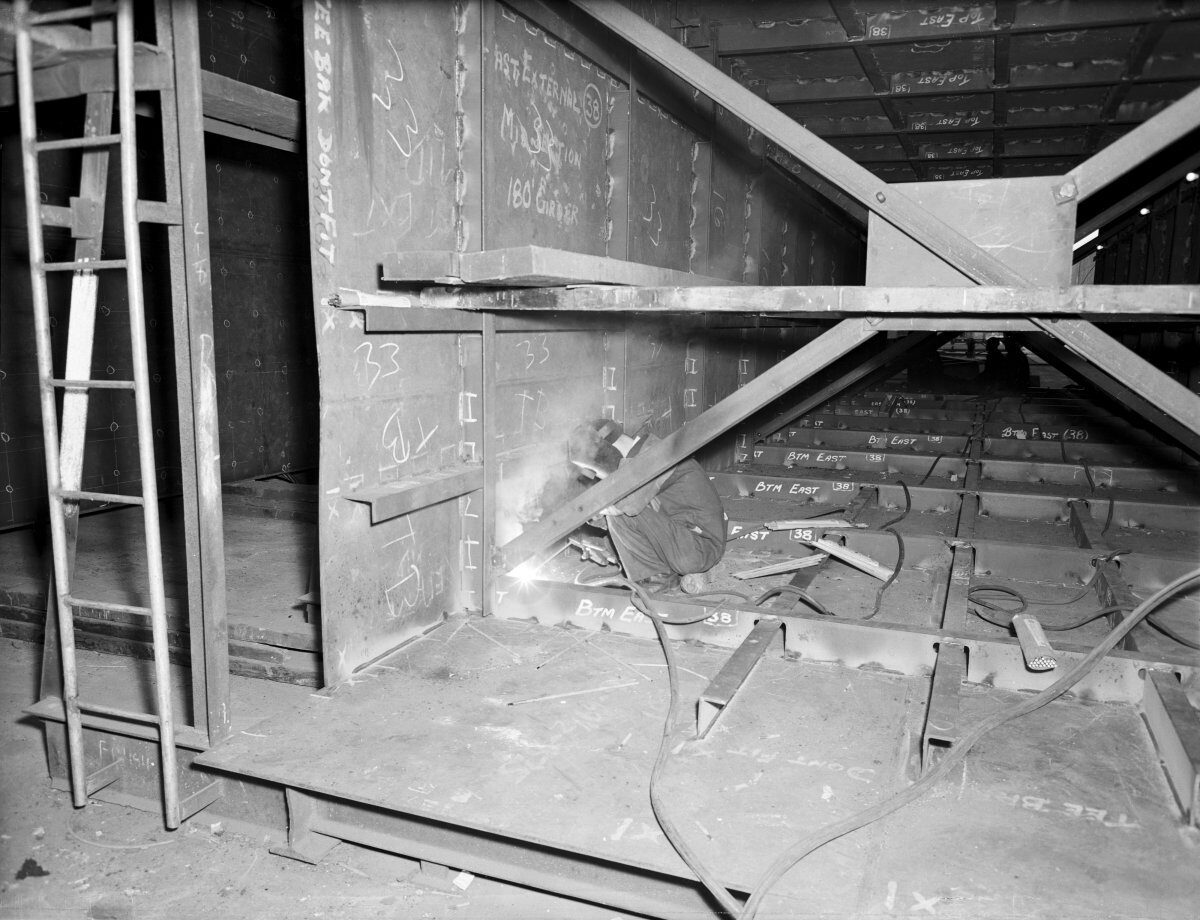
Welding internal construction supports
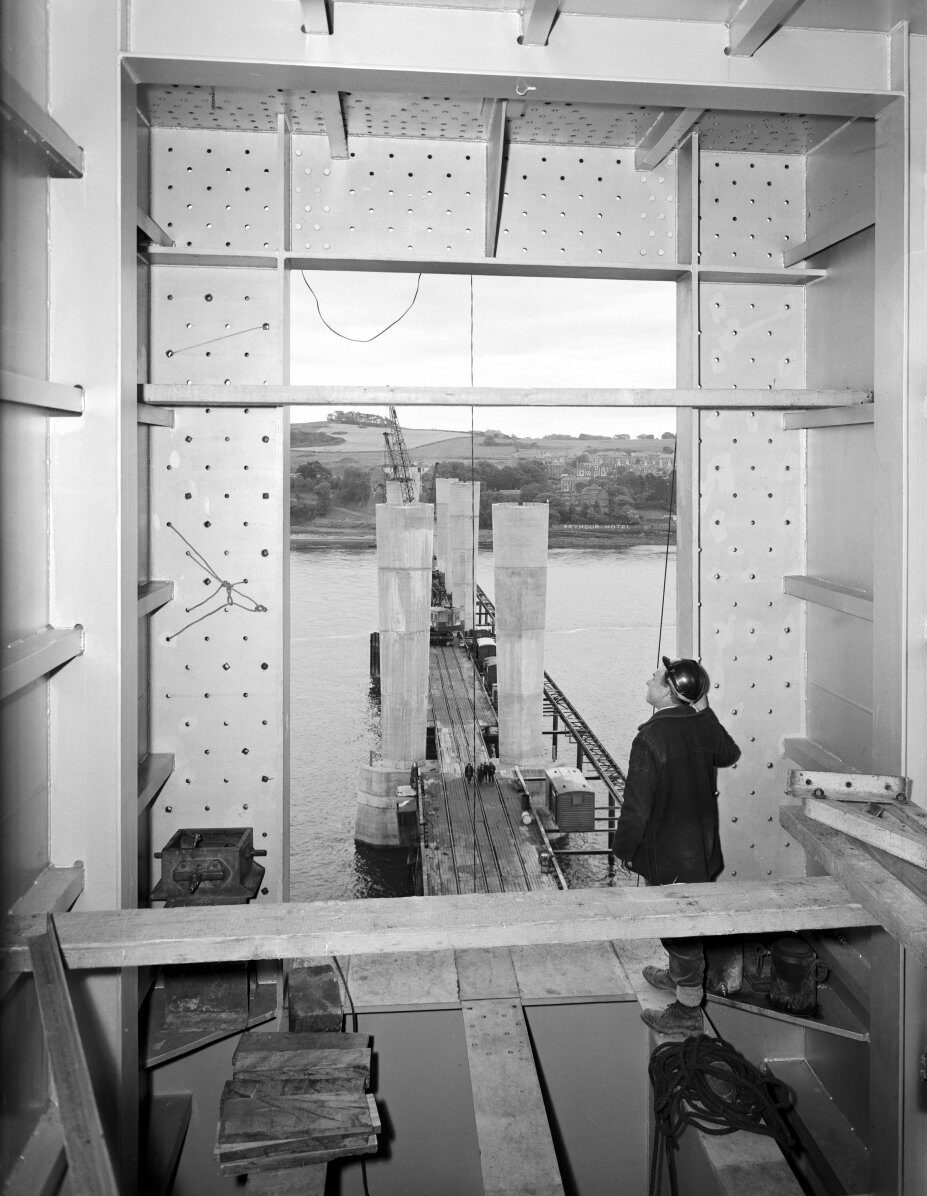
View from inside bridge pier towards Fife
From Construction to Completion
In 1966 the Tay Road Bridge was finally finished, complete with railings, viewing platforms and toll office. On the first four days of opening, the bridge was toll free. Afterwards, it cost 2/6 (12.5p) for cars, 1/- (10p) for motorcycles and 10/- (50p) for heavy goods vehicles. In 1989, the toll rose to 30p, then in 1992 to 80p. Finally, in 2007 the Scottish Government voted to remove tolls altogether. In 2008 the Tay Road Bridge was free to all.
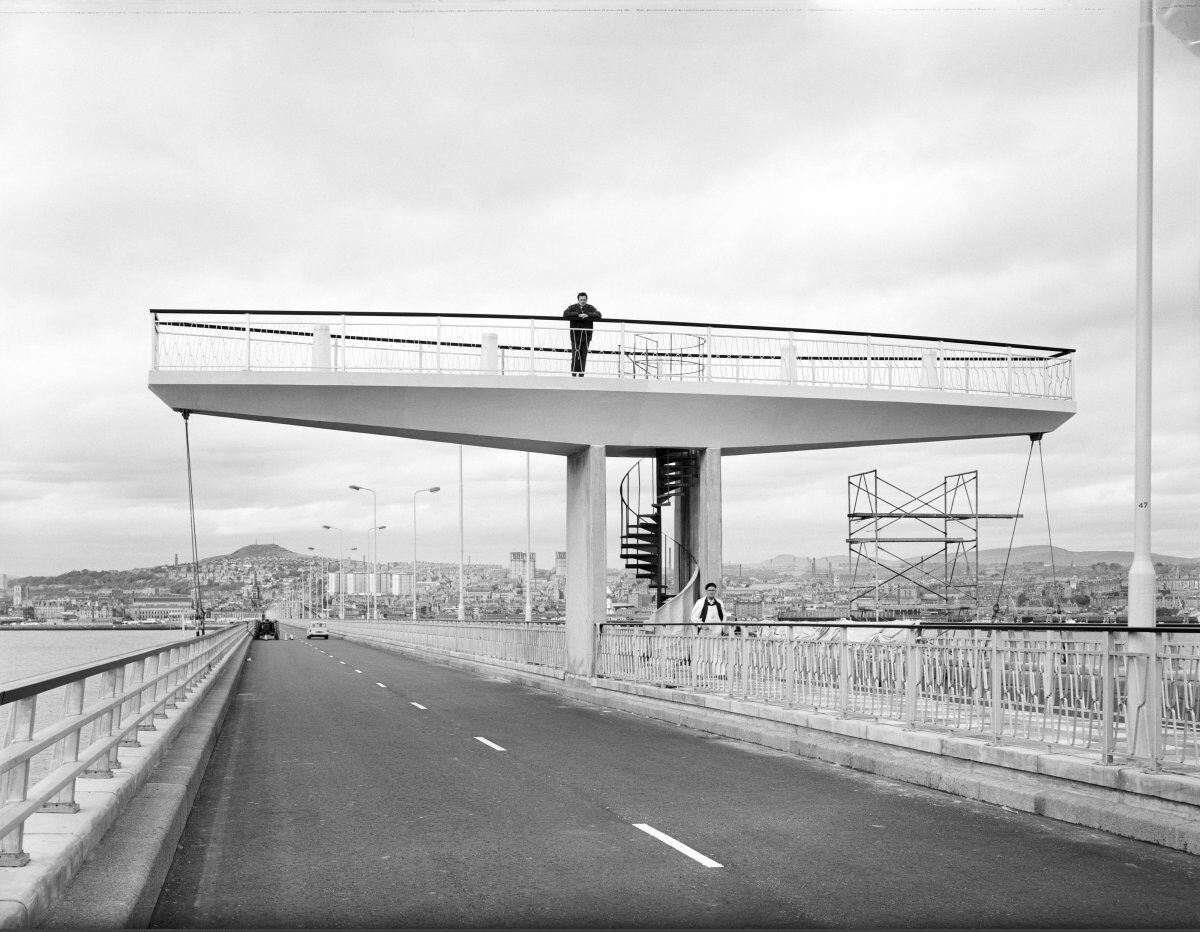
Finished viewing platform
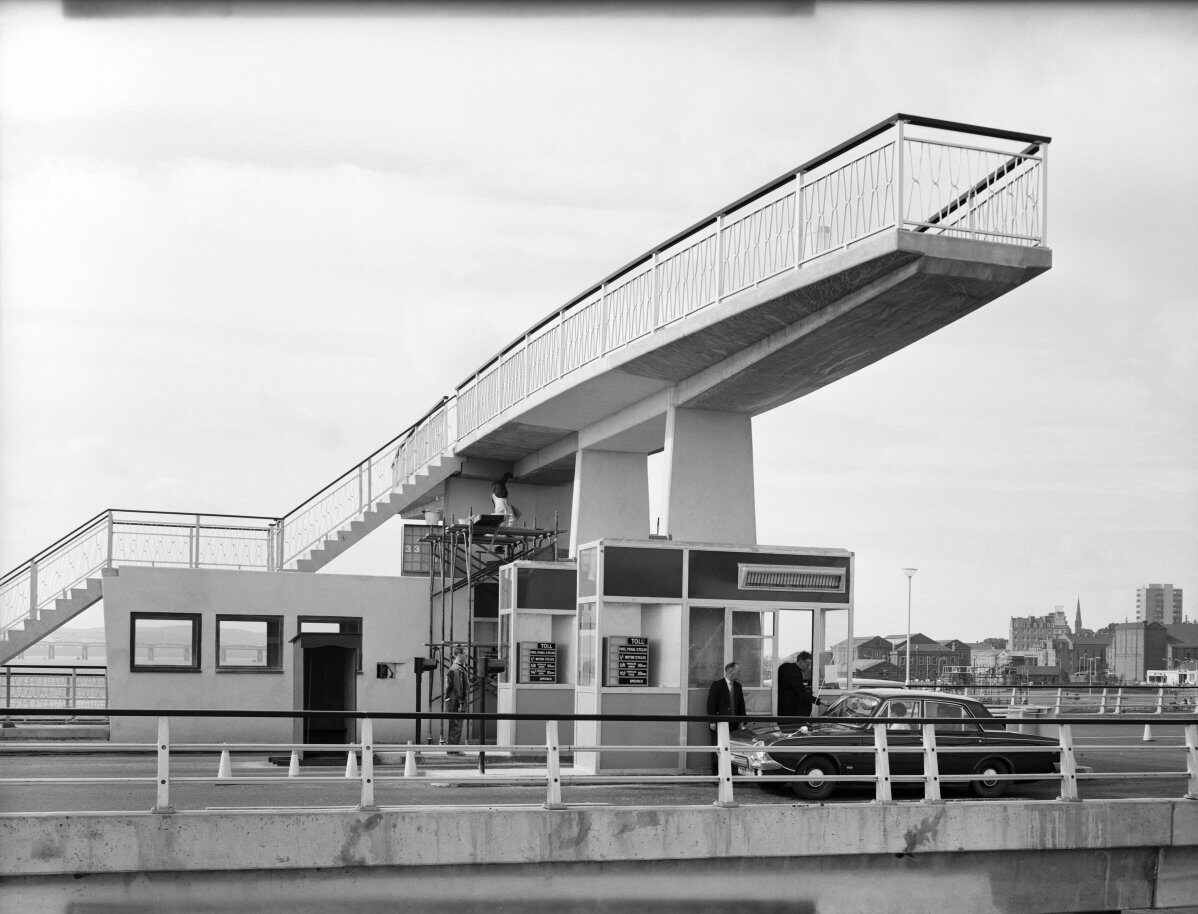
Toll office serving passengers
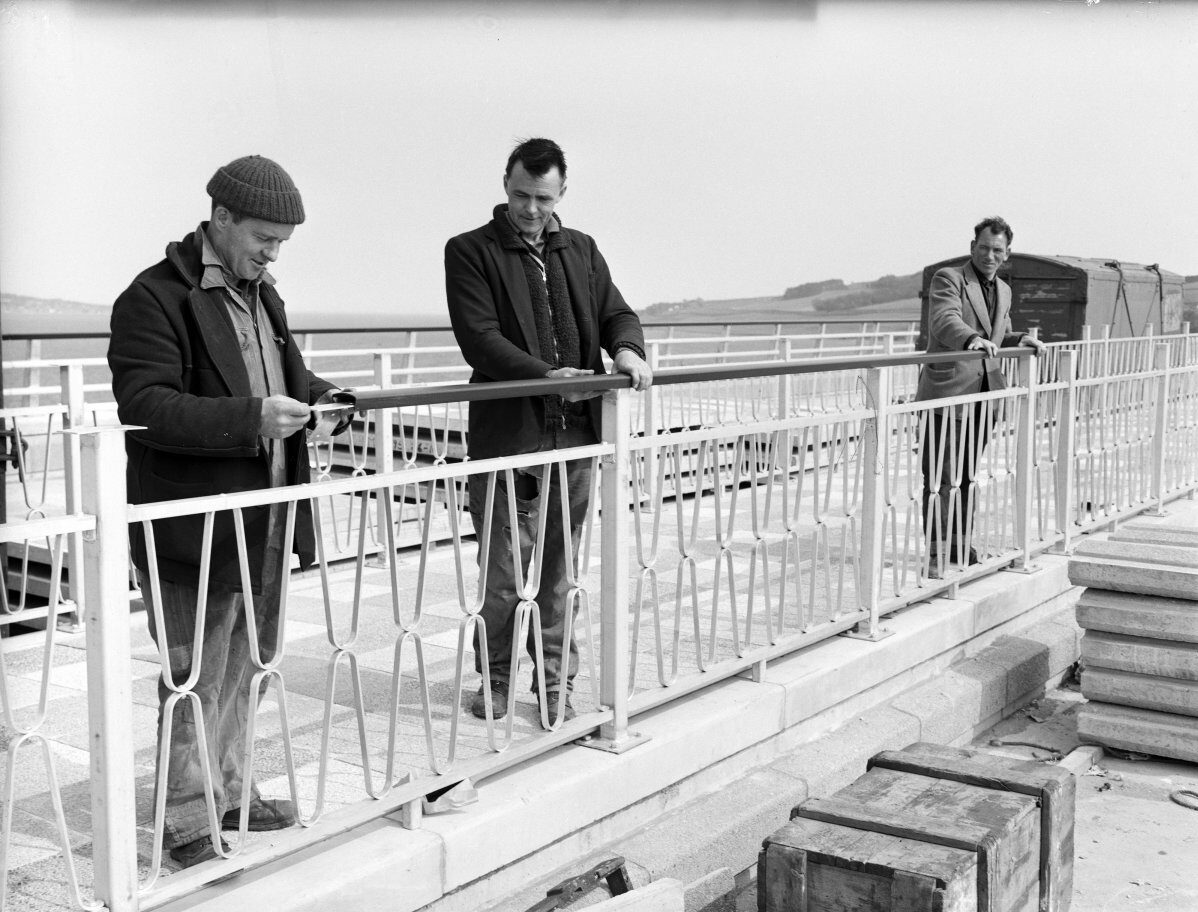
Workmen fixing railings to bridge central walkway
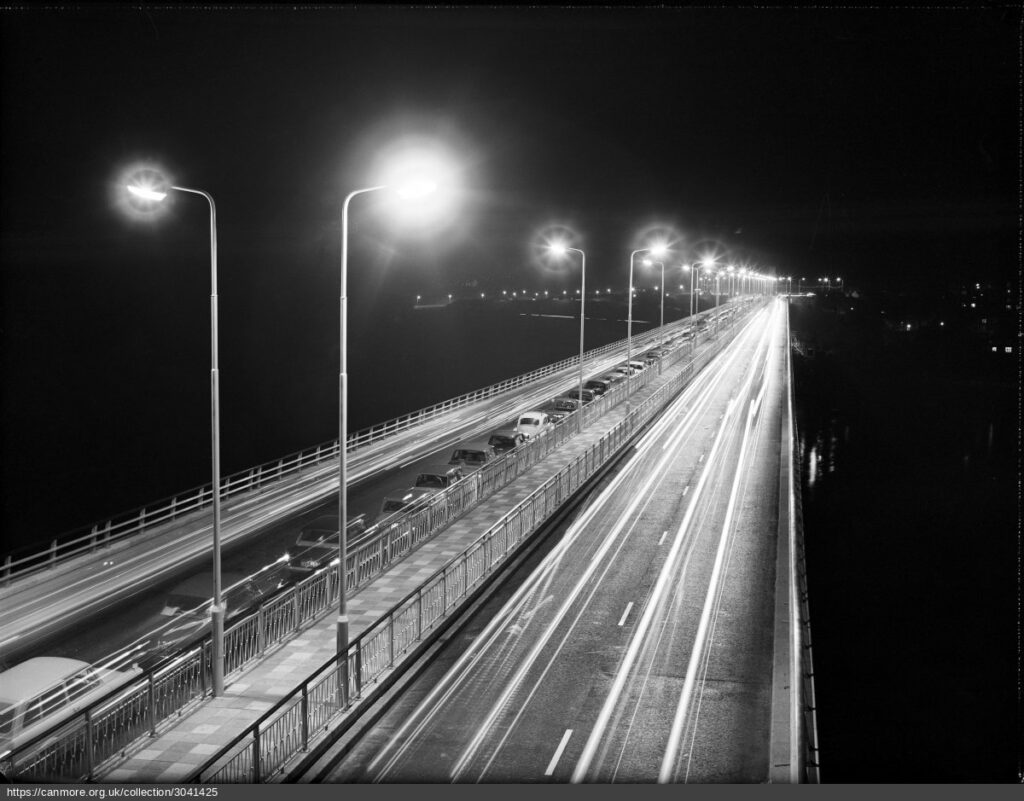
On 18 August 1966, the bridge officially opened. The bridge opened with the debut crossing by the Queen Mother. The British Pathe archives hold a great newsreel of the event. Laing photographed the bridge at night. The resulting glass plate photographs are of exceptional quality. They show the traffic lights as trails due to the long exposure required for photographing at night.
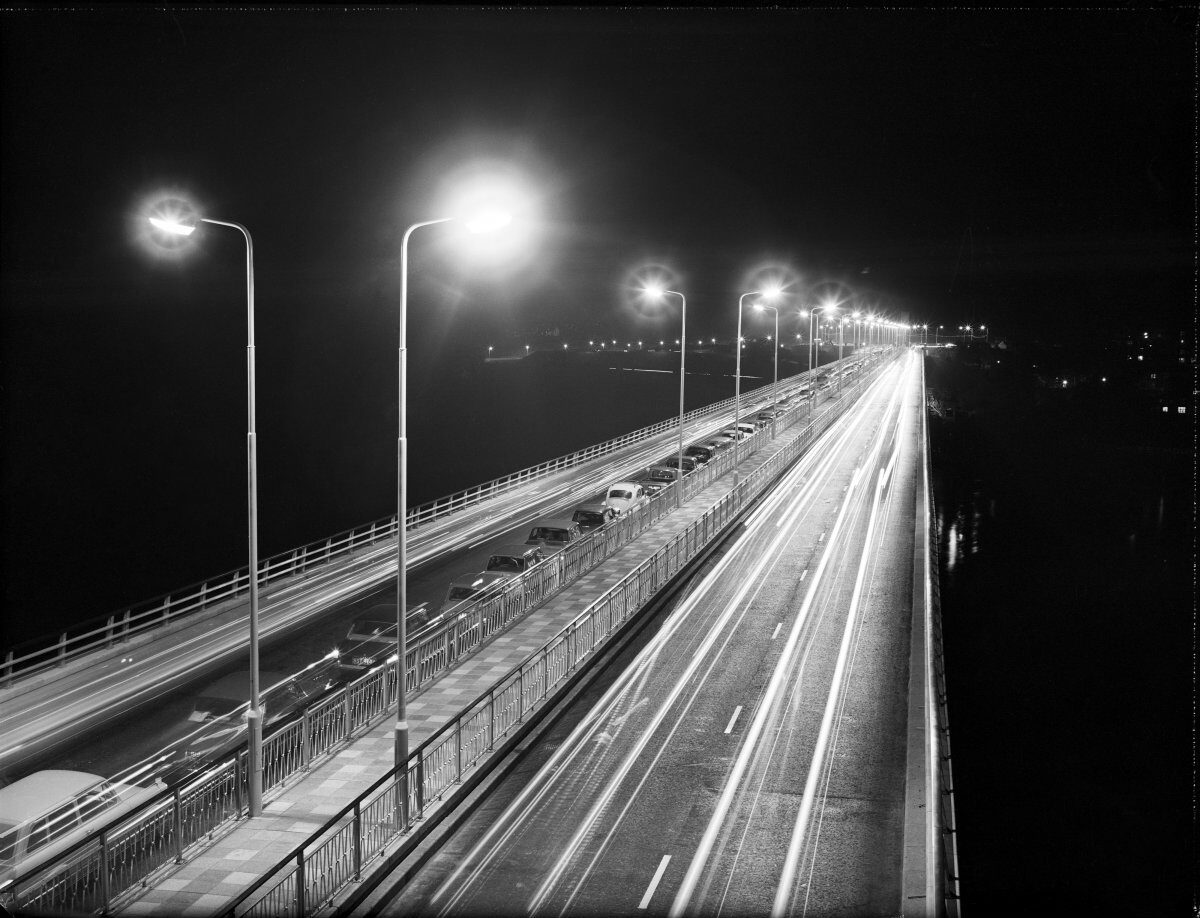
Cars crossing the Tay Road Bridge at night. See this image and others on trove.scot
More from our archives
If you loved this blog, you might like our other stories. Like our blogs about industrial heritage. Or a dive into our archives looking at the history of cycling.
About the Author
Edward Cawood is the Archival Photographer Trainee with our Archives Team at John Sinclair House. Coinciding with the anniversary of the opening of the Tay Road Bridge, Edward has completed the digitisation of a section of the David Wilson Laing Photographic Collection held by us. Part of the section consists of over 600 glass plate negatives depicting the construction of the bridge from 1963 to 1967. Edward has compiled some highlights from the project, alongside a brief history of the bridge. All images are available for public view on trove.scot.
Share
About Author