For centuries, archaeologists, historians and local communities have been piecing together the story of Hilton of Cadboll, one of Scotland’s most celebrated Pictish sites.
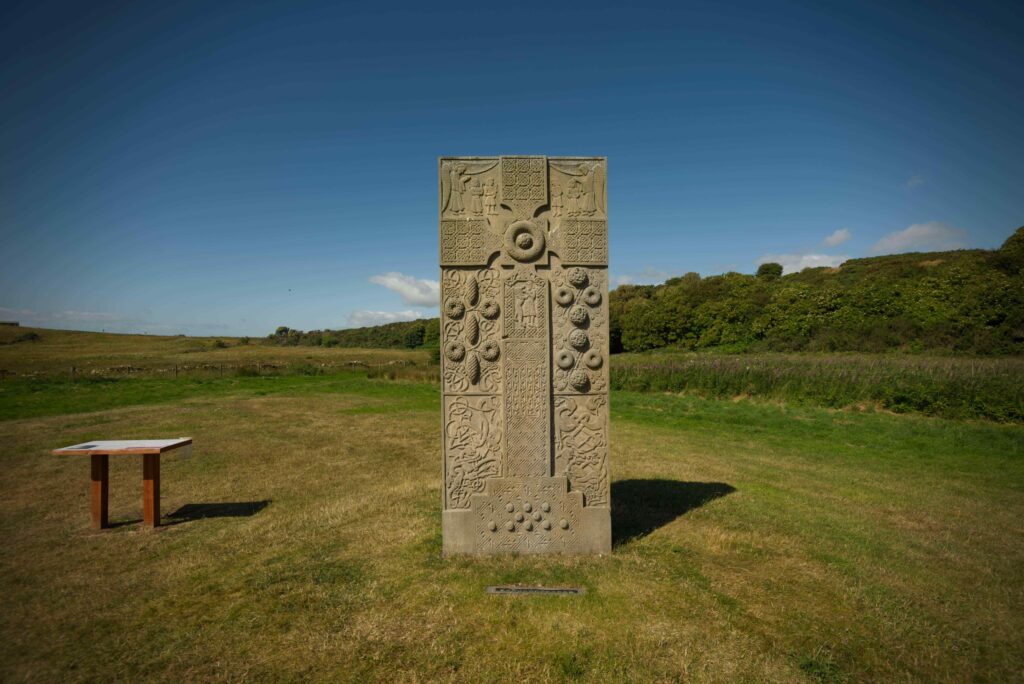
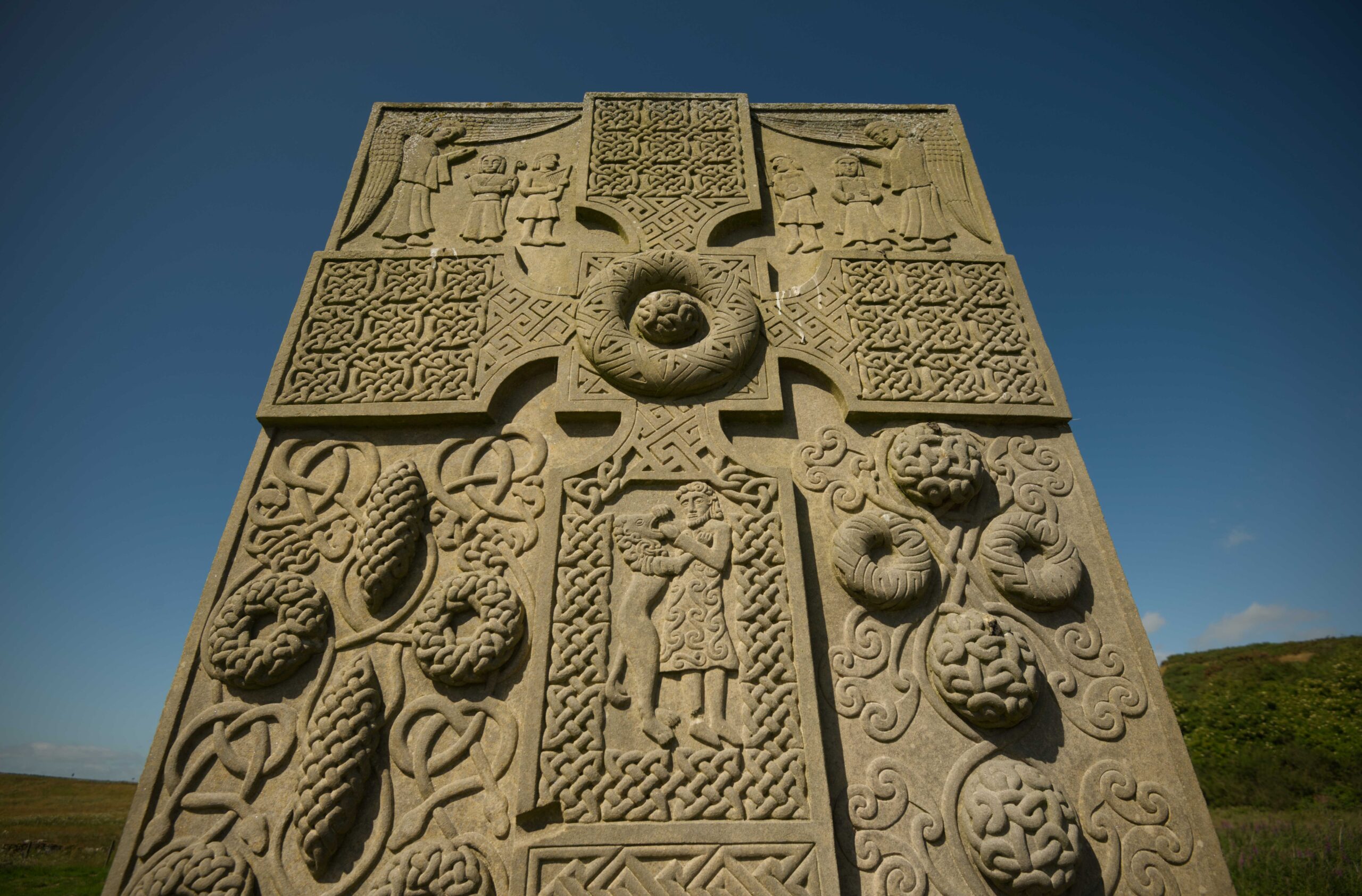
Visitors arriving at Hilton of Cadboll today will find the ruins of a small chapel and a replica of the cross-slab that made the site famous. The original stone, one of the masterpieces of Pictish art, is now displayed in the National Museum of Scotland in Edinburgh.
The site of the famous Pictish cross-slab
The site is on the coast of the Moray Firth on the Tarbat Peninsula, north of the seaboard villages of Hilton, Shandwick and Balintore. It is located in a region rich in early medieval and medieval activity at the heart of a network of early medieval sites and communities in northern Pictland. The Hilton of Cadboll cross slab represents one of a collection of carved stones from the region viewed as the pinnacle of stone carving tradition for the early medieval period.
The cross slab was carved from local sandstone around 800AD and is one of the finest Pictish carved stones from Scotland.
One side survives, which depicts a Pictish hunting scene, and symbols framed by interlace. Experts identified the original position of the stone, near to the footings of a rectangular structure, known as St Mary’s Chapel. Archaeological excavations have confirmed that this is an early chapel site, with associated burials and enclosure.
Nearby, Portmahomack was the site of a Pictish monastery. Other stone sculptures have been discovered at Shandwick and Nigg. Together, they indicate this peninsula overlooking the Moray Firth was an important place in the early medieval period.
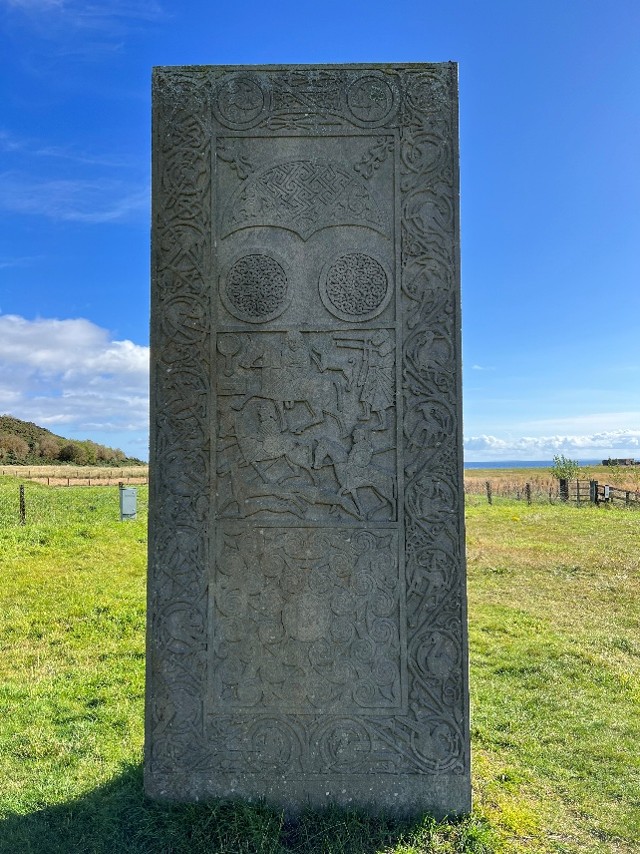
The full-size replica of the stone with a speculative carving on one side created by Barry Grove now stands on the site for visitors to view today. ©HES
Previous investigations
In 2022 Historic Environment Scotland commissioned Gradiometry, Resistance, and Ground Penetrating Radar (GPR) surveys. Rose Geophysics conducted GPR surveys over the chapel and nearby areas. Earlier research by Kirkdale Archaeology and GUARD Archaeology included excavations which discovered the position of the cross slab socket and broken lower fragment. These suggested a Pictish presence from the 7th century AD and later medieval settlement around the chapel.
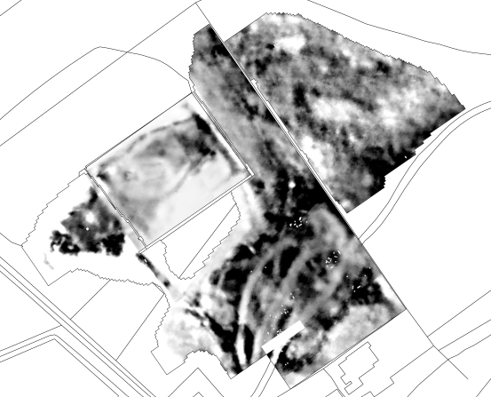
Geophysical survey ©HES
Putting Cadboll in Context
The recent Resistance and GPR surveys have confirmed that the earthwork surrounding the chapel comprises multiple phases. One area in particular, to the north-east of the chapel in the neighbouring field, stood out during the surveys, where a well-defined low resistance response was detected alongside a corresponding gradiometer anomaly. The survey results indicated the presence of a large pit-type feature or midden deposit. The surveys also identified signs of structural remains. When all the survey results were considered together, they pointed to the remains of buildings or settlement activity in the area, and suggested possible tracks and additional pit-type features.
Based on the results of the geophysical survey, in 2023 HES conducted a community excavation to investigate some anomalies. AOC Archaeology led the excavation, supported by volunteers from the Hilton Historic Trust.
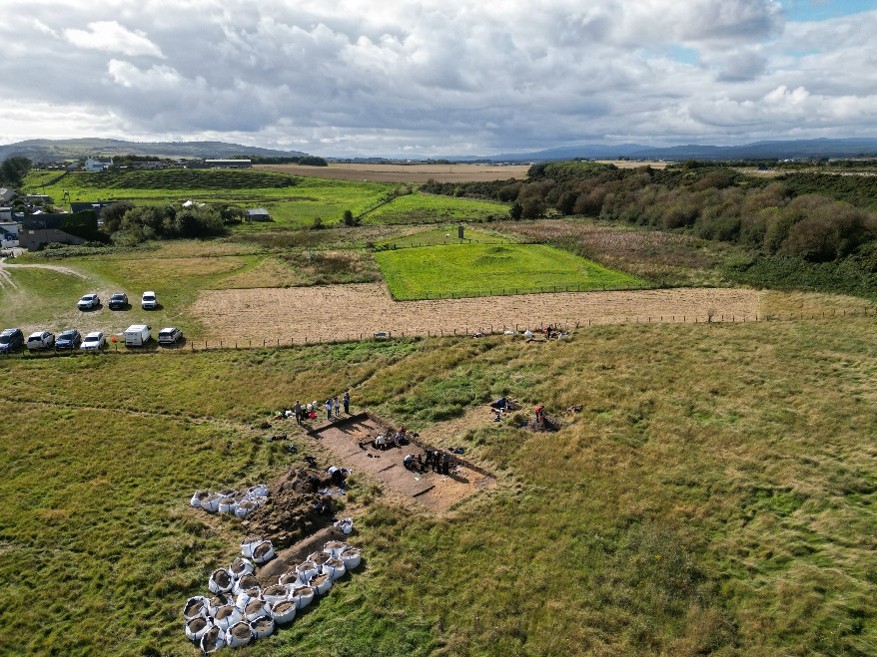
Drone shot of Trench 1 with the chapel in background (top right) ©HES
Community Excavation
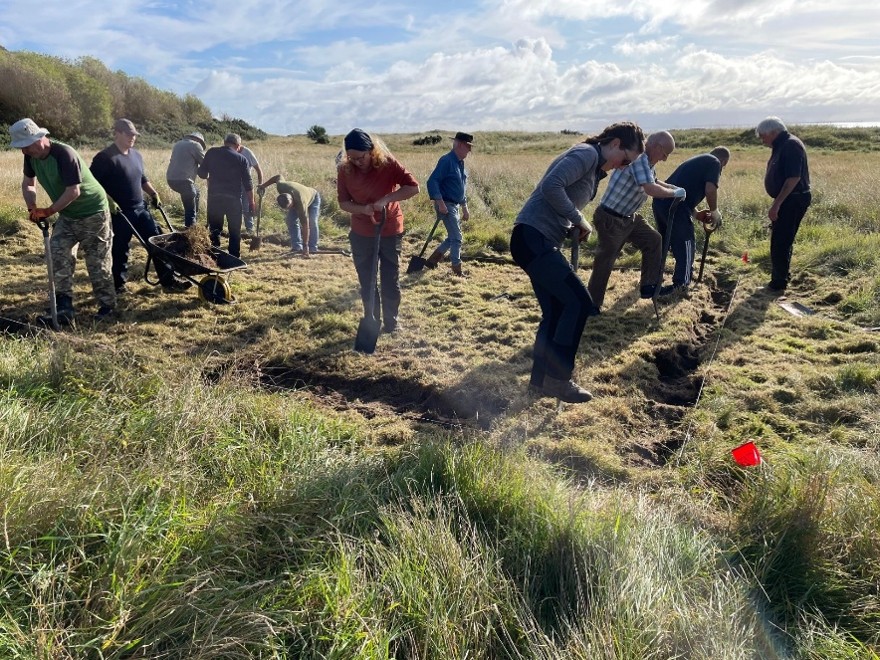
Volunteers starting the excavation ©HES
Evidence of a Medieval settlement
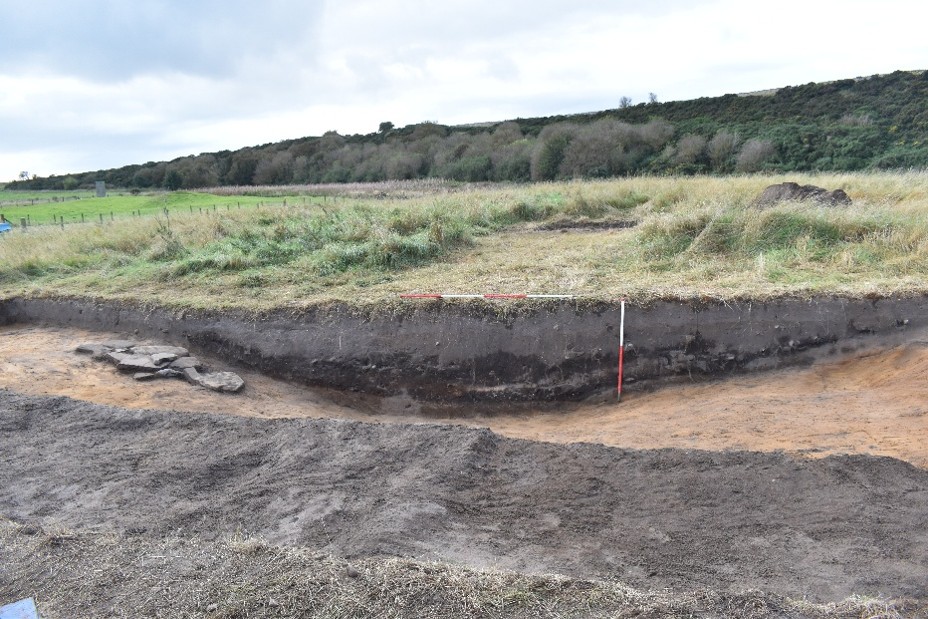
Medieval midden layers contained pottery, bone and other artefacts in keeping with a medieval fishing and farming community ©HES
The community excavations targeted the suspected midden deposits and potential structures (Trenches 1 and 5). The investigation confirmed the presence of a midden. It contained various artefacts related to middening material from a nearby medieval settlement. These included: metalworking debris, animal bones related to butchery and food waste, whetstones, medieval ceramics dating from the 12th to 15th centuries AD, and a silver penny of Irish origin (likely dating from the early 13th to the mid-14th century).
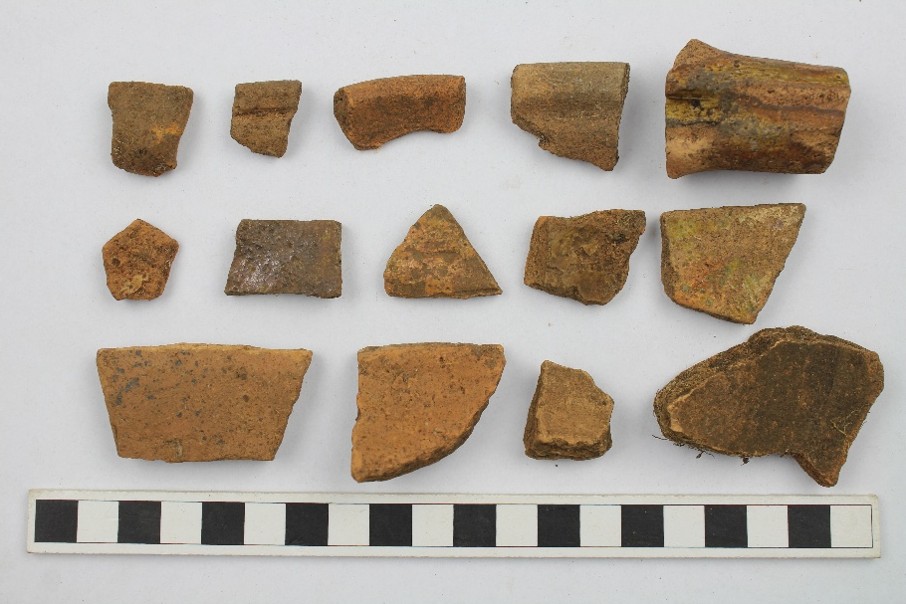
Medieval redware dating to the 12th-15th centuries AD ©HES
A few earlier finds were reincorporated into these layers and included several worked bone fragments, including a reworked piece on cetacean bone and a fragment of bone comb. The comb fragment corresponds with a type generally dating to the 10th-12th centuries AD.
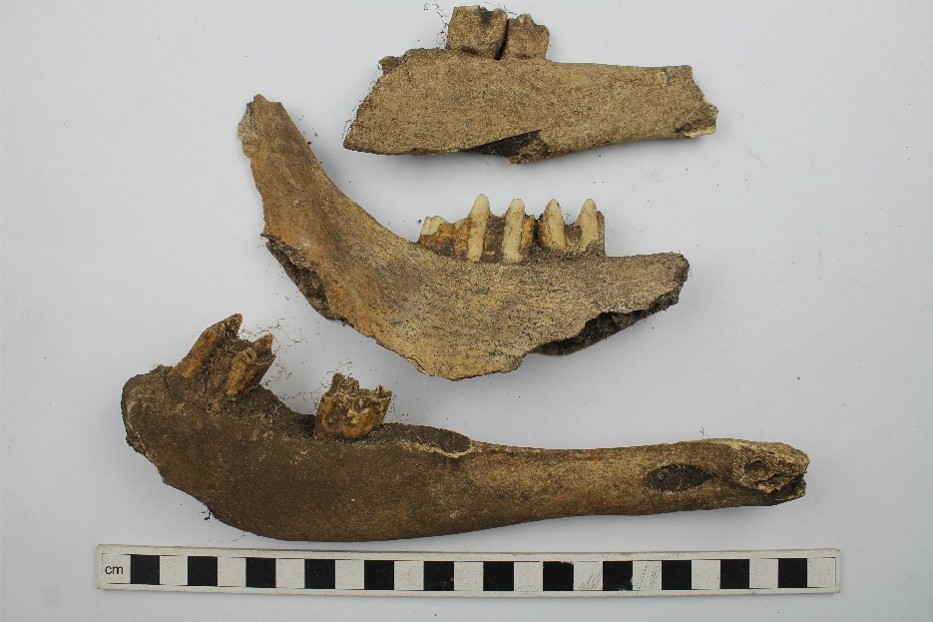
Experts identified animal bone from cows, sheep/goat, pigs and horses, as well as fish bone, indicating deep sea fishing for cod. ©HES
Discovering an earlier occupation
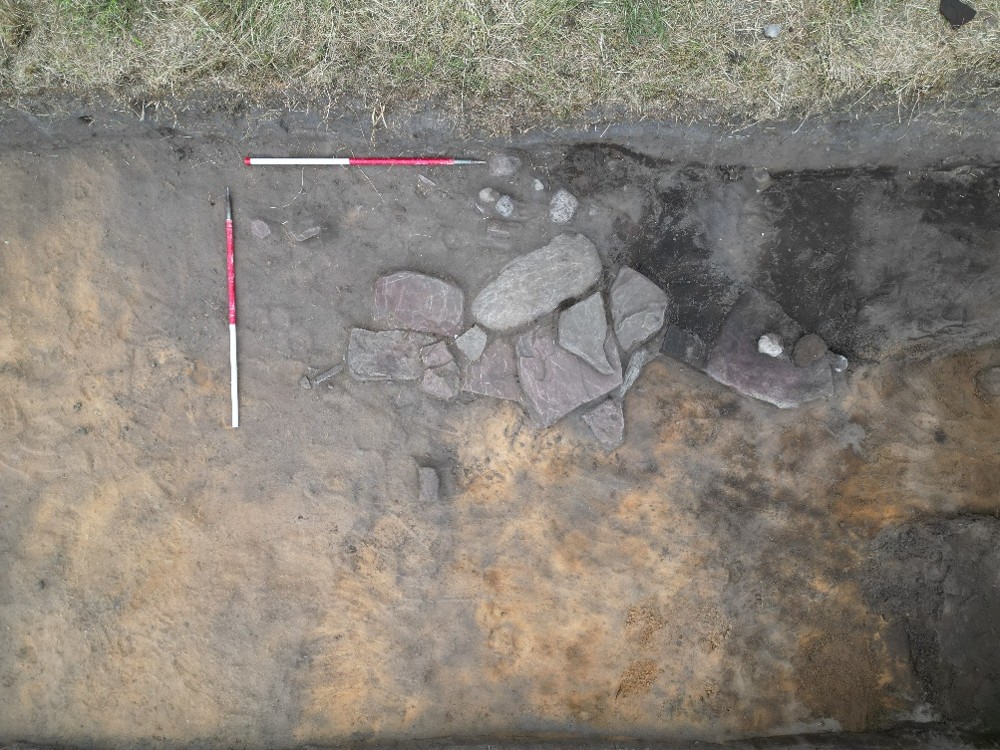
Drone shot of fragmentary stone surface, sealed below this was charcoal flecked material dated to between the 5th-early 7th century AD ©HES
Excavations uncovered earlier features at the midden’s base, such as set stones and shallow cuts filled with charcoal flecked sand. These are likely from foundation trenches or the footings of a small structure.
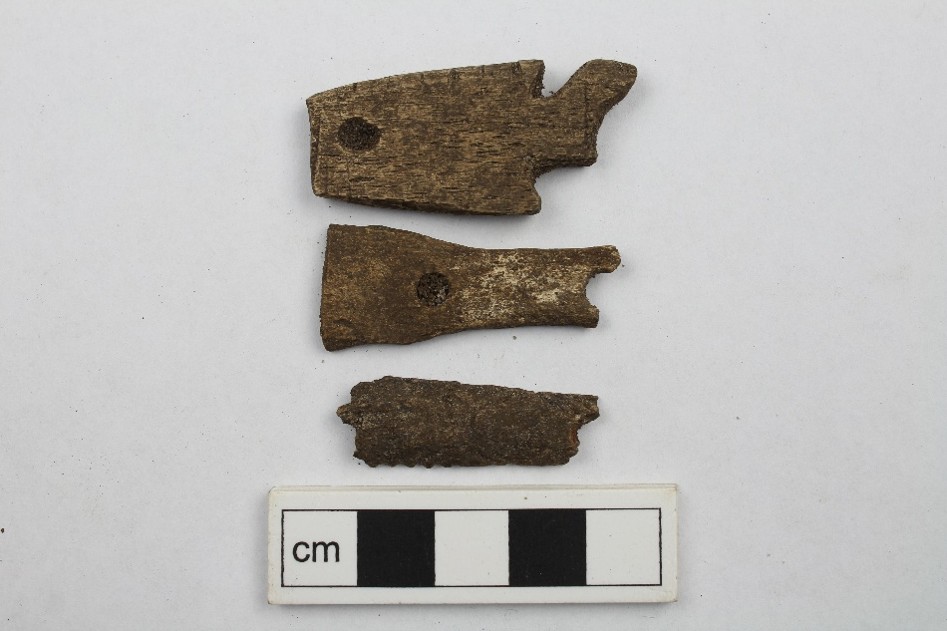
Worked bone fragments: the bottom fragment is part of a bone comb, a perforated plate (middle) and the decorated ring-shaped terminal of an implement made out of whale bone ©HES
Material from these earlier layers included a fragment of copper alloy hand pin and a broken fragment of pin from a penannular brooch. The early hand pin probably dates between 4th-6th centuries AD and comes from a layer containing material dated to between mid 6th-mid 7th centuries cal AD. The structure and some of the finds date from the mid-5th to mid-7th century AD. This is really significant as they pre-date the earliest activity previously identified in and around the chapel.
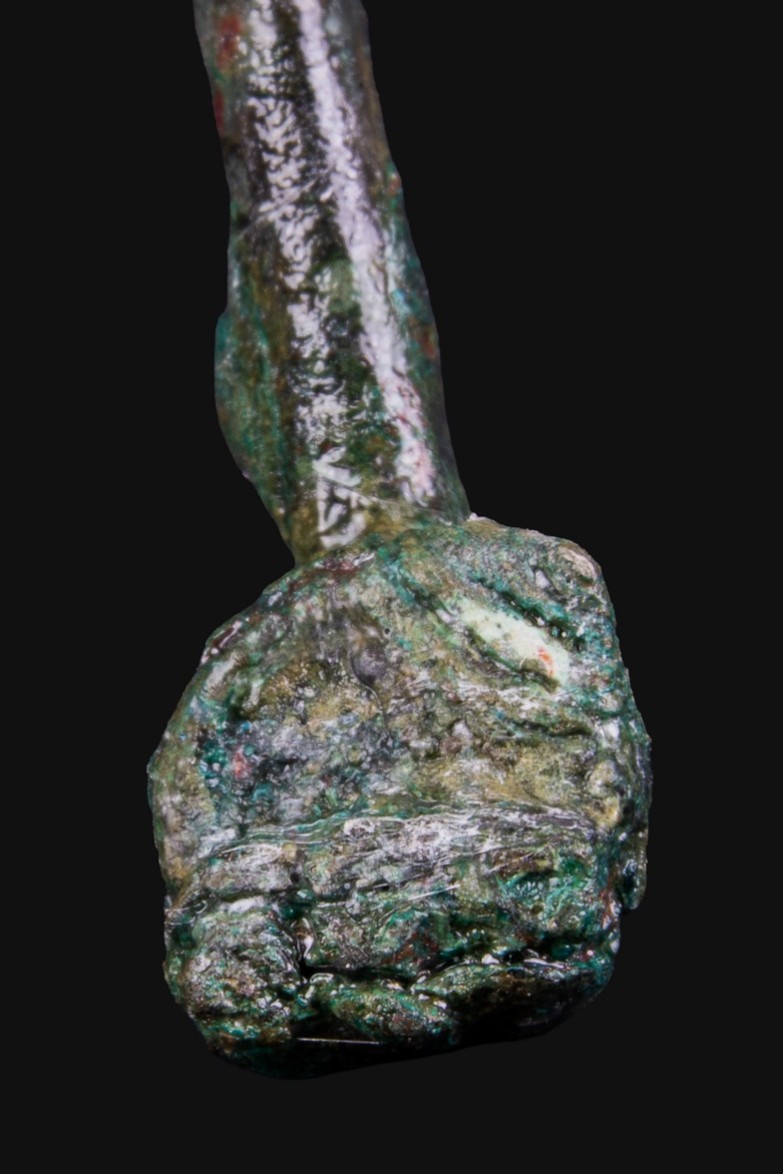
The heavy corrosion on the head of the pin obscures its original design, but a tiny sliver of silver or enamel still survives, hinting at its former embellishment. Can you spot it? ©HES
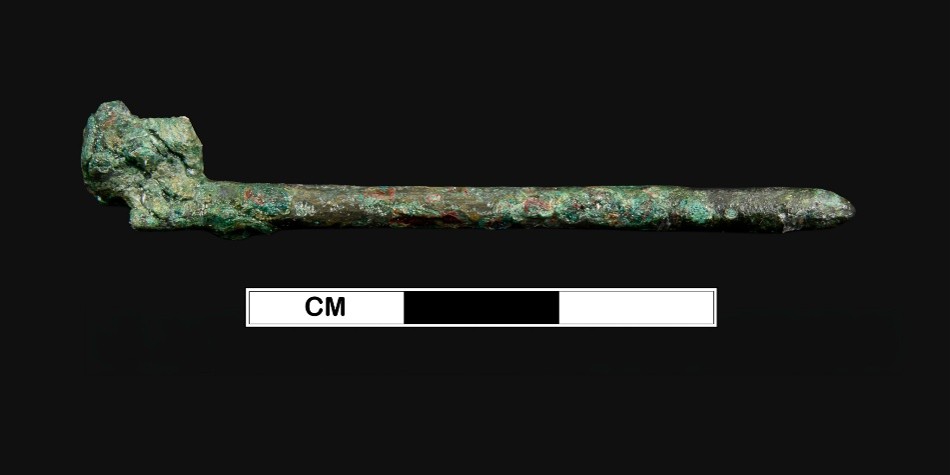
Early hand pin after conservation ©HES
Catboll Fisher and beyond
The excavation revealed multiple phases of activity in the investigated area. This included a distinct medieval settlement phase, likely spanning from the 12th to 15th centuries, related to the fishing community at Catboll Fisher (an earlier name for Hilton of Cadboll). Underlying this, several deposits, artefacts and early structure footings point towards an earlier phase of settlement dating to the 5th-6th centuries AD.
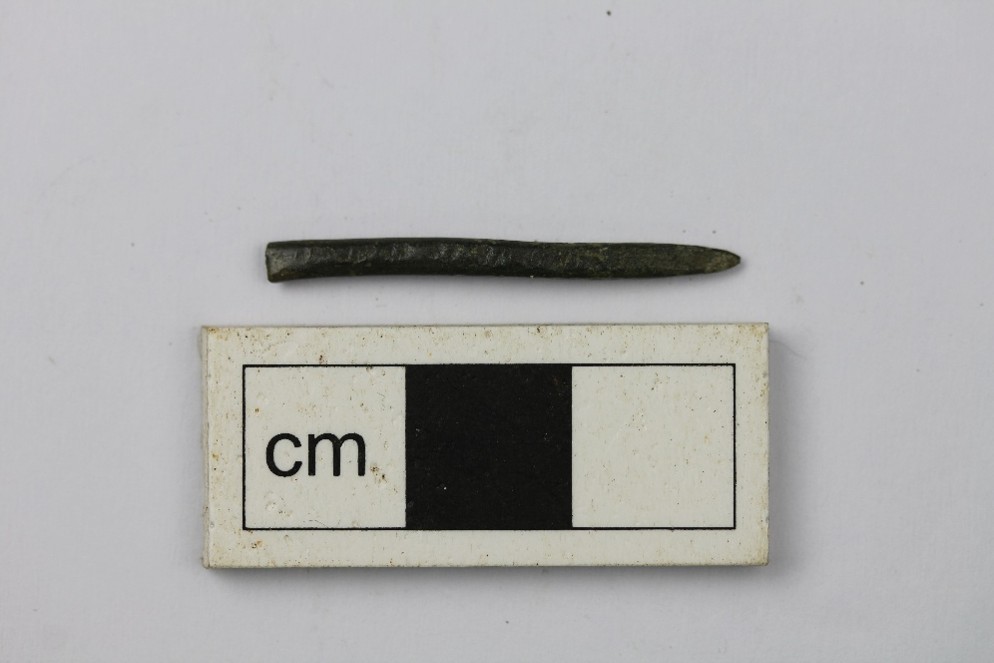
A broken fragment of pin from a penannular brooch ©HES
These fragments of archaeological evidence provide a tantalising glimpse of the community who worked and lived in this area years before the chapel was built in the 7th century AD and the cross slab carved in the 9th century AD. The community here likely had connections with other early medieval sites including the monastery at Portmahomack where there was a settlement from the 4th century onwards, other sites such as Rosemarkie and Craig Phadrig (accessible from the inner Moray Firth) and perhaps even across the Outer Moray Firth to regional centres like Burghead fort (active from the 7th century) and other ecclesiastical sites like Kinneddar.
What’s next?
The results of the project so far have been really intriguing so we plan to return to investigate a larger area around the earliest structures identified in 2023 this September. Find out more about the site on a tour during the Cadboll in Context Excavation Open Day on Saturday 12 September.
Stay posted for further excavation and post-excavation updates!
Explore further!
You can see the main fragment of the Hilton of Cadboll cross slab where it is on display at the National Museum of Scotland. The base fragment is available to view at the John Ross Visitor Centre in Balintore. The site itself is open to visitors for free all year round, with parking on the road above and a footpath down to the site.
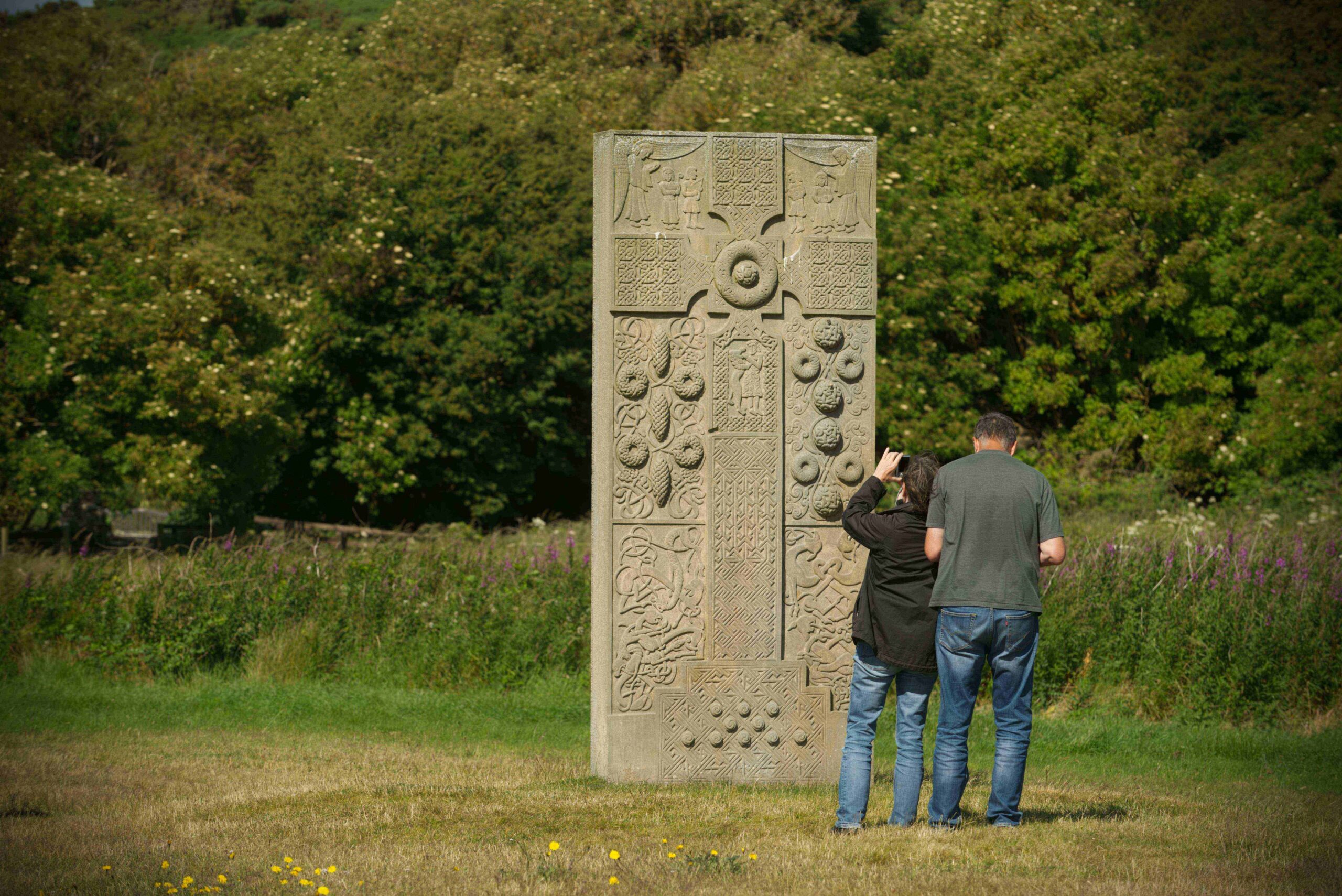
If you are in the area, it’s always worth a visit to the other nearby stones at Shandwick and Nigg. And pop into the Tarbat Discovery Centre to find out more about the Pictish monastery and Martin Carver’s excavations. Further afield there are plenty more sites to visit on the Highland Pictish Trail.
From the comfort of your own living room you can explore 3D models of the cross slab and many other examples Early Medieval stone sculpture from around Scotland on sketchfab.
You can find out more about the Hilton of Cadboll project undertaken by GUARD in both the National Research Framework and the Highland Archaeological Research Framework.
The Society of Antiquaries of Scotland published the work in the Hilton of Cadboll open access monograph here: New open access e-book: A Fragmented Masterpiece – Society of Antiquaries of Scotland
About the author
Cathy MacIver is a Project Manager at AOC Archaeology with a particular research interest in later prehistoric and early medieval settlement across Scotland. This blog presents ongoing work on the environs of Hilton of Cadboll.
Share
About Author