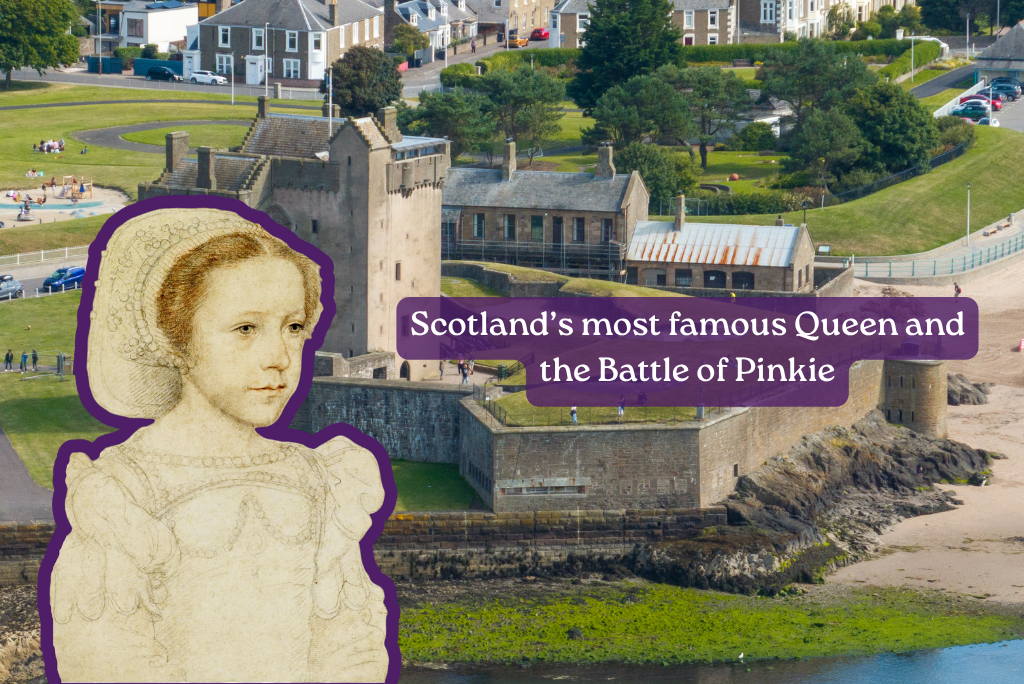
On 9 September 1543 Mary, Queen of Scots was crowned aged just nine months old. Four years later, a two-day battle, known today as the Battle of Pinkie, began. This ended in crushing defeat for the Scots. What was the connection between these events four years apart? And why should we leave the traditional name for the wars fought during Mary’s childhood – the ‘Rough Wooing’ – in the past?
Please be aware that this post contains descriptions of violence against women⚠️
Mary’s birth and the seeds of war
Mary’s accession as Queen of Scots aged just six days old sent shock waves throughout Europe. Her father, James V of Scots, had died suddenly, at the peak of his powers. As James’ subjects grieved, however, his uncle, Henry VIII of England, spied an opportunity. James’s mother, Margaret Tudor, was Henry VIII’s older sister. This meant if Henry died with no legitimate children, James or his children would inherit the English throne and unite England and Scotland with Scotland as the senior partner. In 1542, this had seemed far from impossible. Henry VIII’s quest for a son had caused him to break away from the Catholic Church and institute a new, Protestant, church. Although by 1542 Henry had a son, the legitimacy of his two daughters (Mary and Elizabeth Tudor) was now in question. His separation from the European religious majority made him vulnerable, even to a tiny baby girl.
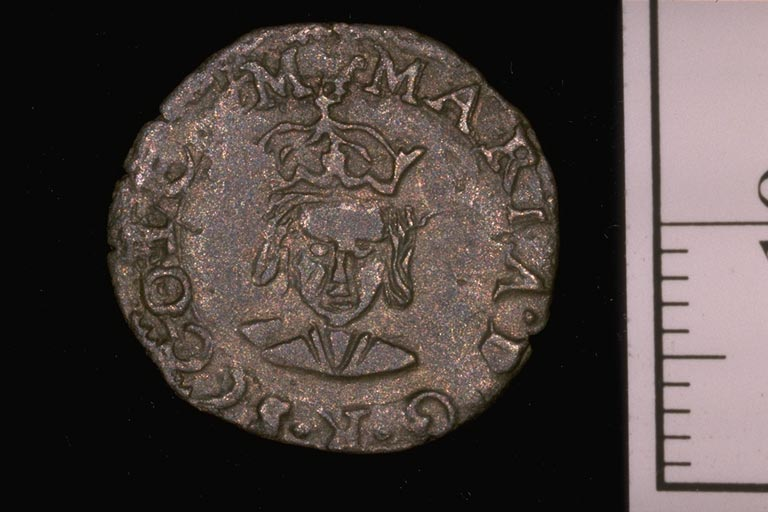
This penny of Mary, Queen of Scots was the first portrait her ordinary subjects would have seen of her. Although she is portrayed as a child, her appearance in a closed crown, a symbol of sovereignty, carried a powerful message. The Scots had a monarch already, so Henry VIII need not apply. Image licensed by National Museums Scotland via SCRAN. View on trove.scot.
Why did Henry VIII invade Scotland?
For a monarch brought up surrounded by English myths that he had a right to rule Scotland, James’s death seemed to Henry to be, quite literally, a gift from God. If the Scots could be persuaded to allow their baby Queen to marry his young son, Edward, when both were old enough, this would bring about Anglo-Scottish union. Because in this period the husband was understood to rule over his wife, this would pass Mary and her kingdom into English control. In one fell swoop, the Scots would be required to convert to Protestantism, united with England forever. Mary’s dynastic threat through her claim to the English throne would be neutralised. The English would be more secure in a hostile Catholic Europe.
Initially the Scots seemed open to Henry’s proposition. Some had converted to Protestantism and so genuinely supported the proposal. Some had been captured by the English and agreed to work towards Henry’s agenda to earn their freedom. Others, however, were playing a dangerous double game. This last group included James Hamilton, second earl of Arran. Arran was the head of one of the most powerful noble houses. He was also Mary’s distant cousin, and would inherit the throne if she died. As a result, he was appointed Governor to rule during her minority.
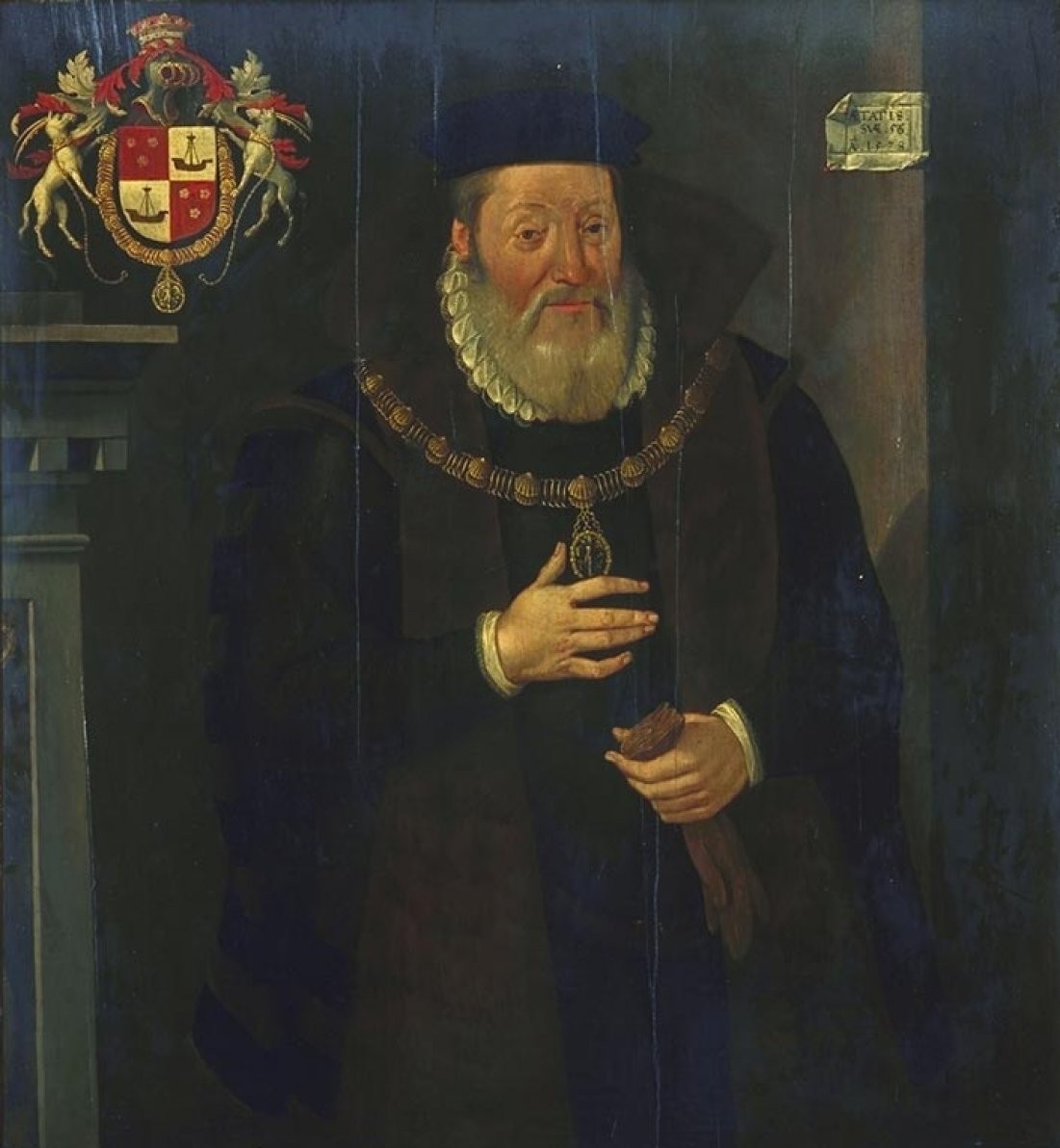
Portrait of James Hamilton, 2nd Earl of Arran and Duke of Chatelherault (c1517-1575). Image licensed by Lennoxlove House via SCRAN: view on trove.scot.
For the first half of 1543 Arran negotiated with the English and offered concessions to Protestants at home. He even agreed to the Treaty of Greenwich, which promised Mary’s marriage to Edward. However, this came with the caveat that the Treaty was subject to parliamentary approval. When the time for that came, the Scots were much stronger. Divisions amongst the nobility had been overcome, and French help was beginning to pull through. English attacks on Scottish shipping broke the Treaty’s terms: Parliament rejected it, and an English marriage for Mary. Her coronation symbolised this new patriotic unity. The timing, too, was perfect: the autumn and winter rain would make the borders into much harder territory to cross. Any serious invasion would be delayed.
War and destruction
1544-1547: border raids and the siege of St Andrews Castle
When spring came, however, Henry’s anger at losing his son’s dynastic prize child-bride was still hot. In April 1544 an English army invaded by sea at Leith, burning Edinburgh. Holyrood Abbey was sacked, and plunder taken from the Palace and the neighbouring houses of wealthy nobles. Defence from Edinburgh Castle meant they did not take the capital, but they wrought havoc as they returned south through the borders. Two years of vicious cross-border fighting followed.
This was the first of three distinct stages during the war. The second was in 1546 and early 1547. Peace between England and France meany a truce (of sorts) in Scotland, but in May 1546 Cardinal David Beaton, Archbishop of St Andrews, was assassinated in his stronghold of St Andrews Castle. This started a lengthy siege in which the whole country was mobilised. Beaton’s assassination had been a revenge killing. A few months earlier he had ordered the Protestant preacher George Wishart to be burned alive. The siege fell in July 1547 with French naval help.
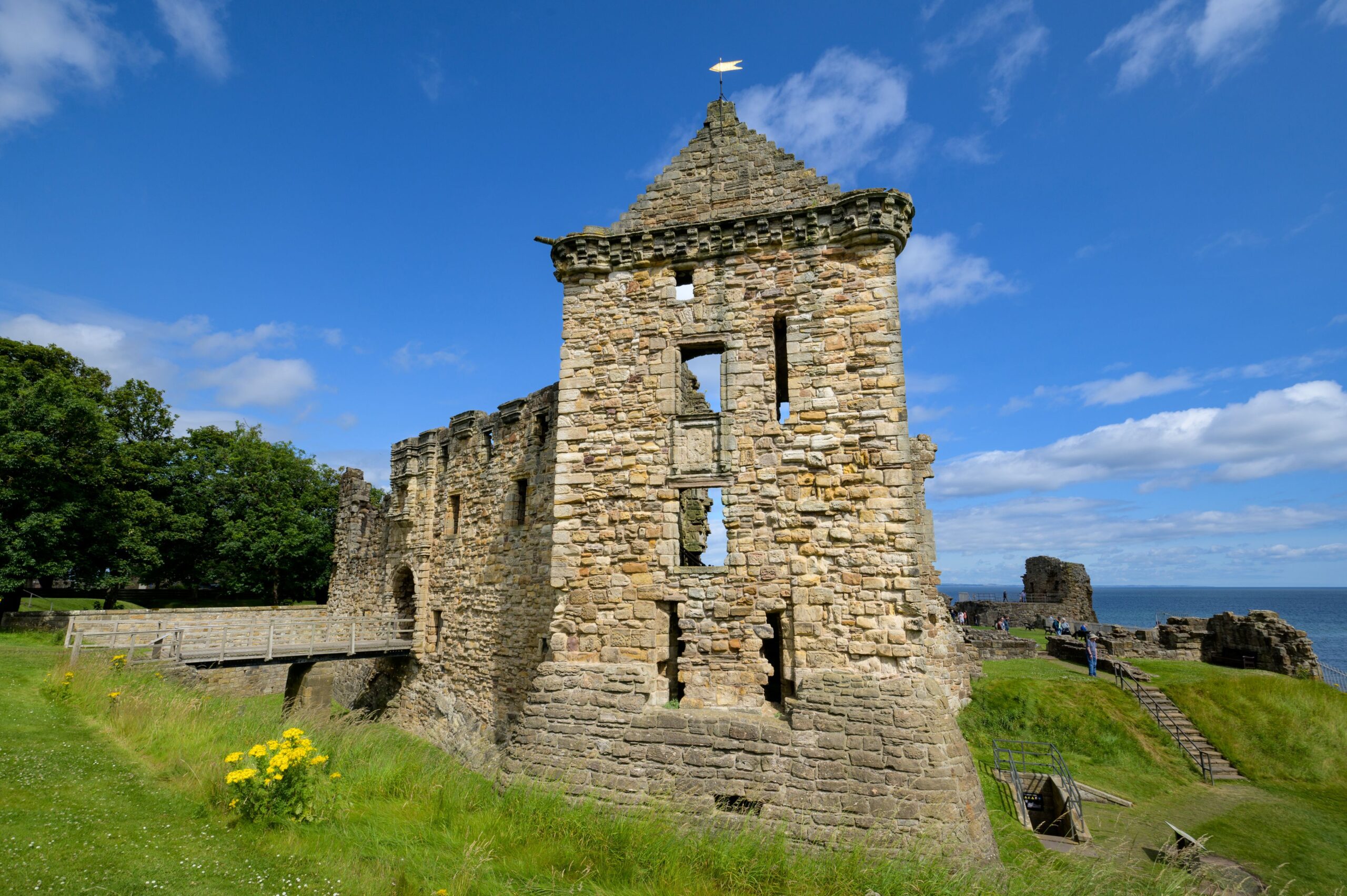
St Andrews Castle as it was rebuilt following the siege with the heraldry of Archbishop John Hamilton, half-brother of Governor Arran. Its costal position gave it important strategic value during the wars.
The final campaigns: from the Battle of Pinkie to the Peace
In September 1547 the final stage of the war began. After the death of Henry VIII, his son, Edward VI, succeeded him. As Edward was a child, England was ruled on his behalf by his maternal uncle, Edward Seymour, Protector Somerset. Somerset was a talented general and he recognised that to conquer Scotland a new strategy was needed. Rather than smash-and-grab border raids they would take castles, hold them, place a garrison of soldiers within them and then gradually increase their control over the countryside.
Following a devastating – but narrow – defeat of the Scots at the Battle of Pinkie, the English followed this strategy. East Lothian and the borders suffered heavily, but this was a national campaign. Using ships they took Broughty Castle on the Tay and Inchcolm Island in the Firth of Forth. A separate campaign on the west coast devastated the area around Dumfries.
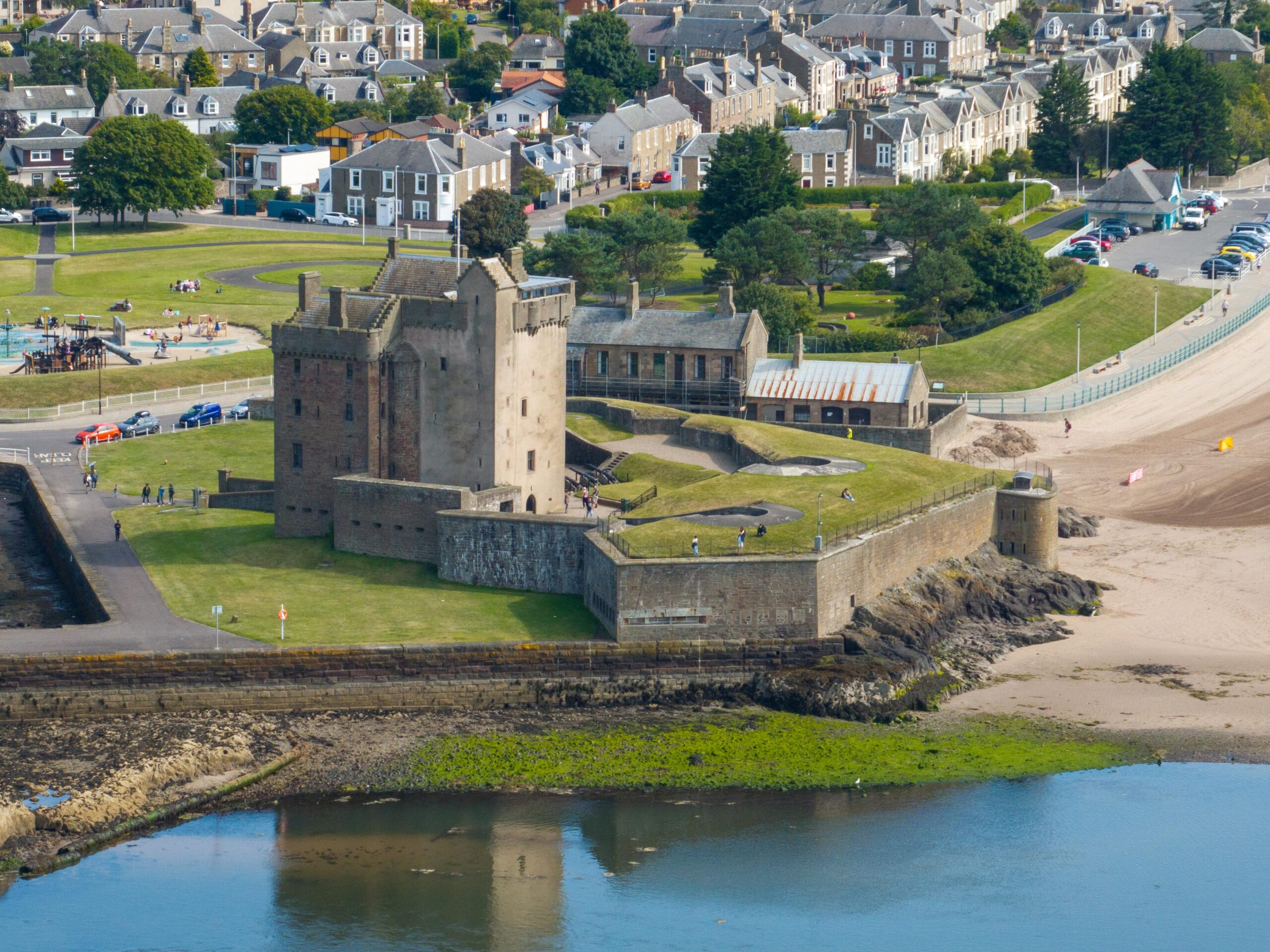
Broughty was strategically located. It was near the mouth of the Tay, down-river from Dundee (Scotland’s second wealthiest burgh) and Perth (another significant and wealthy town). The garrison here caused economic damage as well as physical destruction.
In the early months of 1548 the Scots sought help, by July, negotiations had paid off. The Treaty of Haddington promised Mary to the French Dauphin. In return, French military might would support the Scots in their war.
Haddington was a symbolic location to sign this Treaty. Once a wealthy East Lothian commercial centre, it had been taken by the English. The siege was violent and lengthy.
Soon, the combined efforts from the Scots and the French put the English under pressure. Facing rebellion and trouble at home, the English struggled to maintain momentum. In early 1550 the final shots were fired as England and France made peace. The war ended in Franco-Scottish victory. However, it took until 1551 for England and Scotland to finally negotiate peace in the Treaty of Norham.
What happened to Mary Queen of Scots?
Keeping the baby queen safe was a priority throughout the conflict. After her birth in Linlithgow Palace, in the summer of 1543 Mary was moved to the stronger Stirling Castle. Both were properties of her mother, Marie de Guise, who was responsible for caring for her daughter.
Following the Battle of Pinkie, Mary was evacuated to Inchmahome Priory. As negotiations with France continued for her marriage to the Dauphin, she was moved to Dumbarton Castle. From here she set sail for France, only to return in 1561 after the death of her first husband, Francis II of France.
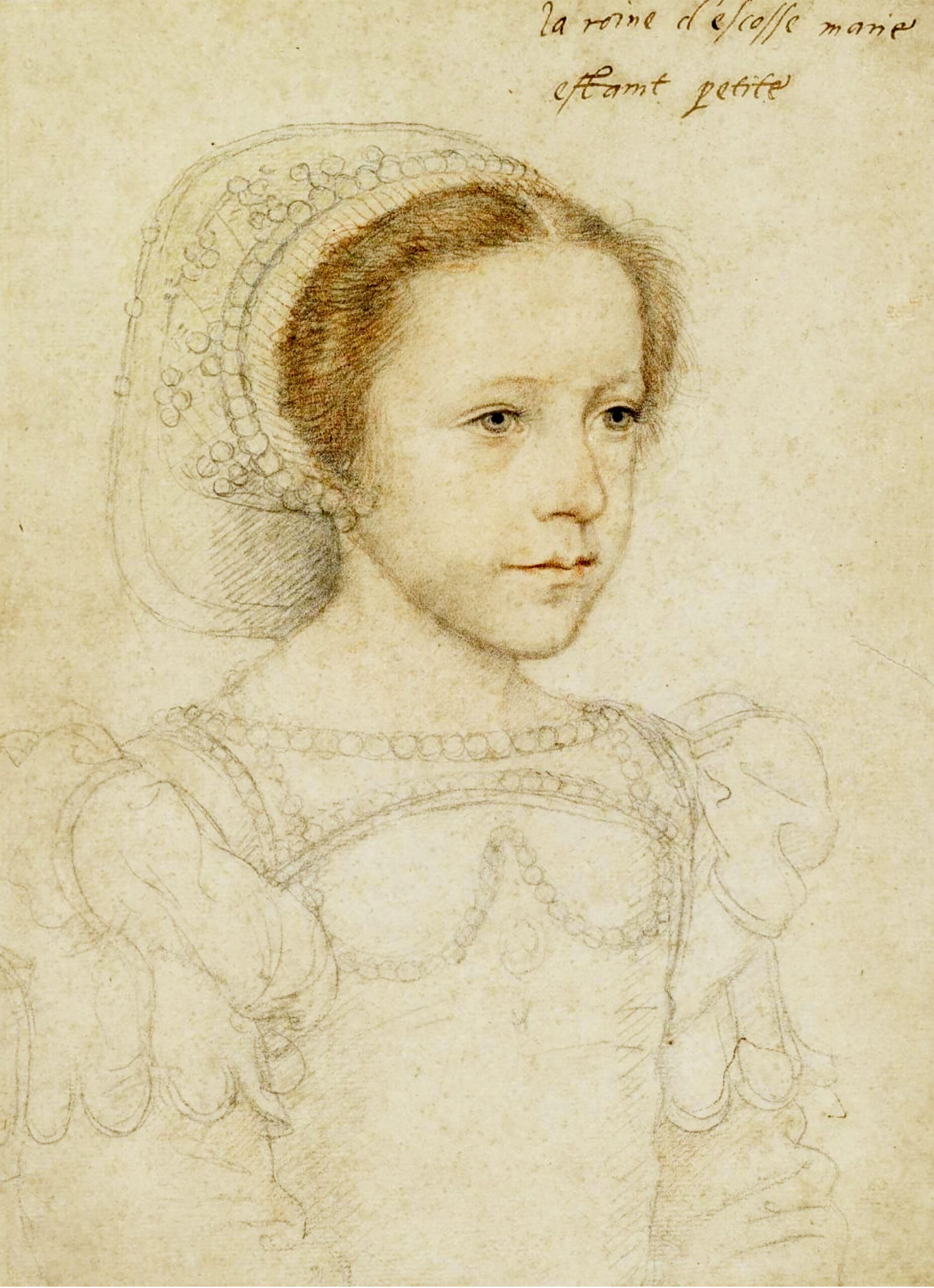
Mary, Queen of Scots (1542-1587) about 1549 by Francois Clouet. Original in the Yale University Art Gallery. Credit: Pictorial Press Ltd/Alamy stock photo.
Whilst Mary was kept safe, many of her subjects were not so lucky.
War and the people
This conflict took a devastating toll on the people. Disrupted trade, destroyed crops and increased demand for food for foreign soldiers on all sides pushed prices up. Alongside a cost-of-living crisis, war was expensive. The government demanded higher and higher taxes as the people had less and less to give. Meanwhile, in 1545 a plague epidemic reached Scotland. The only ways of combatting plague – controlling movement – exacerbated the economic effects of war.
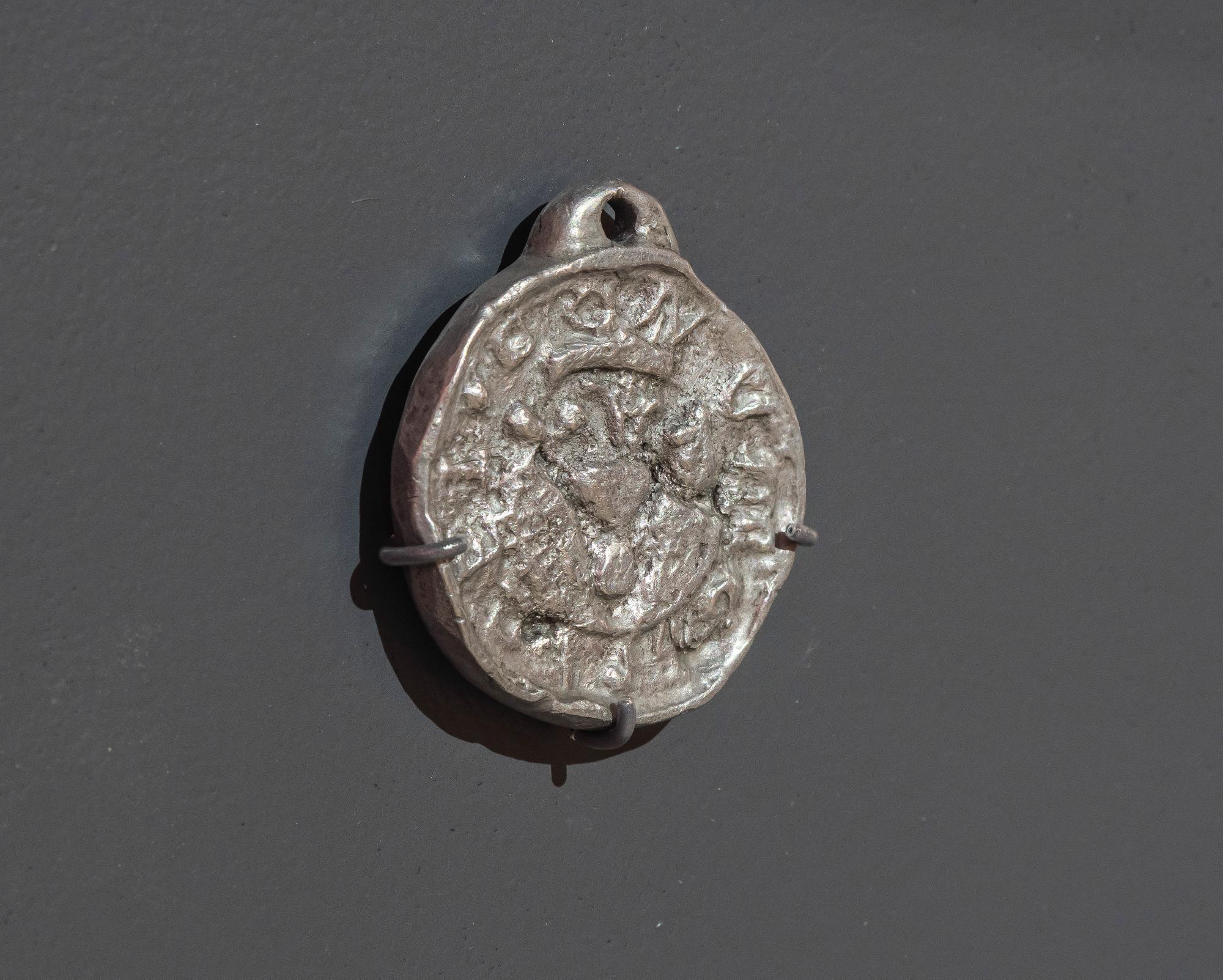
During the plague burgh councils wanted to restrict the number of people for whom they were responsible. Poor folk not born in the town were ordered to leave, those born in the town were allowed to stay – as long as they wore badges or ‘tokens’ to show they had a right to remain. This is the earliest surviving Scottish ‘beggar’s badge’. It was produced in Dundee in 1549 when the burgh lived in the shadow of English occupation. Copyright University of St Andrews Collections and Museums, with thanks to Edward Martin.
Conflict in past centuries can seem abstract, distant from our own lives. But thanks to the survival of precious burgh records we can recover some sense of how ordinary folk navigated these challenges. Take the impact of the English garrison at Broughty Castle. Up-river from this garrison, Perth was a potential target and its people lived in constant fear of invasion. One mother, Elizabeth Crighton, evacuated her daughter, Jane. Following the death of her husband at the Battle of Pinkie Elizabeth felt she did ‘not have a strong house of her own’ which could protect her child. Elizabeth could not accompany her daughter. Like many women in this time, she had responsibilities to her wider community and the war effort. She had to stay at home, in danger, to fulfil these.
Meanwhile, the heavy tax burden pushed one man, James Dick, a tailor, to breaking point. When he was asked for his contribution, he pulled a knife on the tax collectors and insulted them. With the Tay blockaded, coal – essential to bake, cook, brew or heat metal to make anything from weapons to horseshoes to jewellery – became scarce. Finding that some of the Perth merchants wanted to sell coal to Dundee for a higher than usual price, some of the Perth hammermen (metal workers) took them to court to keep the coal in the burgh. The insults traded show how high tensions were rising.
Perth never saw a single English soldier (although English spies were caught in the burgh) but every aspect of life was still affected by war. Dundee, a nearer neighbour, was not so lucky: in 1548 it burned to the ground.
Winning the war – but losing the peace
These difficulties did not simply vanish when the war ended. Some things certainly improved – Governor Arran celebrated by commissioning impressive home improvements to Kinneil Palace. The stunning wall paintings he commissioned remain to this day as a reminder of his leadership and the strength he and his fellow Scots showed in surviving.
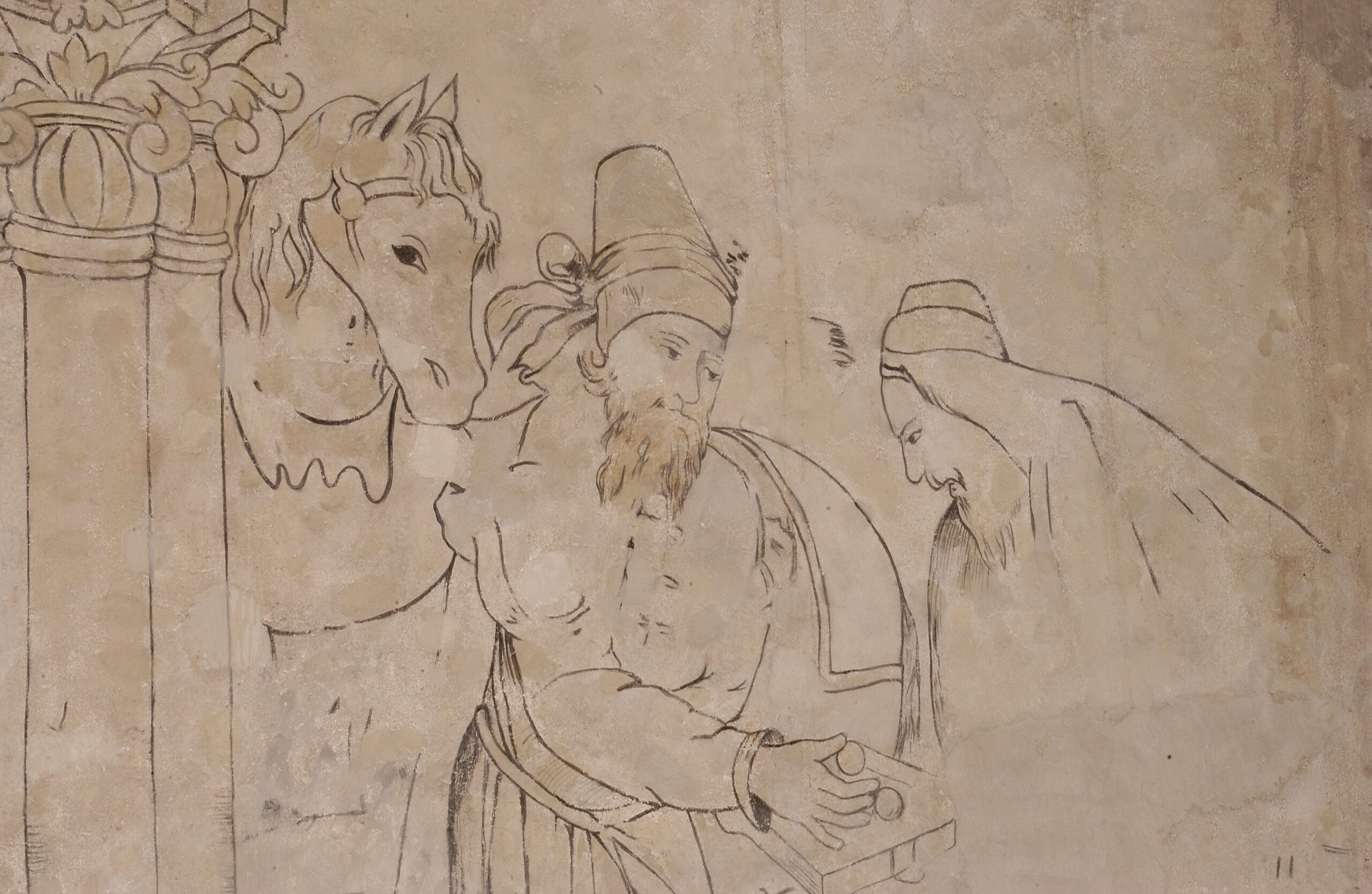
The wall paintings at Kinneil are some of the finest to survive from this period. This one is from a series of paintings depicting the story of the Good Samaritan. It shows the Samaritan paying two pence for the expenses of the traveller who had been attacked by thieves. You can see more images from inside the palace here.
Scratch the surface, however, and trouble was brewing. Prices did not return to their pre-war levels: in Cupar in 1552, for example, the baxters held an eight-day strike in protest that the burgh council had ordered them to sell their bread so cheaply that they would make a loss given the high cost of wheat.
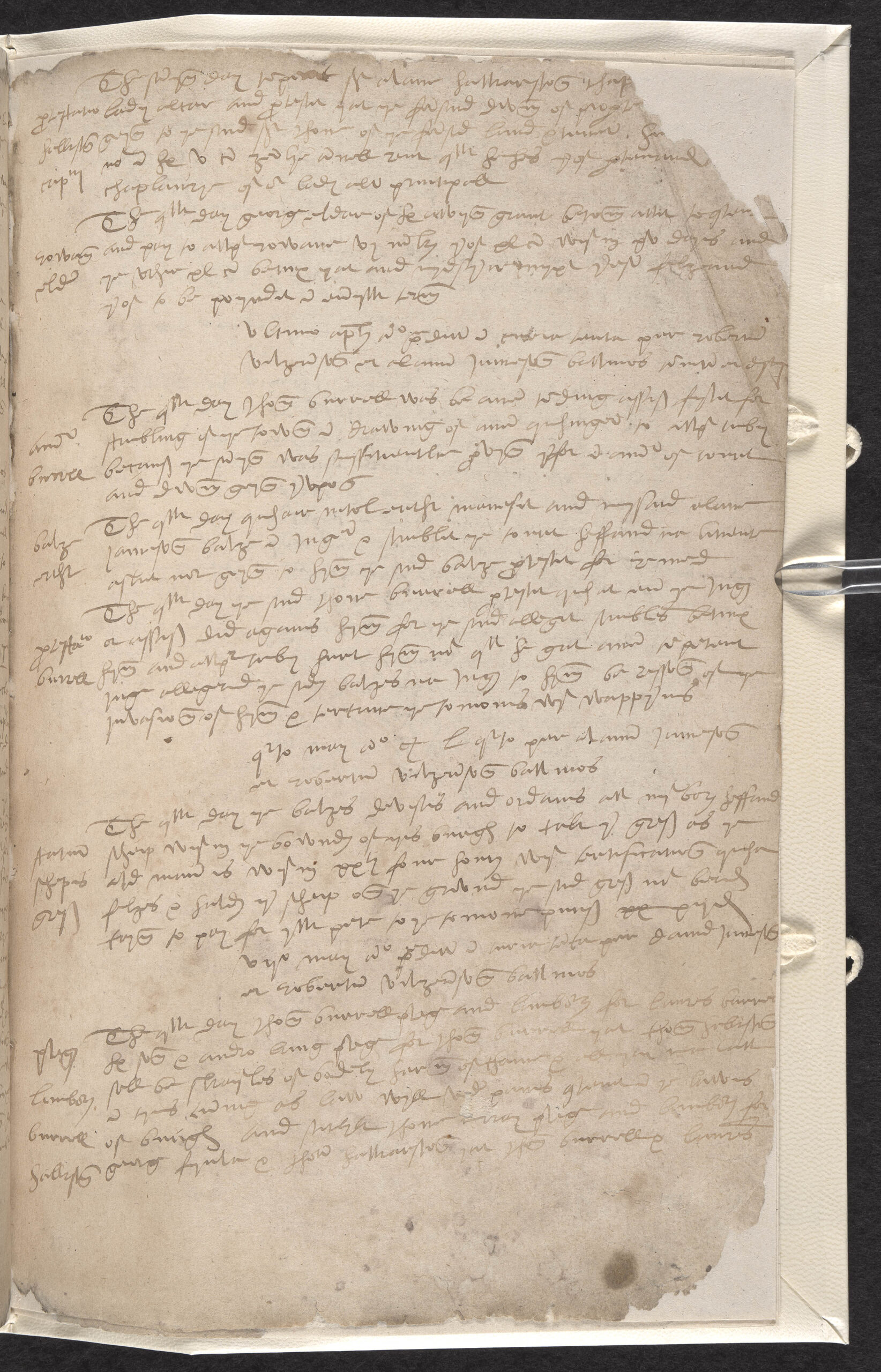
This page of the Cupar Burgh Records shows a trial following a riot in 1554. The burgh remained under intense economic pressure even though it was never invaded and the war had been over for four years. Copyright University of St Andrews Collections and Museums, with thanks to Edward Martin.
In 1554 Mary (aged eleven) was declared an adult, and picked a new regent to rule for her: her mother, Marie de Guise. This strengthened the Franco-Scottish alliance. This meant that the Scots had to pay more taxes to fund their own defence in line with French foreign policy. In 1558 the largest real-terms tax of the sixteenth-century was granted to fund Queen Mary’s wedding to her French prince. Haddington was still so war damaged that it was given a special 50% discount. This was one of many taxes raised in the post-war years to support repairs to damaged forts and to fund the French alliance. High prices and taxes caused resentment to grow.
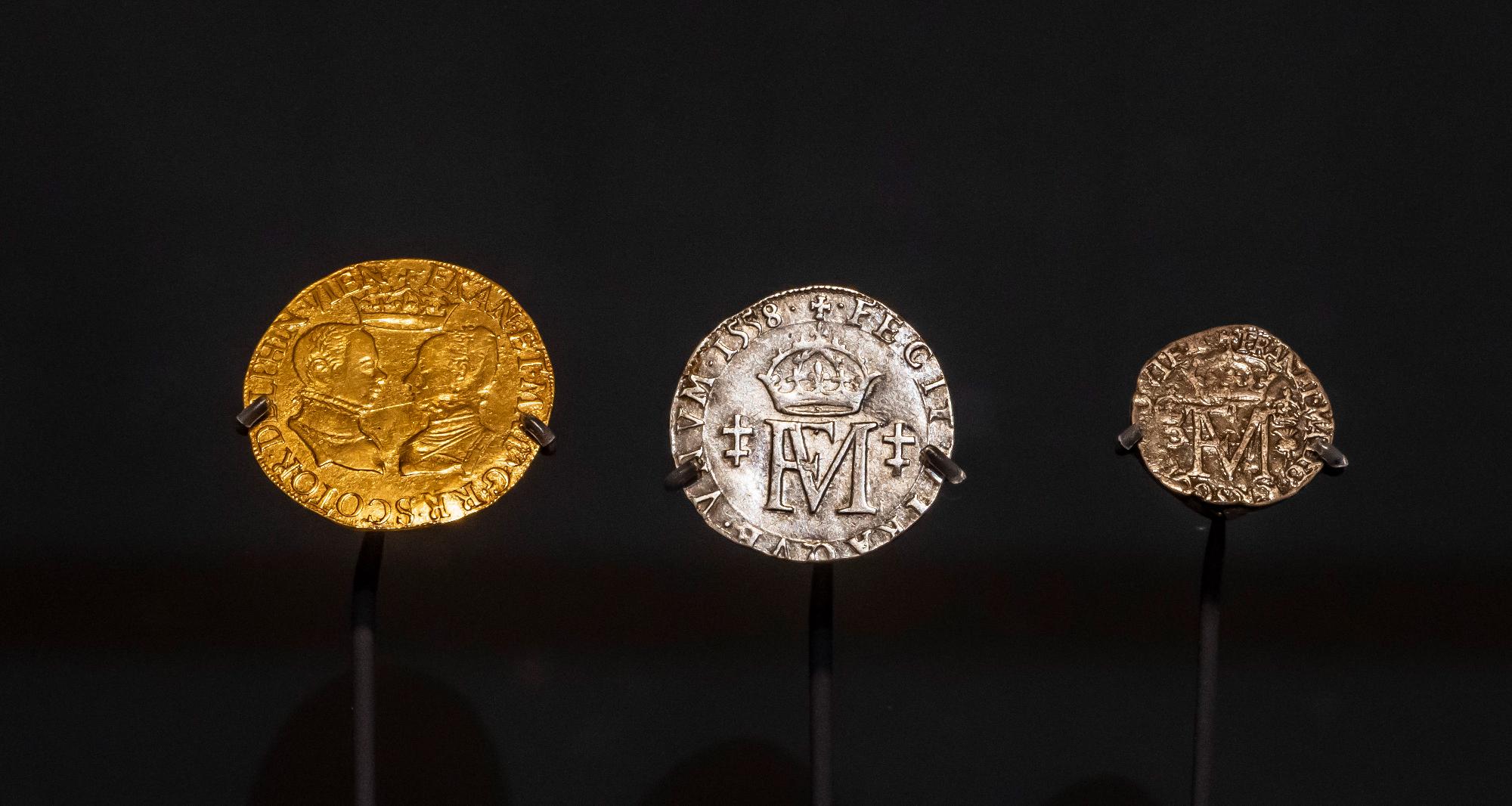
These three coins were issued to celebrate the marriage of Mary, Queen of Scots and Francis II. They bear imagery celebrating the alliance, such as the F and M monogram and the dolphin, a symbol of the Dauphin. As people had to hand over more and more coins to pay higher taxes or ever more expensive goods, these symbols connected Scotland’s French alliance with the money in their pockets and food on their plates. Copyright University of St Andrews Collections and Museums, with thanks to Edward Martin.
The Scottish Reformation: a child of war?
In 1559, less than a decade after the war ended, many Scots joined a rebellion against the Regent, Marie de Guise. Known today as the Scottish Reformation Rebellion, the rebels demanded a change in religion, away from Catholicism towards Protestantism.
How was it that in such a short time so many people who had been willing to fight and die for Catholicism and alliance with France were now willing to fight and die for the opposite – Protestantism and alliance with England?
For some people, religious belief was an important factor. Other people were motivated by concerns about growing French influence on Scottish life. Some of the nobles – particularly those in line to the crown if Mary died without children – were worried about their own position.
For many ordinary people, however, the economic and social disruption caused by war was an important factor. We know this because the rebel leaders, known as the Lords of the Congregation, used it in their propaganda as an argument to persuade people to join them.
Rebel propaganda asked people to remember that they had been ‘smitted’ by ‘exorbitant taxation’, and how their hard work was being used to pay for food to fill the ‘idle bellies’ of French soldiers stationed in Scotland. Pressure from high prices and high taxes made people desperate. They became willing to listen to radical rhetoric which only a few years earlier they had rejected.
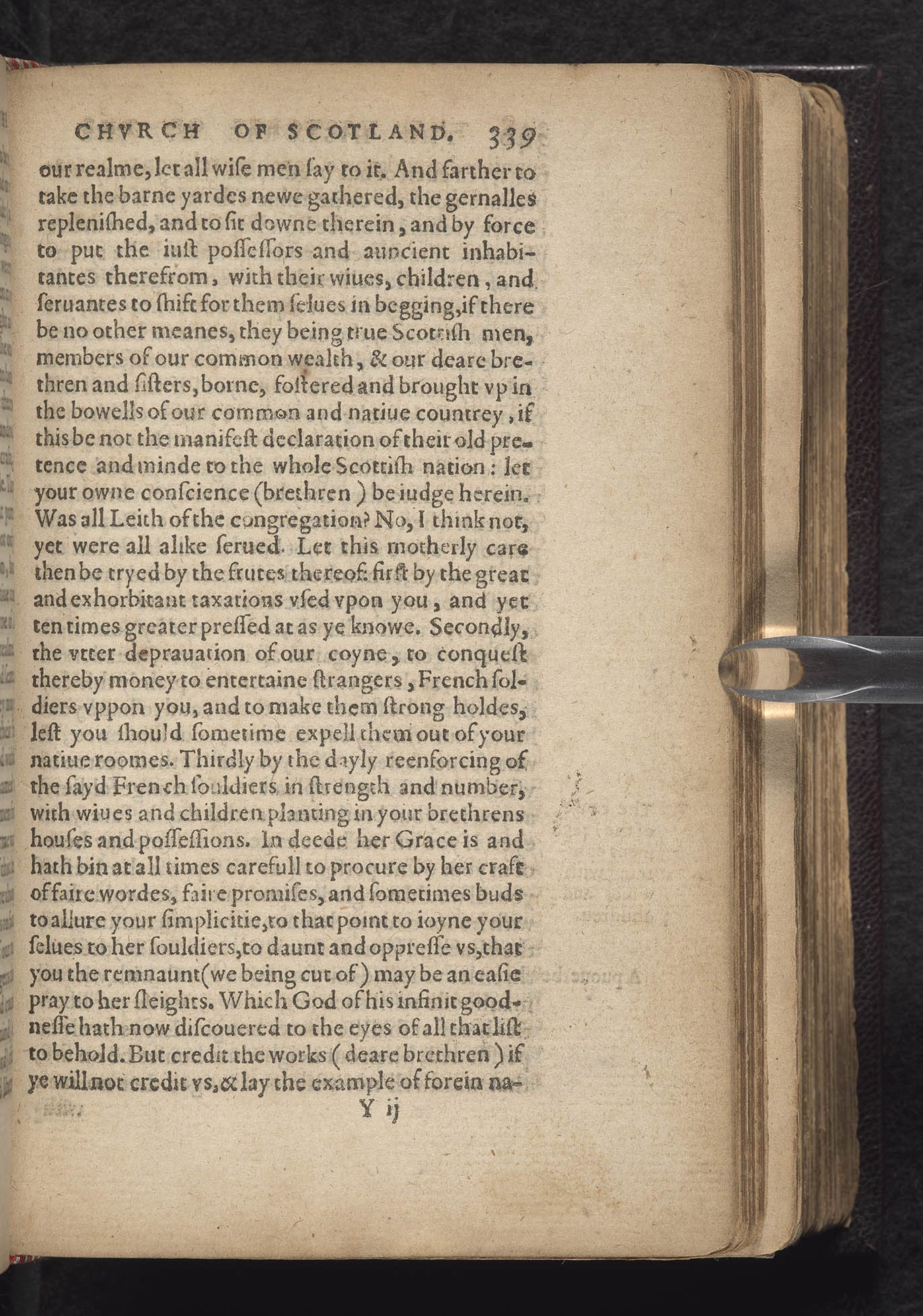
This page from John Knox’s History of the Reformation records an open letter sent as propaganda by the Lords of the Congregation. It asks the reader to remember the ‘great and exhorbitant taxes’ paid to fund the French alliance. Copyright University of St Andrews Collections and Museums, with thanks to Edward Martin.
New research, new perspectives…a new name?
The scale of this destruction raises another question, about the name for these wars. Traditionally they were called the ‘Rough Wooings’, and it was thought (based on claims by the novelist Sir Walter Scott) that this was a contemporary term. In reality, the term was first used 156 years after the war ended – in the debates surrounding Anglo-Scottish parliamentary union. At this time, those Scots who favoured union needed to explain why their ancestors had rejected it. Remembering the 1540s wars was especially difficult because the English had offered not only union but Protestantism, which by now was an important part of Scottish identity. In these debates, one pro-union author described the war as a ‘rough wooing’.
Where did this strange phrase come from? At this time, a ‘rough wooing’ had a specific meaning: it was a kind of sexual assault used to force a woman to marry her attacker. Contemporary misogynist thinking held that women often said ‘no’ when they meant ‘yes’, enjoyed sexual violence and, in any event, when a rapist married his victim, this was seen as her giving post-facto consent. The term ‘rough wooing’ therefore at the same time hid sexual violence and excused it – the end justified the means. These gendered ideas were obviously useful in explaining resistance to ‘union’ (a term also often used to describe marriage) in the 1540s: the Scots had, really, been receptive, and, regardless, the end justified the means.
From ‘Rough Wooing’ to ‘the Anglo Scottish wars of the 1540s’
Examining the records of the 1540s and the immediate aftermath of war shows the Scots did not have a settled name for the war they had lived through. They remembered the burning of homes, towns and crops, or the presence of English soldiers. Two generations after the war had ended one chronicler recorded that the Scots called the conflict ‘the nine years’ war’. Today, that name is double-booked: we use it to describe two quite different wars (in Ireland, 1593-1603, and between France and the Grand Alliance, 1688-1697).
In thinking about this important period in Scottish history from the perspective of the destruction and horror experienced by ordinary people – including women, who in this conflict as in so many others were victims of sexual violence – we have an opportunity to consider whether this anachronistic and gendered name is suitable to describe a war in which real people suffered. Having had the privilege of researching the stories of how these wars affected not just Mary, but her people, I think they deserve better – a name which does not romanticise or excuse the violence, but does what it says on the tin. By calling these wars what they were – the Anglo-Scottish Wars of the 1540s – we can put them in their proper place in a longer history of cross-border violence, and acknowledge those who suffered, as well as those who ruled.
Where to find out more?
You can find out more about the Anglo-Scottish Wars of the 1540s at the exhibition ‘War, Destruction and Reform – The Early Years of Mary Queen of Scots’ at the Wardlaw Museum in St Andrews until 20 September 2026.
Read more about the Siege of Haddington, and download research about the siege from the Haddington History Society.
About the Author
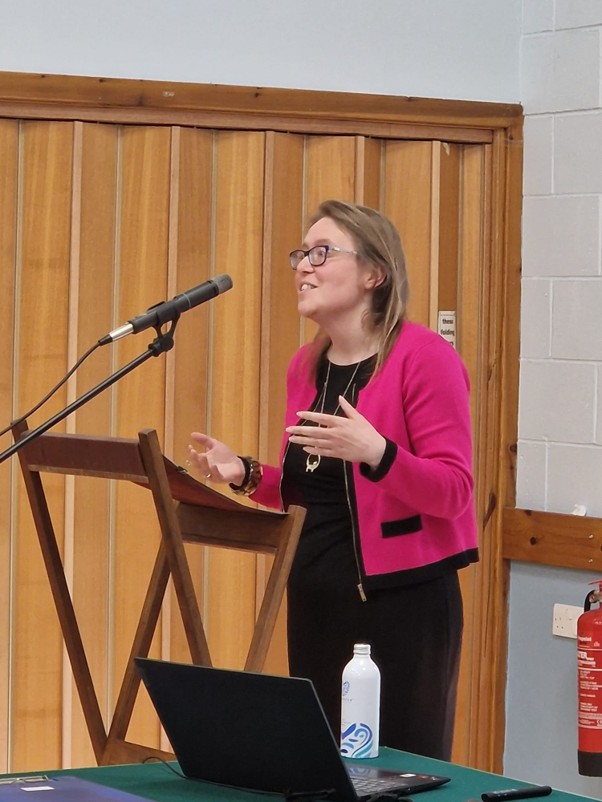
Dr Amy Blakeway is a Senior Lecturer in Sixteenth-Century Scottish History at the University of St Andrews. This blog shares research from her third book, ‘War and Governance in Scotland, 1543-1559: Destruction, Reconstruction, and Reform‘, published by Edinburgh University Press in 2026.
Share
About Author