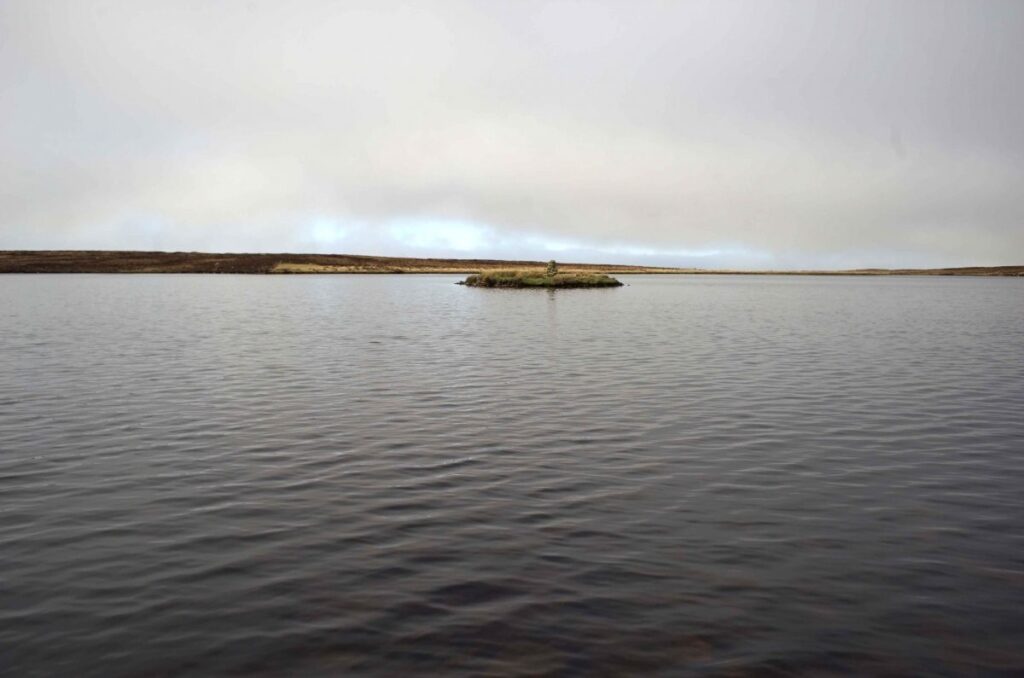
The Designations Service at HES deals with many requests to designate archaeological sites as scheduled monuments. While all the sites suggested to us are interesting, there are some that stand out. That was the case when we had a request to consider two sites in Na h-Eileanan Siar (the Outer Hebrides or Western Isles). Why did these stand out? Read on to find out!
Crannogs
Earlier this year, we were asked to consider two crannogs in Na h-Eileanan Siar for designation as a scheduled monument. A scheduled monument is a Protected Historic Place designated by Historic Environment Scotland as a nationally important archaeological site or monument. Anyone can ask us to consider a site for designation as a scheduled monument or to update or review an existing designation. A request like this, then, wasn’t unusual.
Loch Bhorgastail, crannog. Copyright: HES. View on Trove.scot.
Crannogs are wholly or partly artificial islands made from timber, earth or stone. More than 100 are known in Scotland, built in lochs, wetlands and estuaries. Most were used as dwelling sites. So, although crannogs are important archaeological sites, someone asking us to look at two of them was not out of the ordinary.
What did stand out was the date of these sites. Crannogs were built from prehistory to the medieval period. Until recently, archaeologists thought that the earliest examples dated to the Late Bronze Age or Early Iron Age (after about 800BC). The two crannogs suggested for designation were built in the early Neolithic, almost 3000 years earlier than previously thought!
The Islands of Stone project is a collaboration between HES and the Universities of Southampton and Reading. The project did the work to date these two sites and others in Na h-Eileanan Siar. The watery location of these sites means that organic materials like wood are preserved, giving us unique insights into these sites.
Altogether, this project has shown that that some communities were building crannogs much earlier than we thought. It has told us that early crannogs were used over a very long period of time and, instead of living on them, prehistoric communities appear to have been using the sites for something else entirely.
Loch Bhorghastail
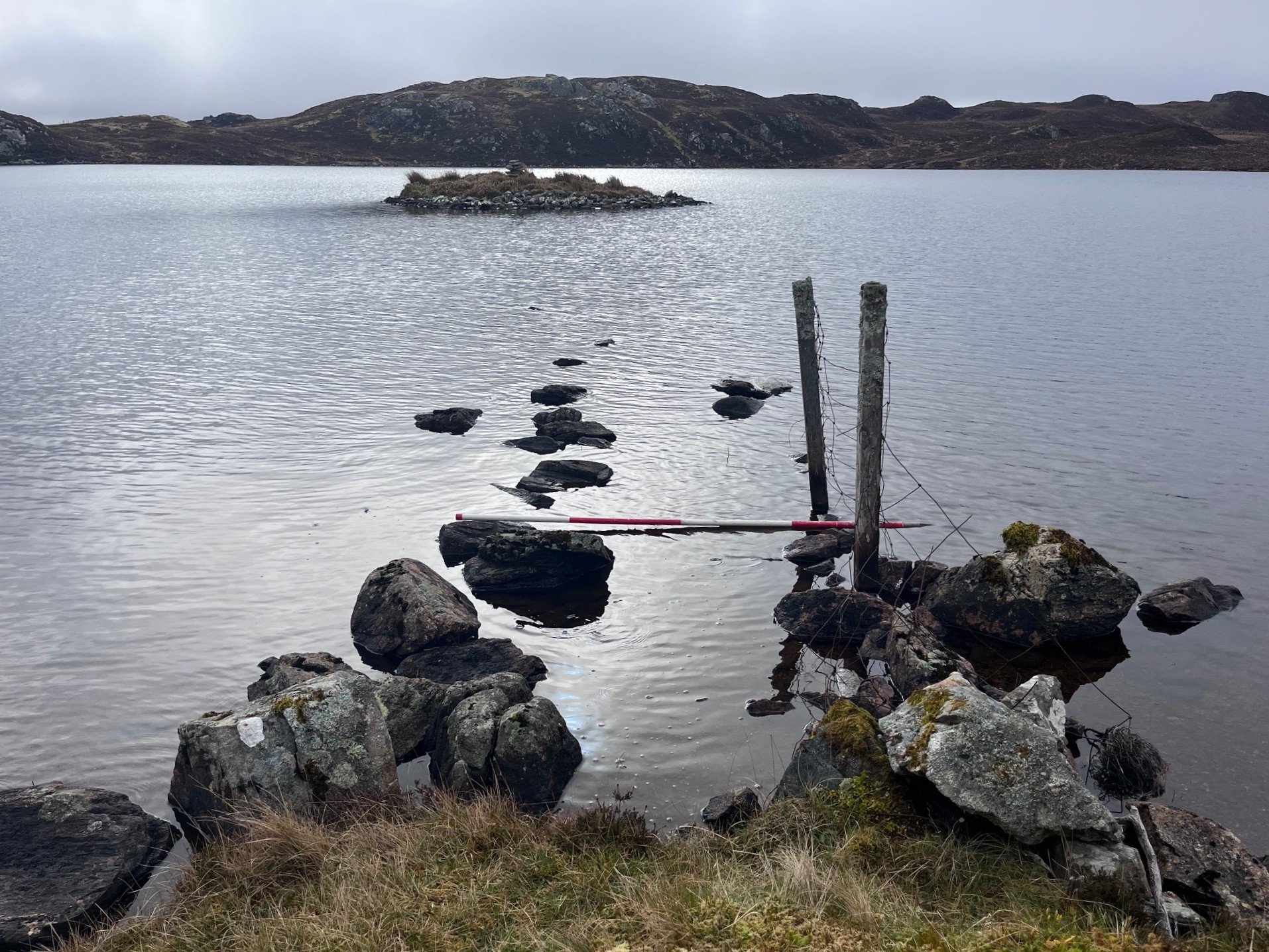
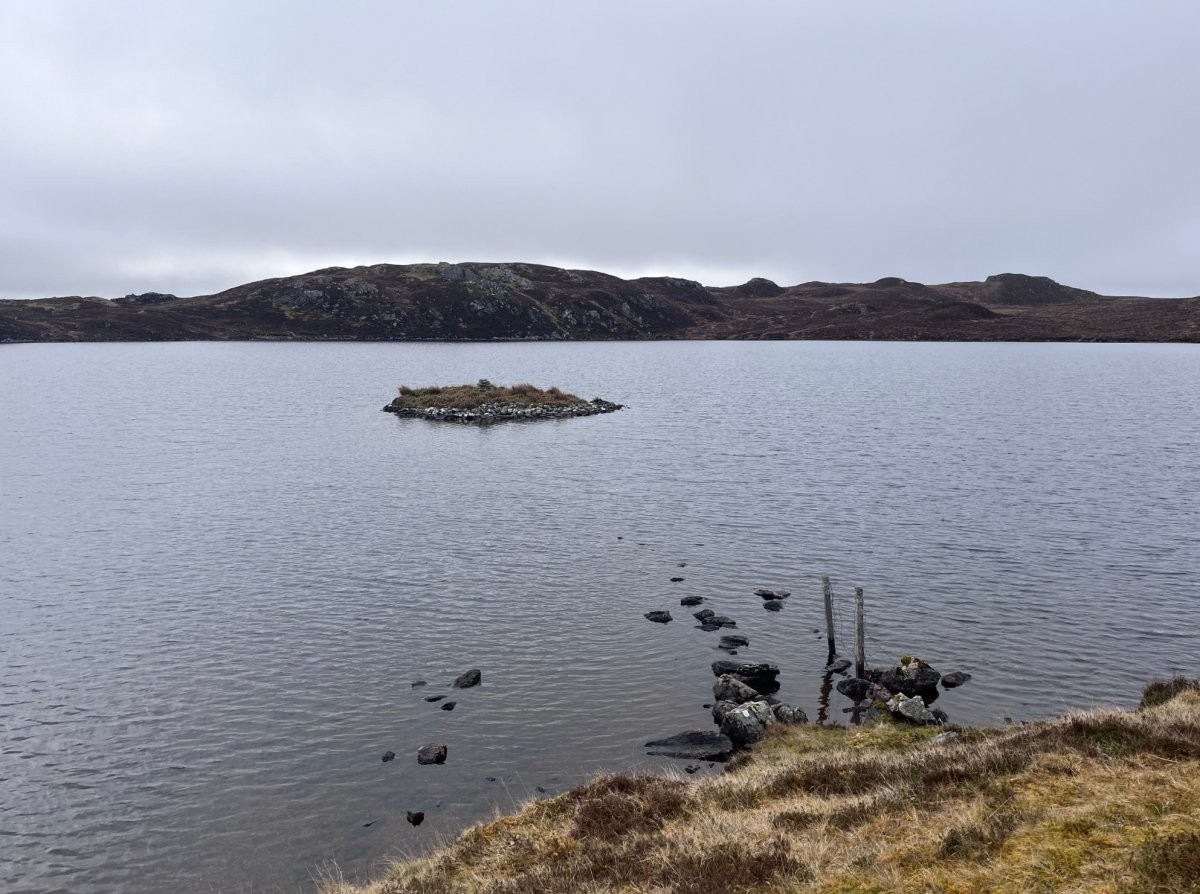
Loch Bhorgastail, crannog. Copyright: HES. View on Trove.scot.
The first crannog we looked at is in Loch Bhorghastail, near Carloway on the Isle of Lewis. Today it looks like a small, stone-built islet sitting about 30m from the shore. A slightly curving stone causeway, now underwater, extends from the western side of the crannog to the shore.
There is, though, much more to this site than meets the eye. Excavation by the Islands of Stone project has shown that it started life as a circular timber platform measuring about 23m across.
This platform was made of piled up brushwood on top of larger willow and birch logs laid directly onto the loch bed silts. Big stones had been placed on top of the larger timbers, probably to weigh them down. Large quantities of pottery and worked stone were found on and around the crannog. Some of the pottery even had tiny bits of prehistoric food still stuck to it!
The remains of this timber platform is now below the water level. It has been dated to 3640-3360BC, which means it was built in the early Neolithic period.
Later during the Middle Bronze Age period (1600-1200 BC) this timber platform was changed. A brushwood layer was added to the western side of the isles. The stones were moved and more added to create the slightly smaller stone islet visible today. Later still, the islet was re-used during the Iron Age (800 BC – AD 400), shown by a pit and area of burning uncovered by the excavation.
So, this site started out as a large artificial wooden island, which was built more than 5000 years ago. About 1500 years after this wooden crannog was built, it was modified and made into a slightly smaller stone island. The earlier timber structure, now sunken and submerged and lying partly beneath the stone island, formed the foundations for this stone crannog. After a gap of perhaps as much as 1000 years there is evidence for the re-use of the islet in the Iron Age. What a fascinating site!
Loch Marabhat
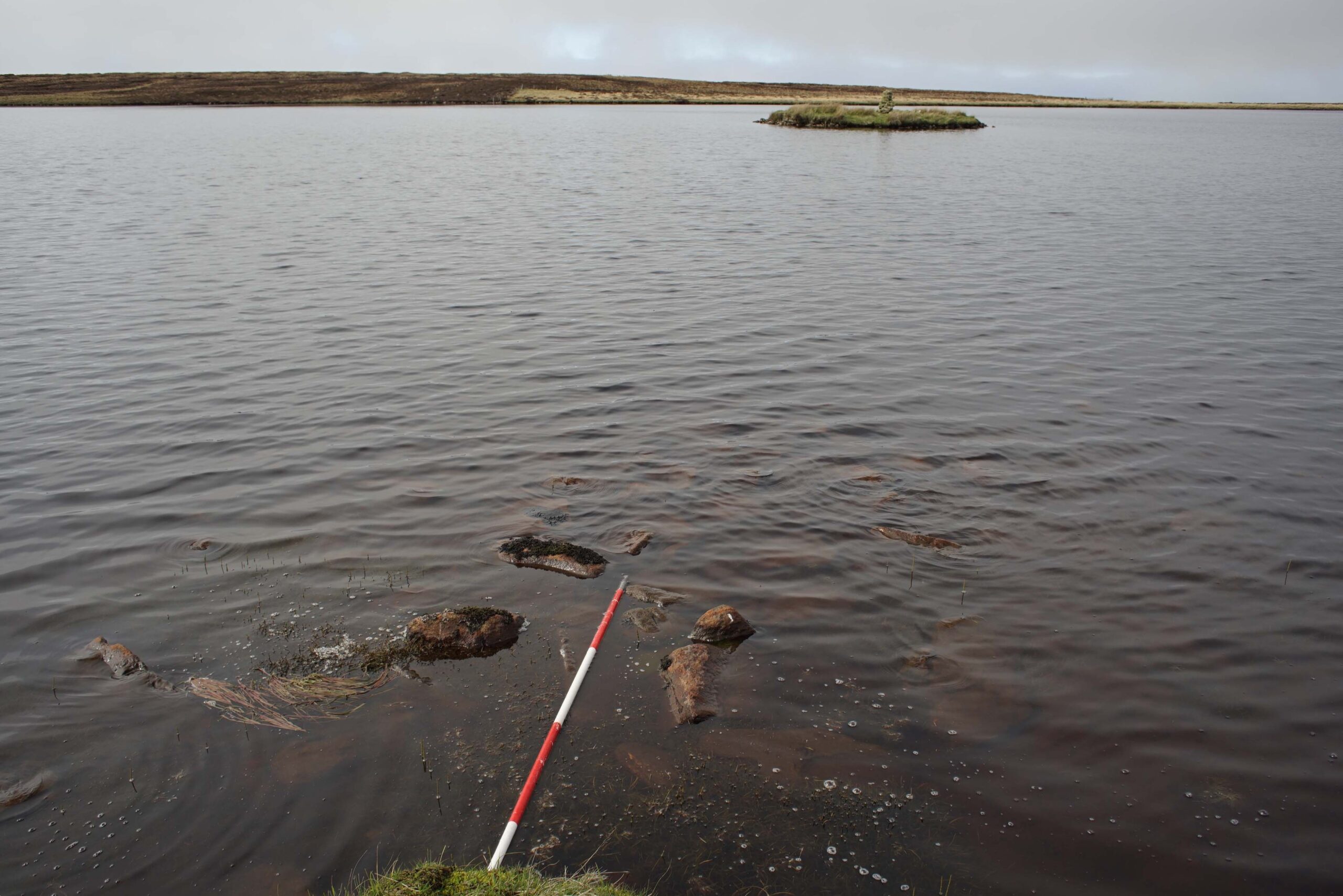
Loch Marabhat, crannog. Copyright: HES. View on Trove.scot.
The second crannog we were asked to look at is not far away. About 23km northeast of Loch Bhorghastail is Loch Marabhat where there is a very similar stone islet. This one sits in the loch about 70m from the shore.
This crannog hasn’t been excavated but the Islands of Stone project sent snorkel divers to survey it. The divers found that this site also has a stone causeway that goes from the shore out to the islet. This causeway is now underwater. They found that the lowest levels of the site are also made of wood.
Samples taken from this timber layer returned radiocarbon dates of 3510-3200 BC. So this site also dates to the early Neolithic. It may even have been built at about the same time as the Loch Bhorghastail crannog. Pottery and stone tools were found on the loch bed around the site.
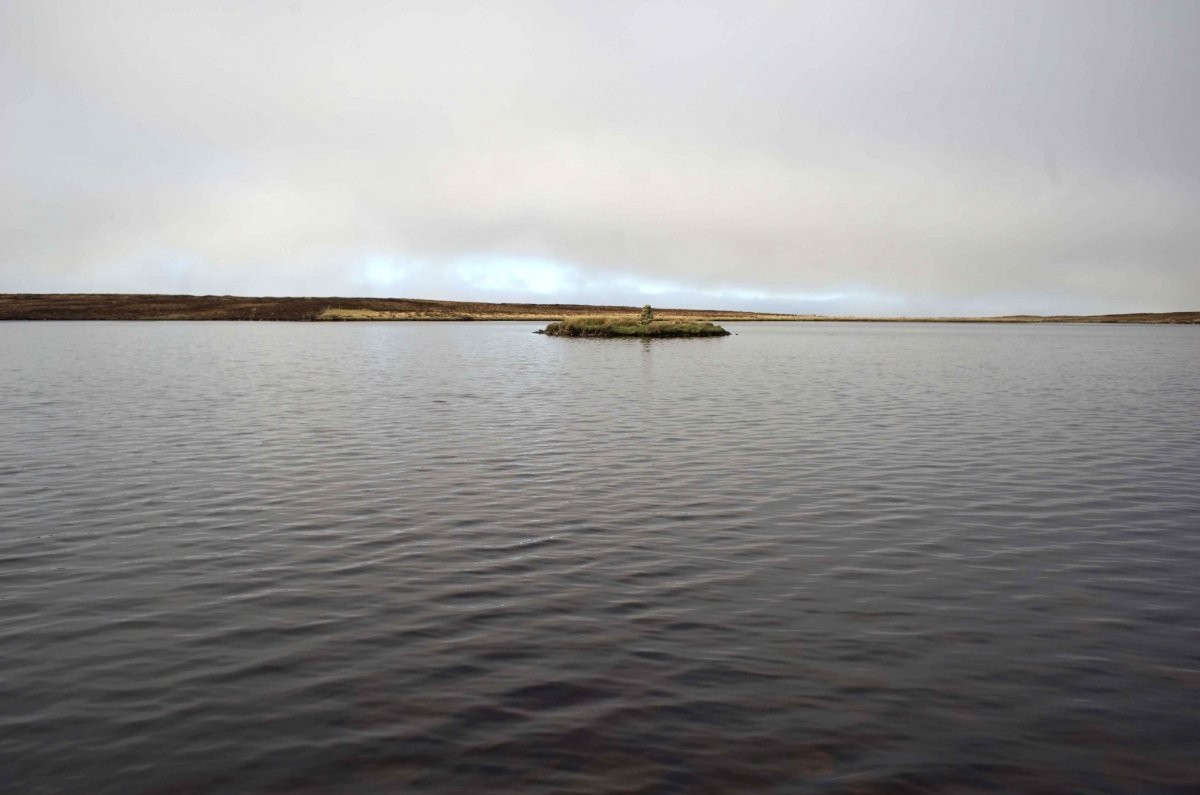
Loch Marabhat, crannog. Copyright: HES. View on Trove.scot.
As the Loch Marabhat crannog is also made of timber with stone on top, we think it probably had a similar history to the excavated example. It, too, probably started out as a timber platform, before being modified and made into a stone crannog, probably during the Bronze Age. It may, too, have seen re-use during the Iron Age.
A rare monument
What makes these two sites so unusual is that only 11 confirmed crannogs of Neolithic and Bronze Age date are known. All 11 are found in Na h-Eileanan Siar. Other confirmed examples include crannogs in Loch Langabhat and Loch an Duin.
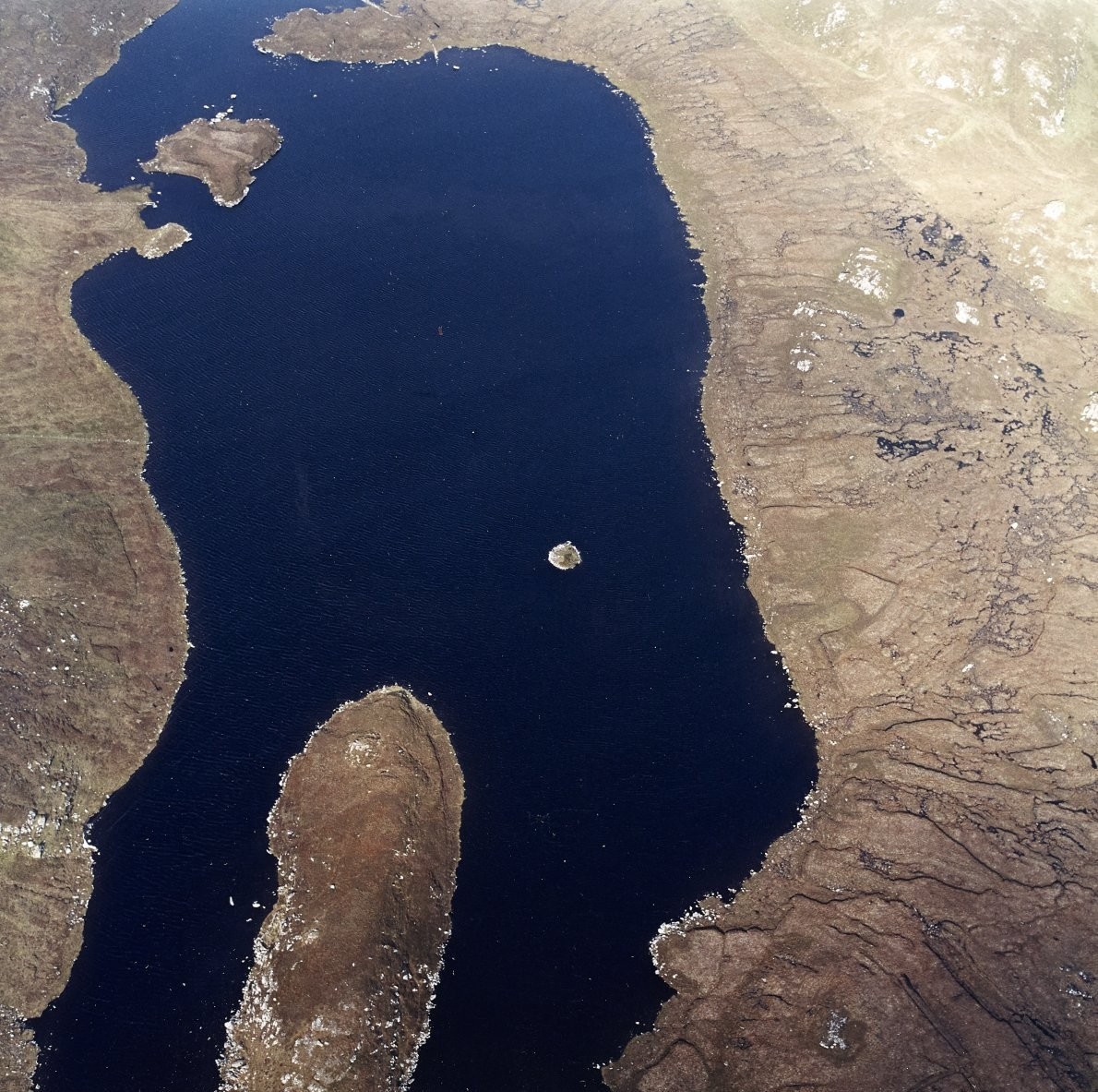
Oblique aerial view of Loch Langavat from 2004. View on Trove.scot.
All of these sites appear to have originated in the early Neolithic. Lots of prehistoric pottery and worked stone have been recovered from the loch beds around many of these sites.
These crannogs didn’t exist alone. They fit within a wider context of Neolithic and Bronze Age activity in the area. This includes the enigmatic site of Steinacleit, only about 1km northwest of Loch Marabhat. None of these site, though, are quite like these artificial islands.
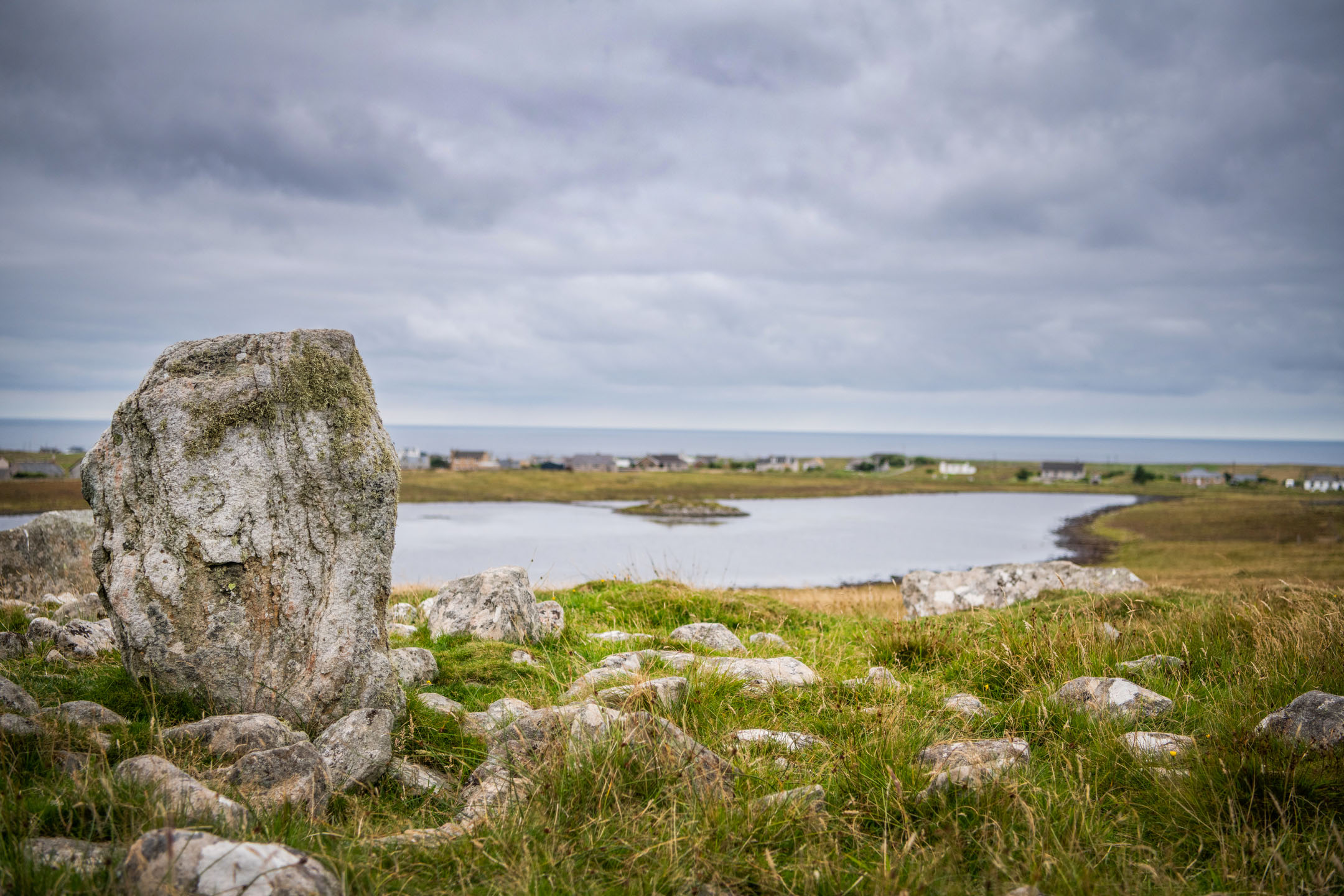
Steinacleit Stone Circle on the Isle of Lewis.
What were they used for?
So, what were these sites used for? That question is hard to answer. The excavation at Loch Bhorghastail didn’t find any evidence of people living on the crannog, so they don’t appear to have been dwelling sites.
But they clearly were important sites. A lot of effort went into building and maintaining them. The materials of wood and stone had to be cut or collected and then gathered together, transported out into the loch and the structure carefully built in the water.
Creating an artificial island from scratch is quite a feat and will have taken a lot of skill. Maintaining and later modifying it will also have taken effort. In fact, there’s evidence from Loch Bhorghastail that part of the original structure had started to subside. This is presumably one of the reasons why it was changed into a slightly smaller stone-built structure during the Middle Bronze Age.
Lots of bits of pottery and stone tools have been found on and around these sites. Where the pottery has been analysed, some have the surviving food residues on them. This suggests that people were either cooking food on the crannogs or bringing food in pottery vessels to these sites. Then, once the food had been eaten, they were throwing some of the pottery containers away.
Our best interpretation from the available evidence is that these crannogs may have been communal sites of some kind, where people came together to cook and eat. Communal activities involving food and eating is a common theme throughout human history and prehistoric communities were no different.
Perhaps the crannogs were focal points for the communities living around the lochs. The lochs themselves may have been important in some way to those communities, which is why they went to the effort of building these artificial islands within them.
Designation
Research in the future may give us more insight into what was going on at these sites, but they were clearly very special places. And it was very special to research these sites for designation.
We have now recognised their national importance through scheduling. (See Crannog, Loch Marabhat and Crannog, Loch Bhorghastail for more information.) They are protected under the Ancient Monuments and Archaeological Areas Act (1979). This means these wonderful pieces of Scotland’s story will be safeguarded for the future.
Could you add to our knowledge of the past? It’s important that members of the public take time to ask us to look at sites and buildings. This is, after all, everyone’s heritage! Anyone can suggest a building or site for designation as a scheduled monument, listed building or another of our designations. You can also ask us to review existing designations or correct errors in existing records. All you need to do is head over to our website, fill in a request form and send it by email to designations@hes.scot.
Discover more stories from our Designations team on our blog.
Share
About Author