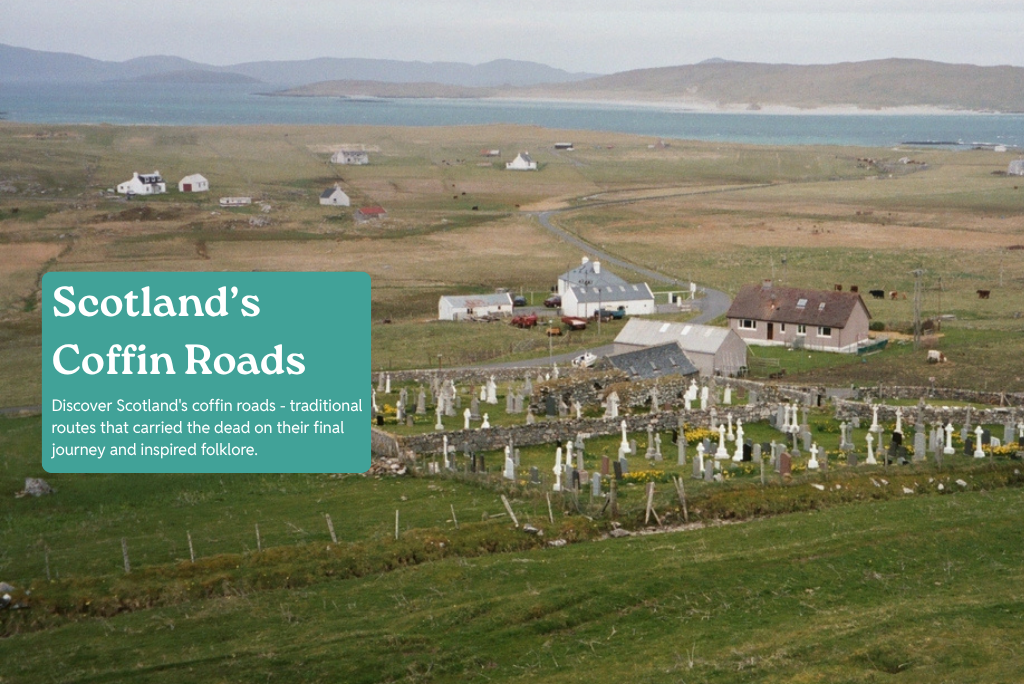
Across Scotland’s Highland and Island landscapes, carved into imposing hillsides, desolate moors, and shorelines, the well-travelled routes known as rathadan-ciste, or coffin roads, can be found.
For centuries, remote communities used these roads to carry their dead from small townships to consecrated burial grounds. These final resting places could often be many miles away. The journey could take several days and required the entire funeral procession to cross difficult terrain.
Many of these coffin roads are still accessible as walking routes. They provide a physical link to past communities and a window into Gaelic culture and beliefs in the Highlands and Islands.
These communities considered coffin roads as liminal spaces. They helped ease the departed, and those left behind, through the transition between life and death. As a result, they were seen as places where the ‘veil’ between the living and the dead was particularly thin.
Why coffin roads were needed
Coffin roads existed in large part due to the challenges of parish geography.
Beginning in the medieval period and lasting until well into the 19th century, burial practices in Scotland were controlled by church law and parish structures. Remote communities could not bury their dead locally, even though challenging terrain could make burying them elsewhere a difficult undertaking.
Church directives required burial in specific kirkyards. Each parish kirkyard served a defined geographical area. In the Highlands and Islands, those areas were often vast.
Communities living on the outermost boundaries of parishes still had to bury their dead in the designated burial ground. This requirement created the long journeys made along the coffin roads.
Additionally, the terrain surrounding many of these townships was absent of roads that could accommodate wheeled transport. This meant carrying coffins by hand, often in relays if over a great distance, was the only option.
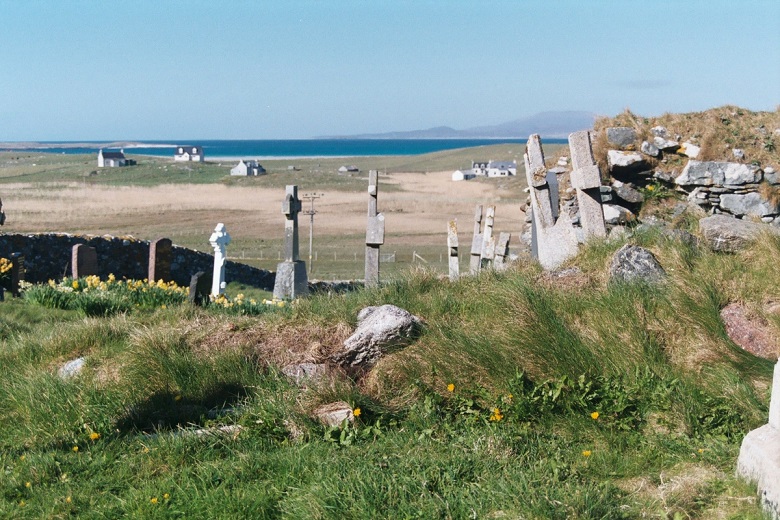
Cille Bharra on the Isle of Barra. ©Headland Archaeology Ltd. Courtesy of HES
Faith, belief and the journey west
Along with necessity, a deep connection to theology and the importance of consecrated ground in Gaelic Christian and folk belief traditions shaped the use of the coffin roads.
We can observe this in the fact that most coffin roads traverse from east to west. The people of Scotland’s Highlands and Islands shared the desire of many other early cultures to be buried in the west. This was in accordance with the belief in Celtic mythology that the heavenly realm of the dead (often described as Tìr nan Òg, ‘the land of eternal youth’ in Gaelic) existed as islands far out to the west, beyond the setting sun.
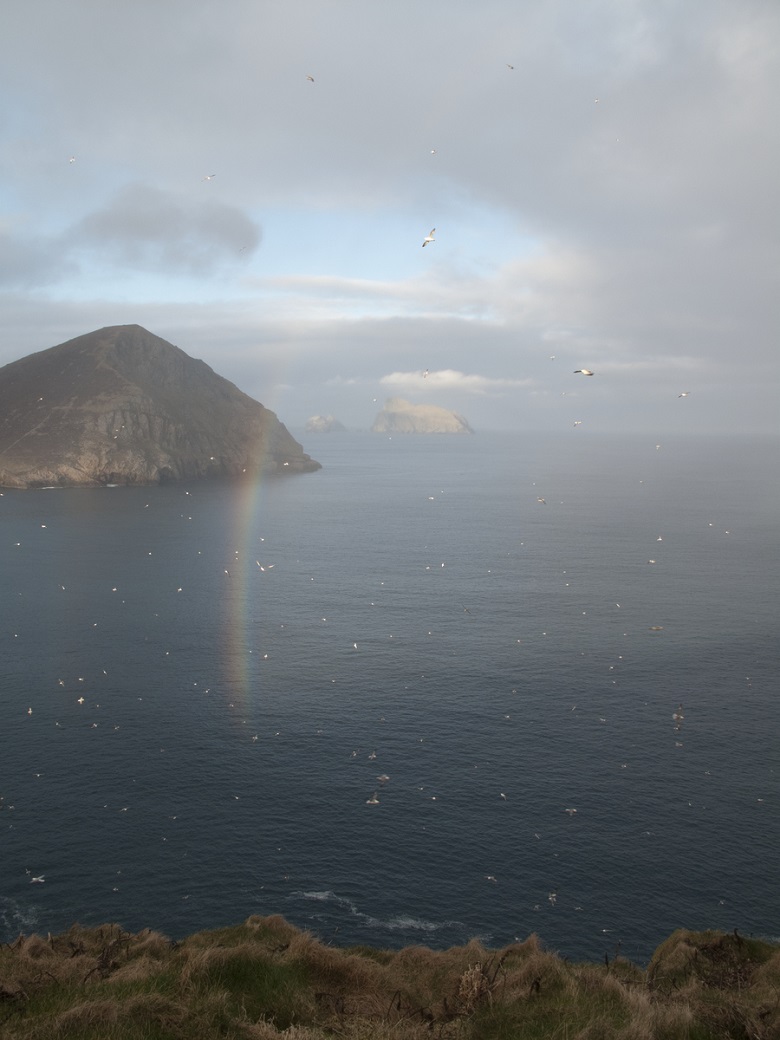
Image taken from St Kilda, the most westerly of Scotland’s islands, looking out past Oisebhal (Oiseval) towards Boraraigh (Boreray). ©Crown Copyright: HES
Community, mourning and funeral rituals
In Gaelic culture, the coffin roads, or rathadan-ciste, were the setting for funeral customs that reflected strong community bonds.
Death was not hidden, sanitised or private. It was regarded as an inevitable aspect of the cycle of life. An event which the whole town openly discussed, prepared for, and responded to.
When someone died, their body would rest at home for a continuous wake hosted by their loved ones. The wake would last for two to three days and nights. During this time, people would come to visit the bereaved and pay their respects to the deceased.
They would also enjoy a convivial atmosphere of drinking, eating, dancing and storytelling, often relaying humorous stories about the person who had died. This was just the first step in a grieving process that was decidedly communal. Death was never a burden to be carried alone.
The funeral procession and the cairns
When it was time for the burial, it was not just those closest to the deceased who walked with their coffin along the coffin roads. The entire community was involved in preparing for the procession.
Along longer coffin roads, rest stops for the procession were marked by cùirn cuimhne meaning ‘memory cairns’. The men who were carrying the coffin would build a small cairn, or add a stone where cairns already existed. This served as an act of remembrance and commemoration for the dead.
This solemn ritual played an important part in the Gaelic burial process known as Tòrradh. Tòrradh is Gaelic for ‘burial’, a term that is also associated with the heaping of stones, the act of building a cairn over the dead. We can still see some of these cairns standing along coffin roads today.
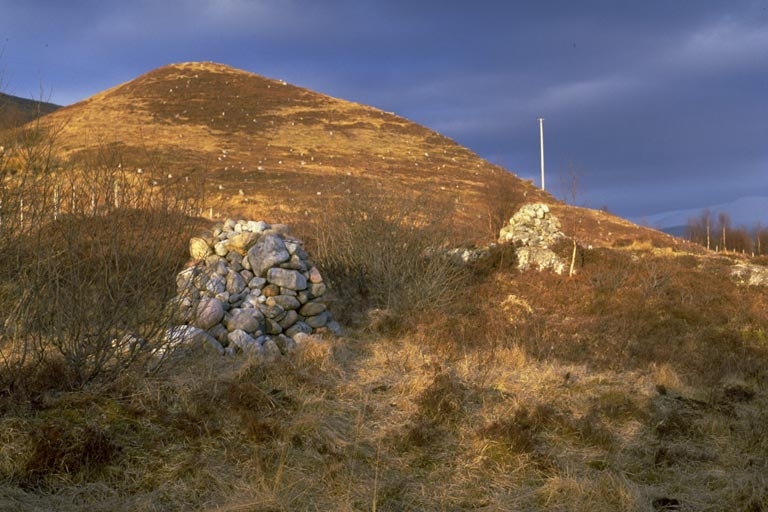
Resting cairns at Cill’ Choireil, Roy Bridge, Lochaber. © Gaidheil Alba. Courtesy of HES
Keening
Another practice that would often accompany processions along the coffin roads was that of caoineadh (keening). This traditional vocal lament was performed by either the deceased’s female relatives or by semi-professional mourners sometimes referred to as mnathan caoinidh (keening women).
The keening women would follow the coffin and perform a loud, emotive expression of grief in the form of rhythmic crying, wailing, singing, and chanting. Keening helped mourners release their sorrow. It was also believed to guide the soul safely into the next world.
Folklore
There is a rich history of folklore associated with the coffin roads, and the spiritual beliefs of the communities that used them.
Chief among these was the conviction that certain rituals must be performed to allow the spirit to find rest, preventing them from attempting to return home or haunt the living.
These could include:
- opening a window after someone died to allow their spirit to leave
- using an unfamiliar exit to transport the body out of the home
- crossing water during the funeral procession
This final point came from the belief that spirits couldn’t cross running water. Many coffin roads will cross over rivers and burns because of this desire to create a spiritual barrier that prevented the dead from returning.
The dead were often carried with their feet pointing in the direction of travel, away from their home. This prevented them from ‘looking back.’
Folklore also refers to ‘corpse lights’. These ghostly lights were attributed to the spirits of the dead, meandering along coffin roads. This alleged physical manifestation of the souls of the departed demonstrates the belief that the barrier between this world and the next was especially thin on these roads, allowing the dead to ‘pass through’.
Landscapes of memory
These beliefs remind us that coffin roads were far more than practical routes to burial grounds. They are landscapes of considerable cultural significance, charged with generations of inherited ritual and superstition.
Kilmartin Glen
The first of three examples of notable coffin roads is Kilmartin Glen. One of the most archaeologically significant sites in Scotland, Kilmartin Glen is also home to what author Ian Bradley (The Coffin Roads: Journeys to the West) describes as the earliest coffin road. For over 3,000 years, funeral processions carried bodies or ashes of the dead through the glen to ancient burial sites.
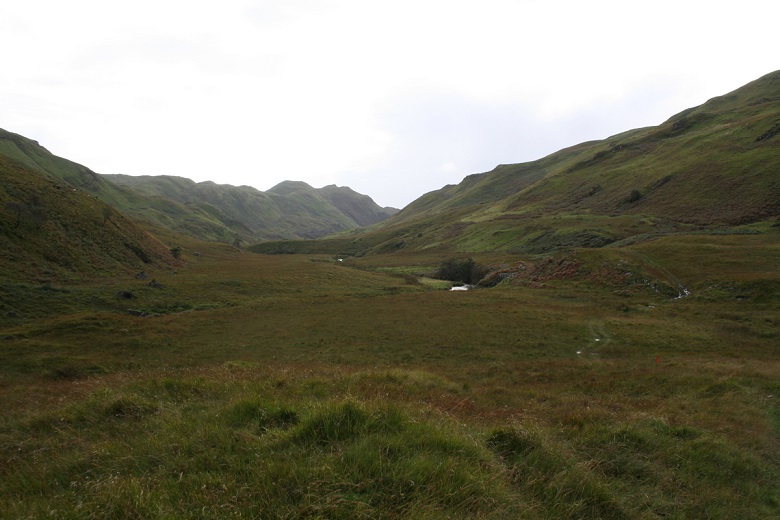
Gleann Domhain, Kilmartin. © Courtesy of HES (Records of Scotland’s Rock Art
Project). Photograph by Kilmartin Group
There are more than 800 prehistoric monuments to be found in Kilmartin Glen. These include burial cists, cairns, and chambered cairns used by Neolithic and Bronze Age communities to house the remains of the deceased.
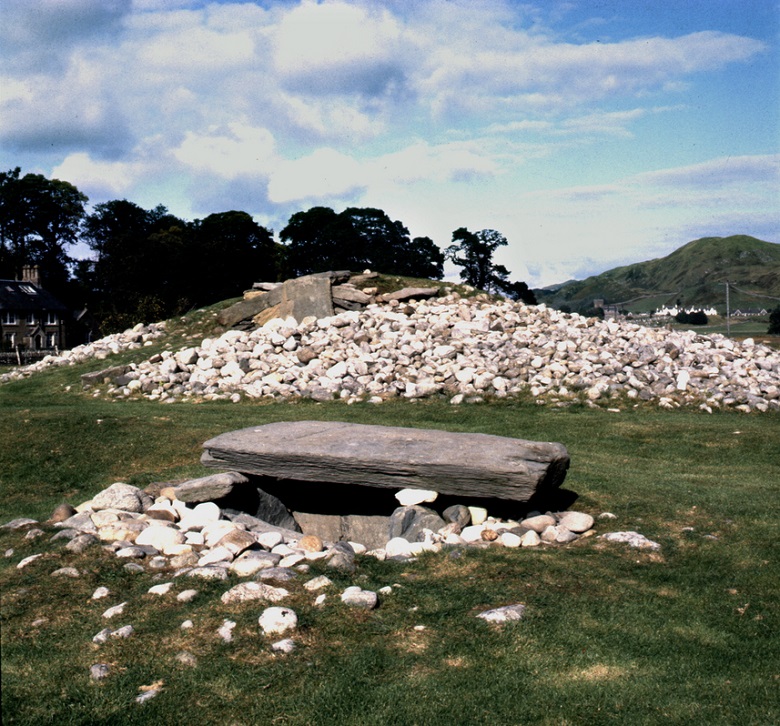
Neolithic chambered cairn at Nether Largie South, likely one of the oldest burial sites within the linear cemetery at Kilmartin. © Crown Copyright: HES
Bealach Eòrabhat, the Harris Coffin Road
Next, we turn our attention to one of Scotland’s better known coffin roads – the Harris coffin road. This road starts on the harsh, rocky east coast and winds for approximately 3.5 miles across the breadth of the island. It finishes at the sandy machair of the west.
The ancient rocks that are a striking feature of Harris’ east coast render it too hard and shallow for burials. This meant coffins had to be carried to the softer, sandier ground of the west. This also aligns with the desire to be buried in the west.
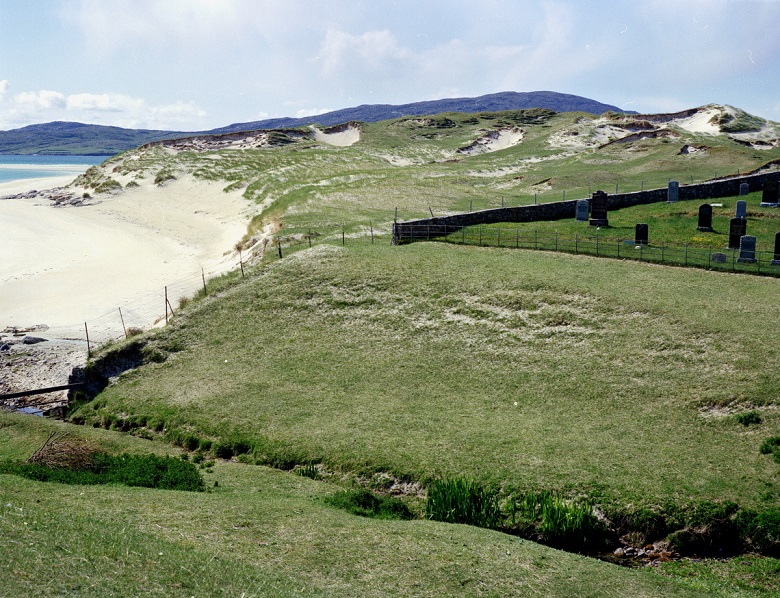
Luskentyre Beach on the Isle of Harris, where the Harris Coffin Road ends. © British Geological Survey/NERC. Courtesy of HES.
This created a dramatic funeral journey across Harris’ extraordinary landscape that you can still traverse today.
Eilean Fhianain (St Finan’s Isle)
The final example is not a coffin road itself. Instead, it was the destination reached by several coffin roads.
Eilean Fhianain (St Finan’s Isle) sits on Loch Shiel, between Glenfinnan and Acharacle.
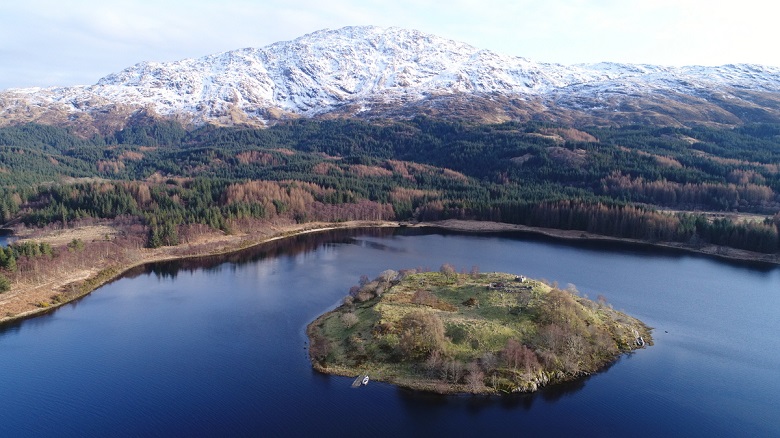
Aerial view of Eilean Fhianain. ©Historic Environment Scotland.
It is home to several graves from at least the early medieval period, if not earlier. Some of these graves are marked by medieval cross-slabs attributed to the late 15th century. Other uncarved stones may be older still.
Eilean Fhianain can be visited by boat, departing from the jetty near Dalilea. The same route funeral processions may have taken as the final stretch of their journey along the coffin roads.
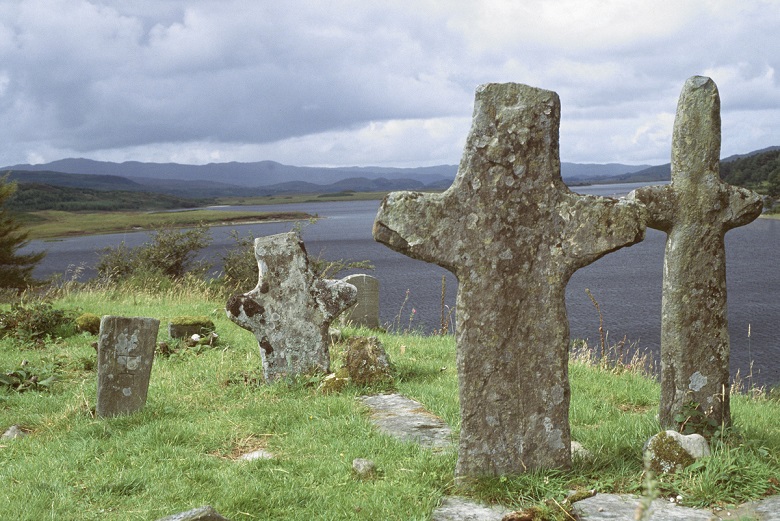
Cross grave markers found in the oldest part of the burial ground. They are perhaps of post-medieval date. © Crown Copyright: HES
Walking the Coffin Roads today
The coffin roads survive as a physical trace of Scotland’s cultural heritage. They offer insight into the traditions and beliefs of the people that forged and maintained them. They are a unique demonstration of geography, necessity, and faith combined.
Though they are no longer used for carrying our dead, they persist as powerful symbols of community and ancestral connection. The isolated, picturesque landscapes they lie upon hold centuries of meaning and memory, telling stories that are shaped by generations. In this way, the landscape itself becomes its own character in Scotland’s rich culture and folklore.
Walking along a coffin road today, you may find they can invite quiet, personal reflection on mortality and remembrance. Your mind may also turn to the legacy that these roads and their accompanying rituals and traditions have left behind, both tangible and cultural.
Most importantly, the coffin roads allow us to take solace in a physical reminder that the path of grief is well worn, and one that unites us all.
Image credit for banner image: © Headland Archaeology Ltd. Courtesy of HES
Share
About Author