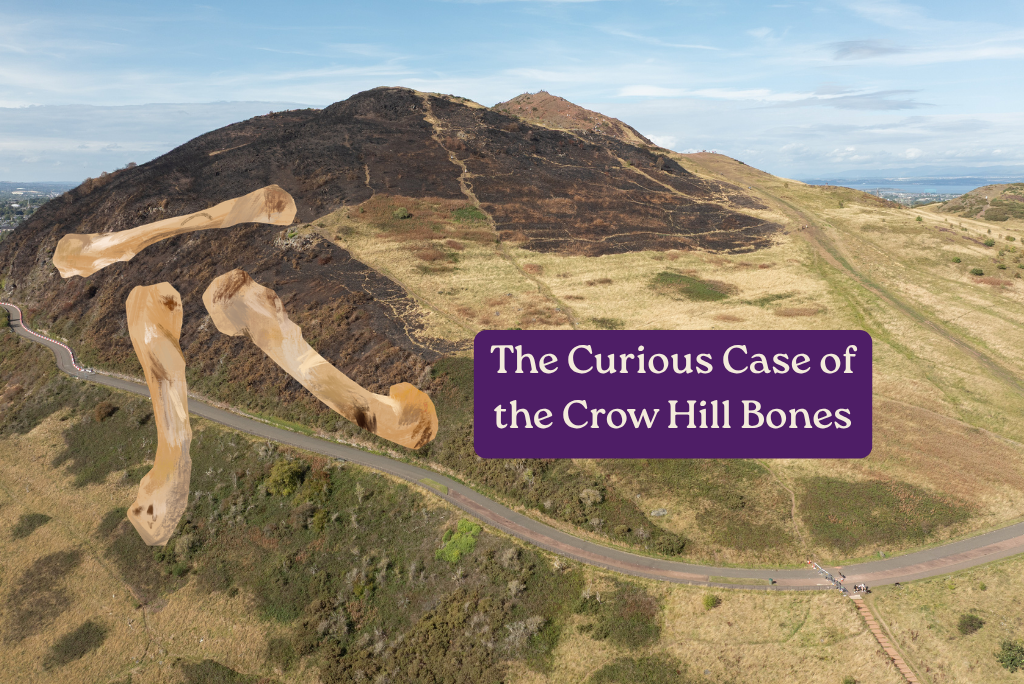
Edinburgh has never been short of mysteries. From the infamous Burke and Hare murders, to the strange tale of the miniature coffins discovered on Arthur’s Seat in 1836, the city’s history is full of unexplained stories that continue to intrigue generations of residents and visitors alike.
Now, a new mystery has emerged from the hills of Holyrood Park. It sounds almost like the opening chapter of an Inspector Rebus novel: a remote hillside, hundreds of animal bones, curious signs of human activity and no obvious explanation for how they got there.
What the fire revealed
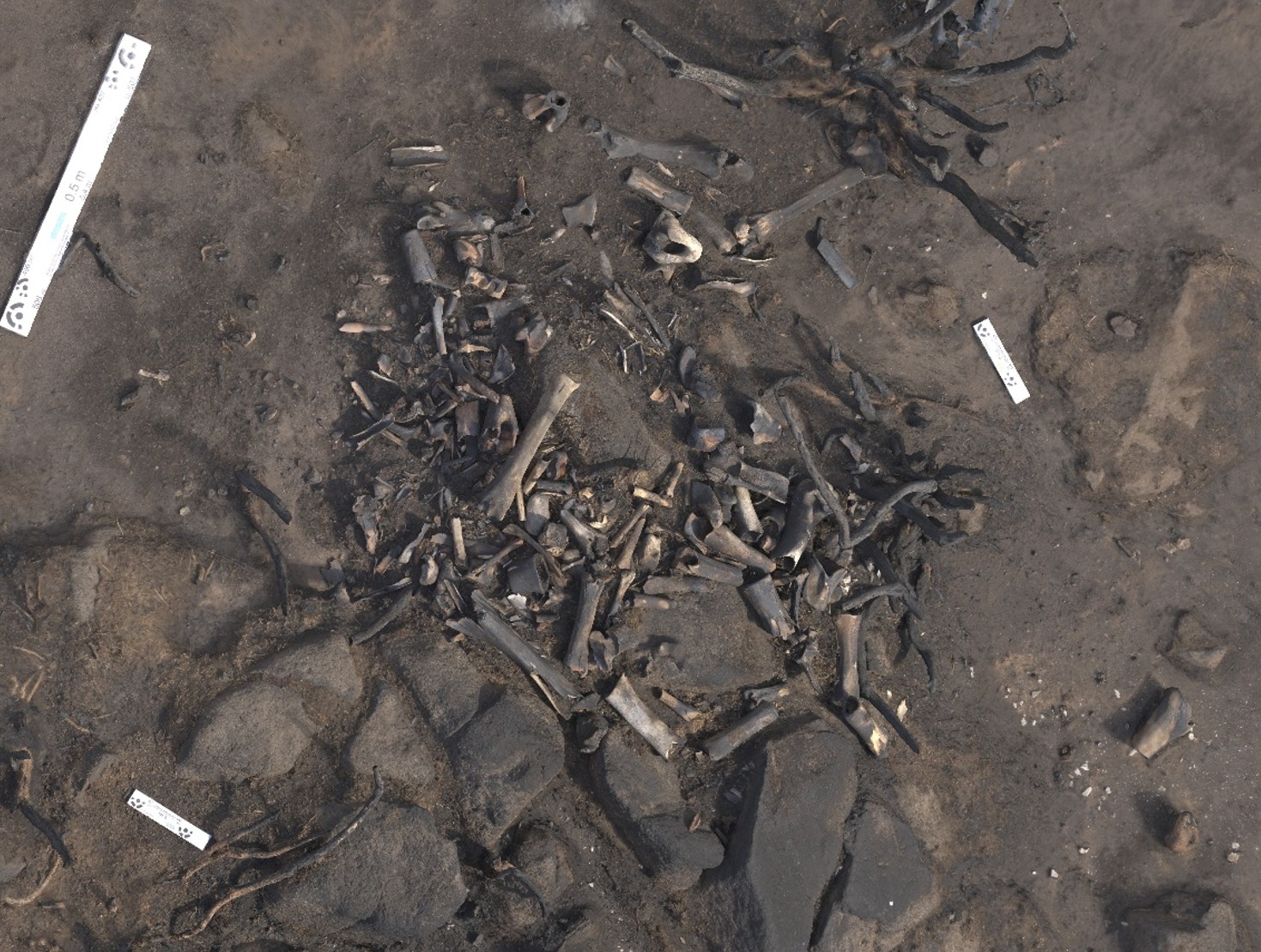
In August 2025, wildfires blazed at Holyrood Park in Edinburgh. Following the fires, park Rangers discovered a large pile of animal bones – over 13 kilograms or 30 pounds – to the east of Arthur’s Seat in an area known as Crow Hill. Like much of the park, the area has seen human activity since prehistory. There is evidence of terracing, prehistoric stone tools and pottery, which indicate agricultural use. Recent excavation even found evidence of an Iron Age building! So while this discovery isn’t the first activity at Crow Hill, it certainly seems the strangest.
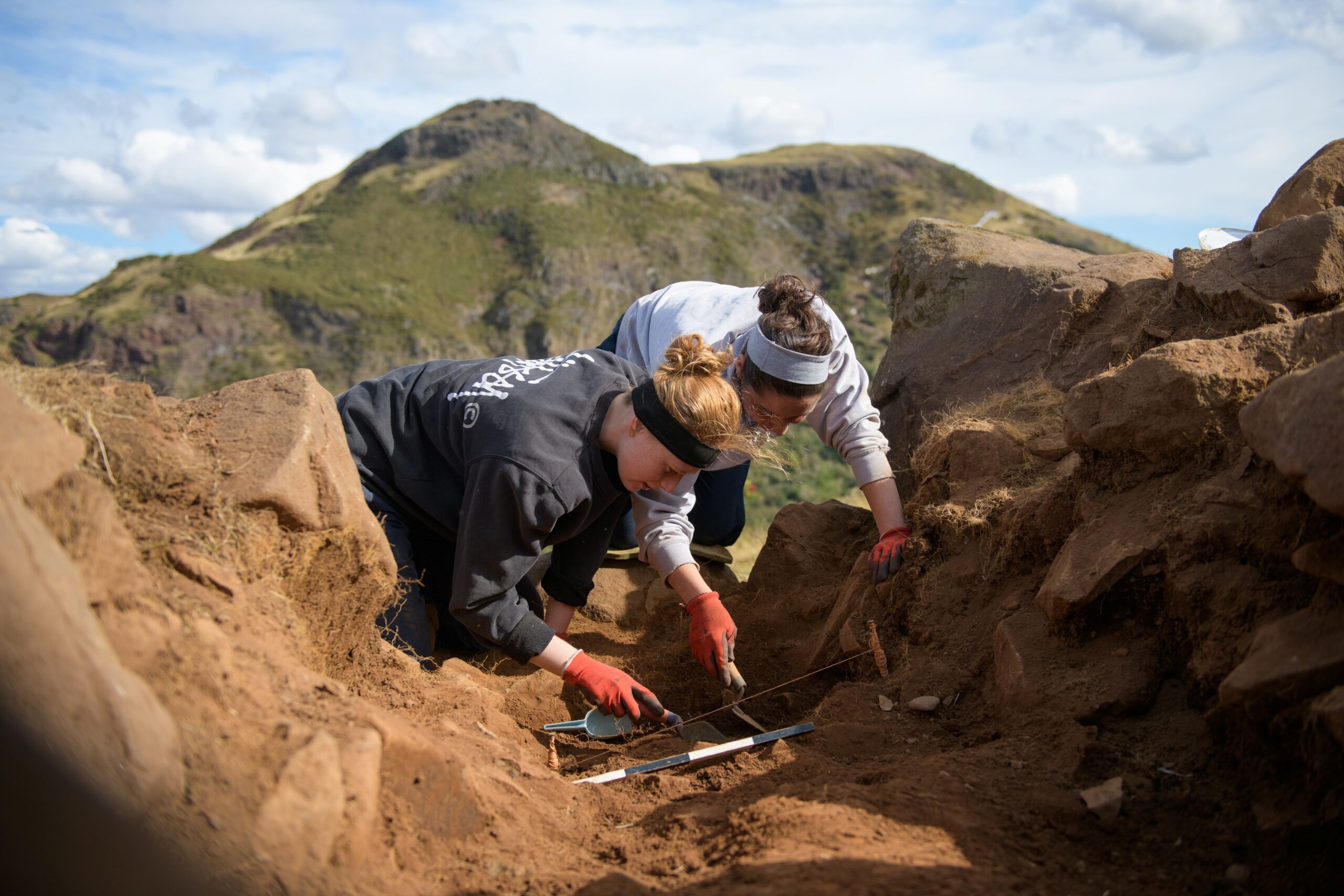
Students from the University of Edinburgh taking part in archaeology field work at Crow Hill in 2025.
The bones were a surface find, meaning they had not been buried. They were likely always visible, although they were obscured by plant life until the fire exposed them.
After the bones were initially identified, they were collected, processed and analysed by AOC Archaeology. Their expert archaeologists hoped to answer some of the mystery surrounding the find. Who gathered these bones, and why were they brought here?
A strange assemblage on the hillside
Finding such a large, surface collection of bones is not common. The bones also showed clear evidence of human alteration even before analysis.
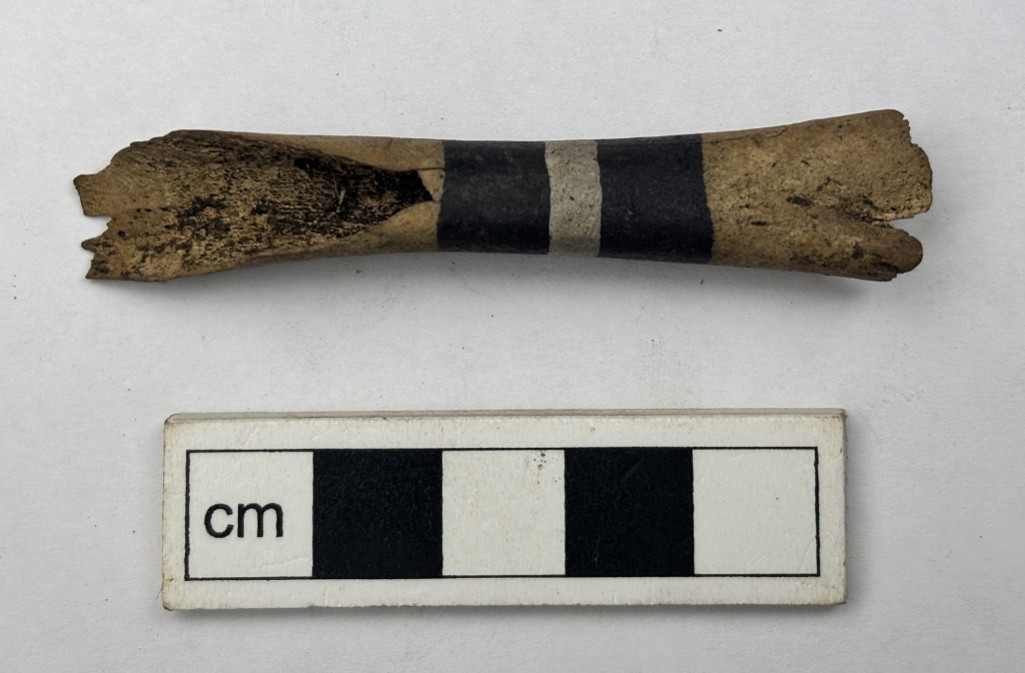
Small mammal bone with painted bands on the surface.
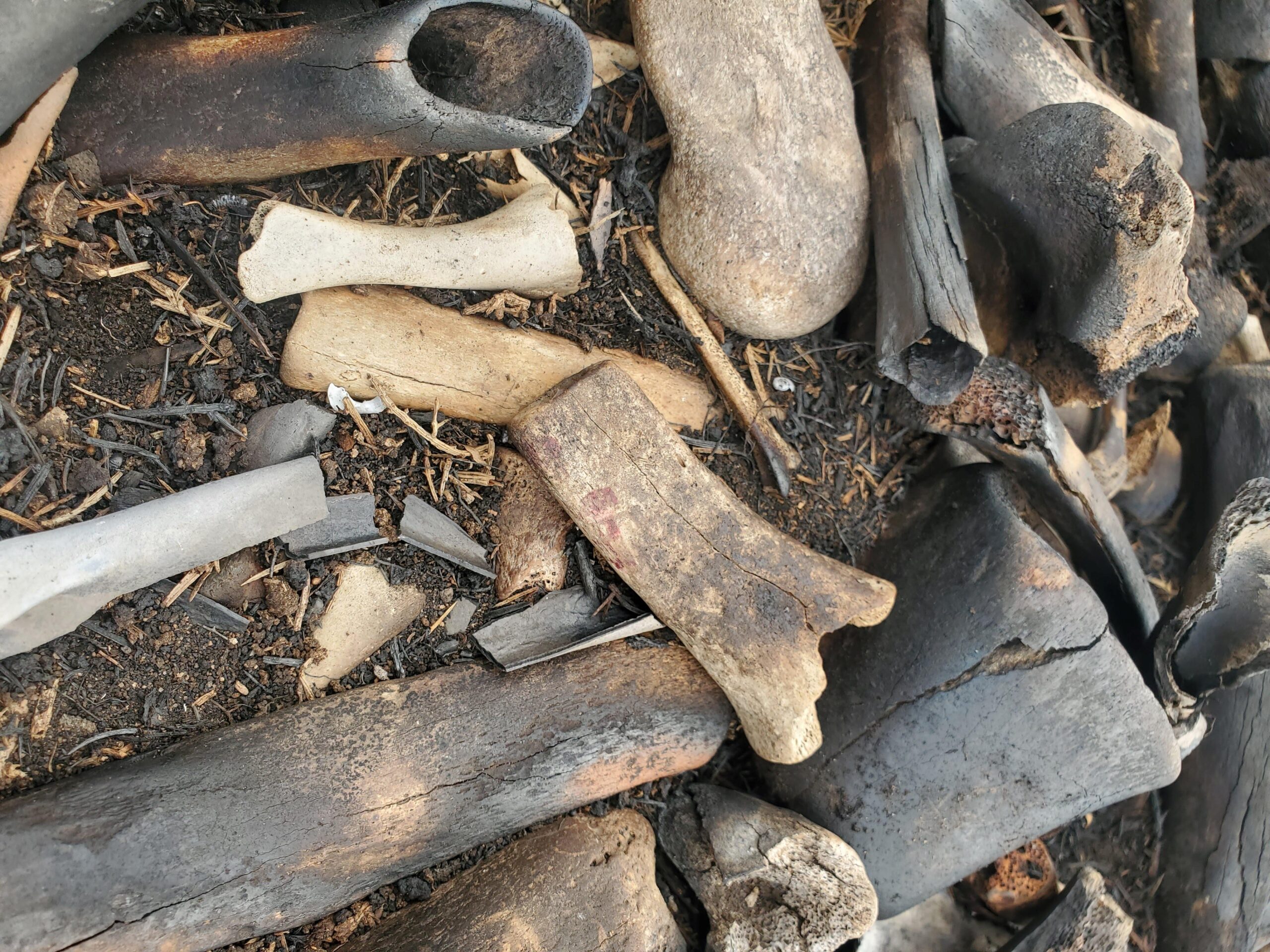
The most striking fragment was a small mammal bone, whose species could not be identified, that had a series of striped bands painted on. Three bands are clearly visible, two nearly equally size blacked bands with a smaller, white band in-between them. We don’t know the purpose of the painting. However, it clearly indicates that humans were using or altering these bones in some way prior to disposing of them at Crow Hill. Initial observation raised several questions. Were the bones archaeological or modern? What was the purpose of the modifications? Why were they left on Crow Hill?
Paint, fingerprints and puzzling clues
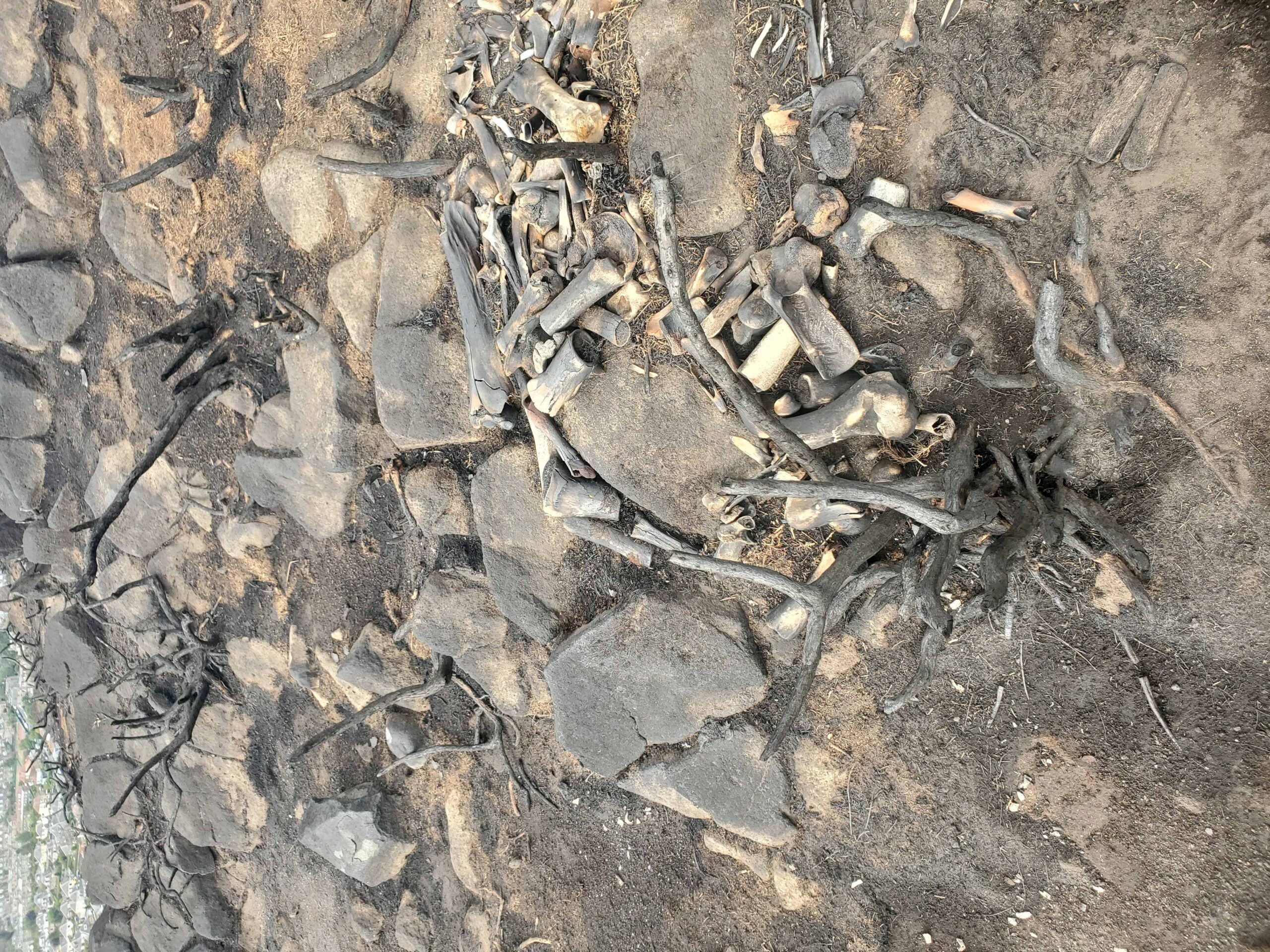
The more archaeologists learned about the assemblage, the stranger it became. The collection contained more than 800 fragments from a wide range of animals. Cattle, horse, pig, sheep/goat, cat, rabbit, red deer, weasel and bird, were identified alongside some unidentified large and small mammal bones. Unidentified mammal long bones made up the biggest proportion of the collection (346), with cattle comprising the largest identified species (39) followed closely by bird (35). No human bones were found.
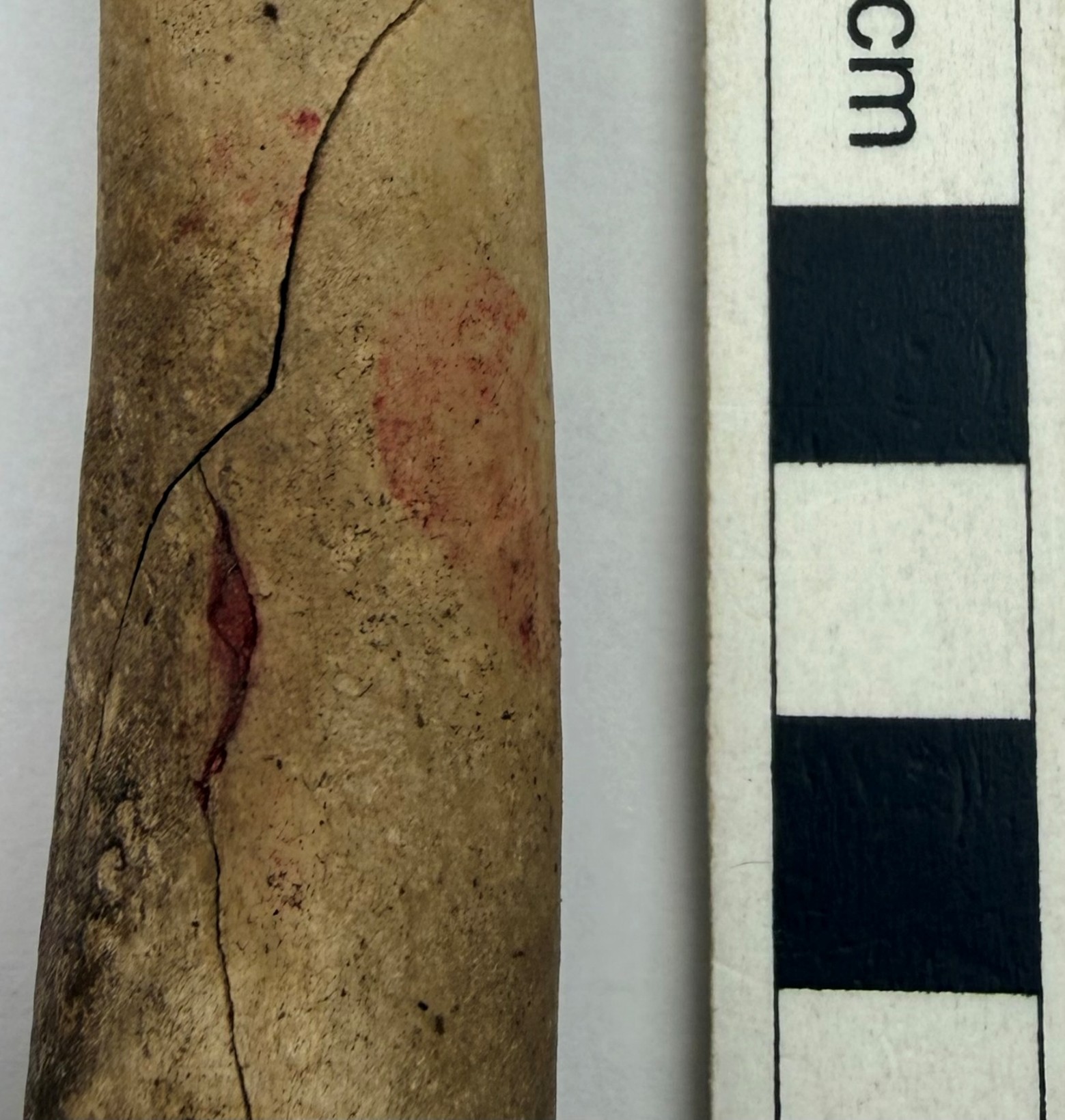
Detail of sheep/goat femur with red staining, possibly a thumb or finger print.
Many of the fragments were in poor condition, with the majority having been damaged in the fire. They still however provided evidence for a diverse range of human modification. Along with the painted bone mentioned above, a sheep/goat femur had red pigments that appeared to be a thumb or fingerprint, likely done accidentally rather than intentionally. These paint marks suggest the fragments were involved in some kind of craft activity before being left at Crow Hill.
Traces of craft and creativity
The people who left the bones did not only paint them. Two of the bones showed signs of drilling or coring. The first was a leg bone from a horse or pony that appeared to have an unusually large hole in it. Small holes occur naturally in bones to allow blood vessels and nerves to pass through, but this one seemed much larger than expected. A shaft bone from a pig also appeared to have been butchered, and had a drilled hole through the rounded end of the bone. We don’t know why someone would modify the bones in this way. It might have been efforts to create some kind of artefact.
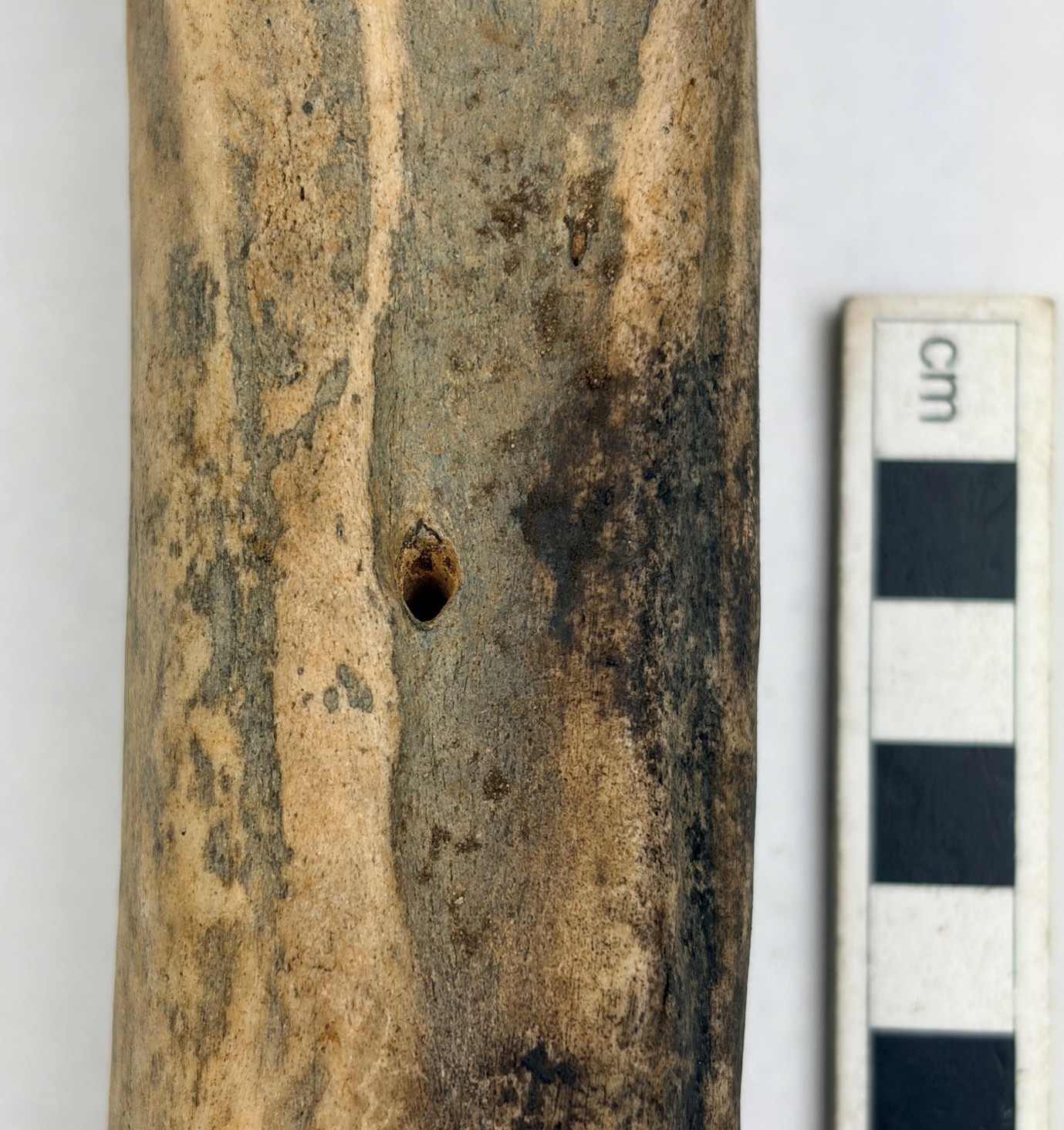
Exaggerated foramen (hole) on horse metacarpal (leg bone).
Over 13% of the bones were found to have signs of butchering, sawing, chopping or cutting in some way, by far the most common modification within the collection. Almost half of the cattle and sheep/goat fragments found had been butchered. Most of these appear to be made by a modern electric saw. These animals are commonly butchered, so this is perhaps not surprising. But how they came to be obtained and deposited on Crow Hill remains a mystery.
Bones from all over
Archaeologists also found the bones were gathered from different places over many years. Those with electric saw marks may have come from butcheries. Others appear to have spent time in seawater before being collected. Two long mammal bones had limpet shells attached to the surface, indicating they had spent a significant amount of time submerged in water. Other bones contained evidence of animal gnawing. The diverse life cycle of these bones indicates that whoever put them in Holyrood Park was gathering bone fragments from several places – the sea, chance finds and maybe even their local butcher! From all of these places, they eventually found their way to the same hillside beside Arthur’s Seat.
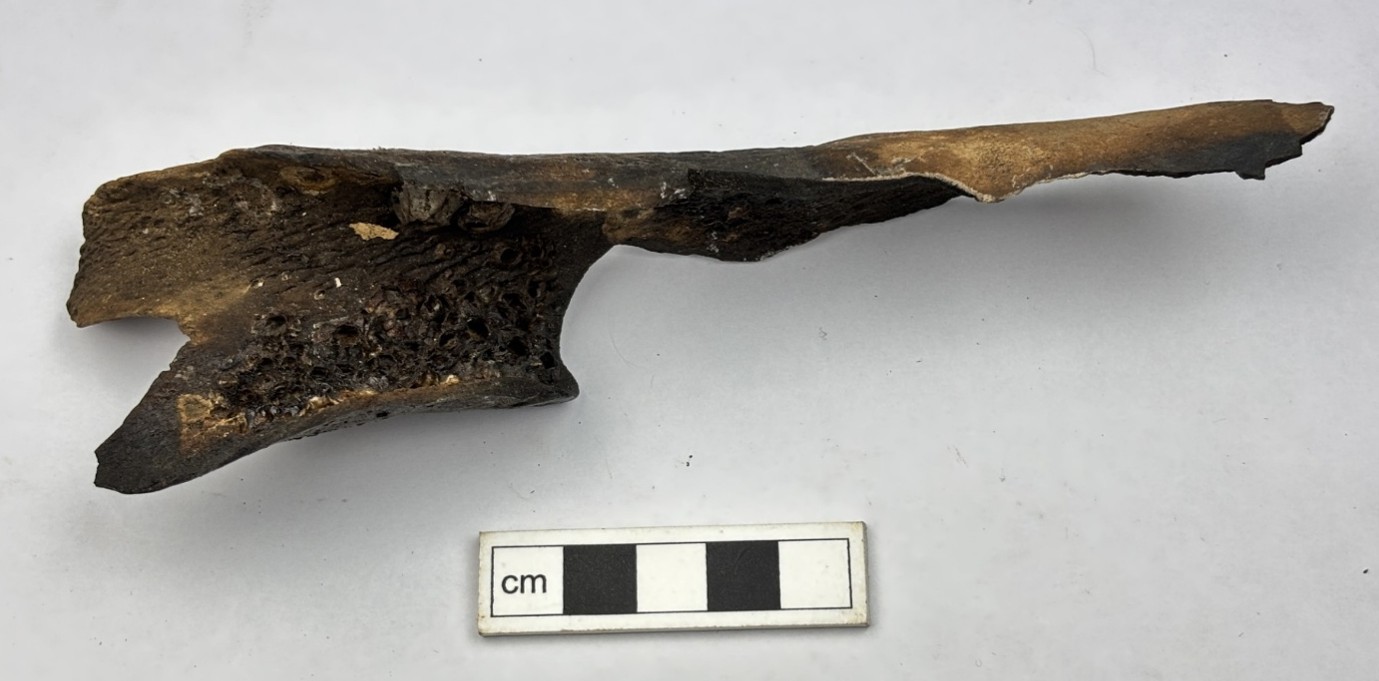
This long mammal humerus has limpet shells attached to its surface.
The length of time the bones had been collected and left on Crow Hill further deepens the mystery. The bones were not all weathered in the same way. This indicated that they had been collected and deposited over an extended period of time.
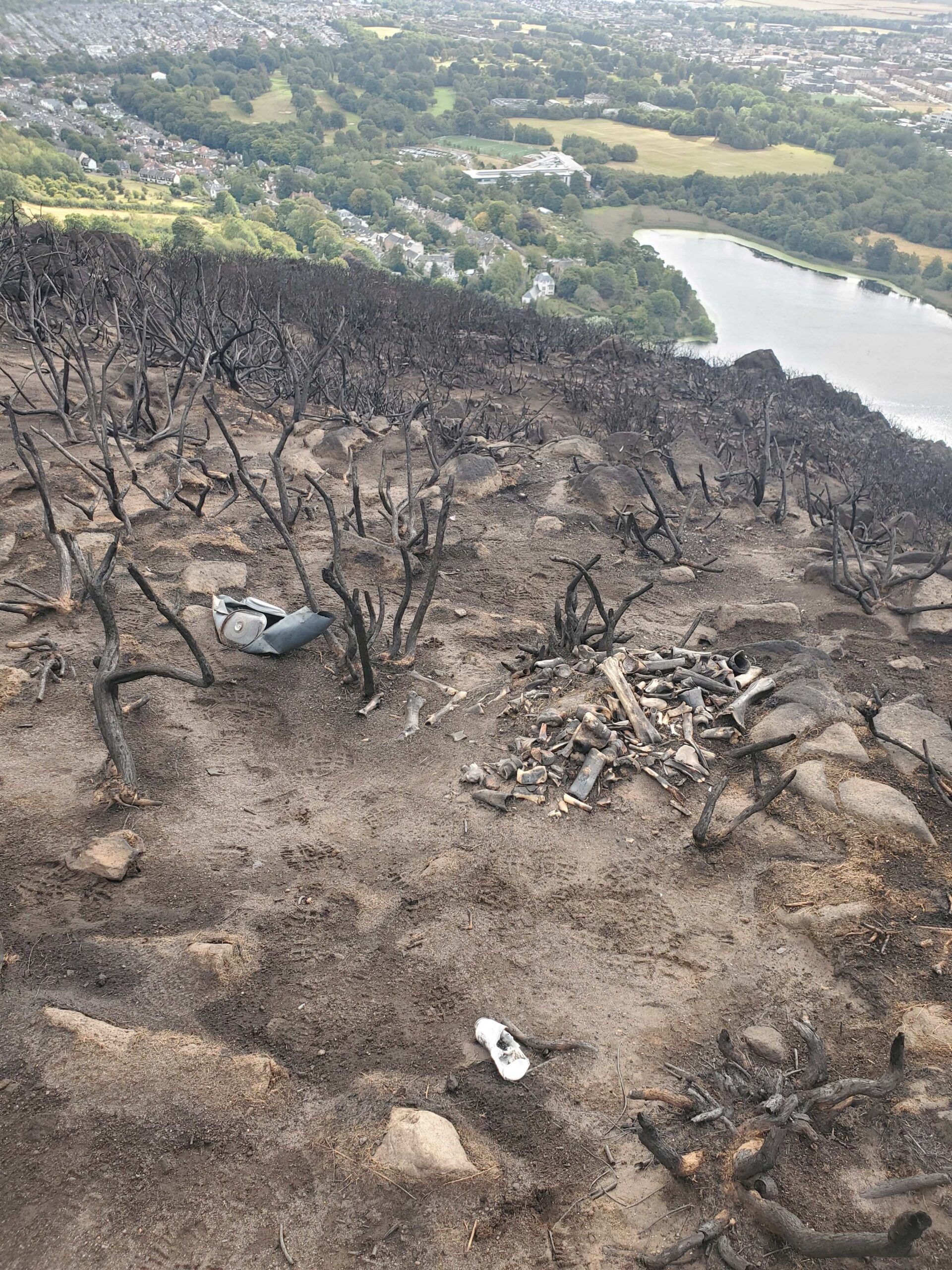
The fairly remote location of the bones means that there are no nearby structures from which the bones could have been discarded.
The location itself is perhaps the greatest clue. Arthur’s Seat is undoubtedly a very busy area with several footpaths. However, Crow Hill is not somewhere a person would casually carry hundreds of bone fragments simply to dispose of them. There are much easier ways to dispose of the bones if that had been the only goal. The effort required suggests the site held a particular significance for whoever left them there. The location must have been selected for a specific reason.
Not ancient, but not ordinary
Radiocarbon dating – a scientific process that dates organic material – was undertaken on a horse/pony and cat bone to determine the age of the collection. The results were surprising to say the least. The date returned from the horse/pony bone was c.1811, suggesting it was from an animal skeleton which had been kept for some time before being deposited. The radiocarbon date from the cat was post 1950, suggesting it is modern, possibly the remains of pet or stray animal. So while the collection is not archaeologically significant, it remains no less intriguing.
The mystery continues
In some ways, the puzzle recalls one of Edinburgh’s most enduring mysteries: the tiny carved coffins discovered on Arthur’s Seat almost 200 years ago. Despite countless theories, nobody knows for certain who made them or why they were left hidden on the hillside. Both finds feature an unknown creator, a dramatic location and a story full of unanswered questions.
Analysis of the bones means we know we’re not dealing with ancient artefacts. What we have found, however, brings up even more questions. Was this the work of a single collector? A group of friends? An artist? A practitioner of an unusual hobby or ritual? Or is there another explanation that nobody has considered yet?
For now, the mystery remains unsolved.
Discover more
Interested in exploring Holyrood Park? Join our rangers on a tour! While we can’t promise you’ll find a deposit of bones, our rangers are full of knowledge about the history and geology of the park.
You can delve further into Holyrood Park’s fascinating past on our blog.
Share
About Author